https://player.fm/series/hispanic-marketing-and-public-relations/hmpr-ira-pastor
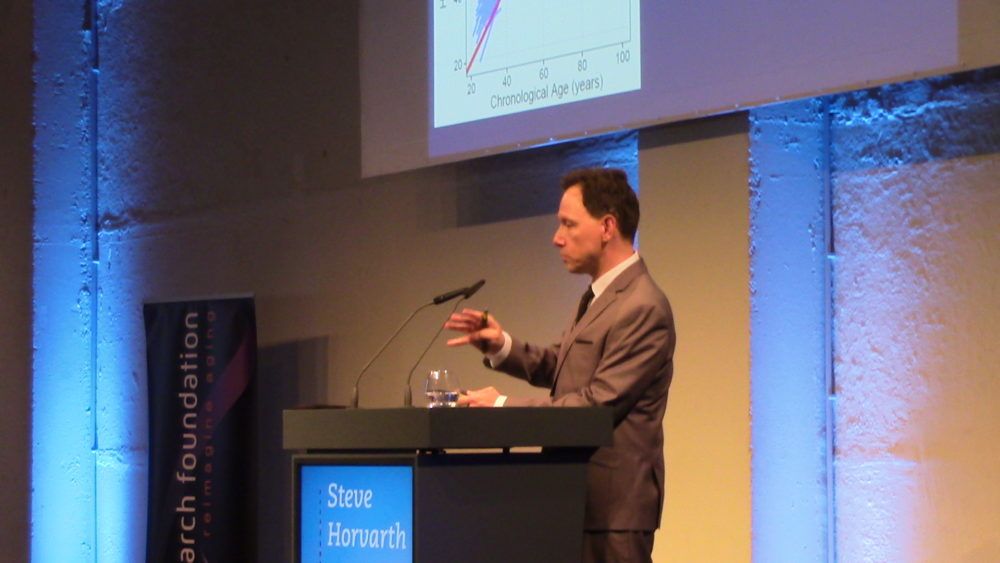
Today we bring you an interview with Professor Steve Horvath pioneer of the epigenetic clocks of aging.
Steve Horvath is a Professor of Human Genetics and Biostatistics at UCLA. His research sits at the intersection of biostatistics, bioinformatics, computational biology, cancer research, genetics, epidemiology, epigenomics, machine learning, and systems biology.

The discovery of a genetic switch that triggers stem cells to turn into heart cells is a major step in finding treatment for damaged hearts.
Researchers from A*STAR and their colleagues in India have been investigating the molecular and genetic processes by which human embryonic stem cells differentiate into the body’s many types of cells—in particular, cardiomyocytes, or heart muscle cells.
“The effort is underway globally to find ways to differentiate these stem cells into beating functional heart muscle cells so that they can be used for cell-based therapies to treat structural abnormalities,” says Prabha Sampath, from the A*STAR Institute of Medical Biology.
Biotech lobbyists and companies are trying to get the Trump administration to hand regulation of genetically edited animals over to the USDA, which has more lenient rules than the FDA, which currently regulates animals.
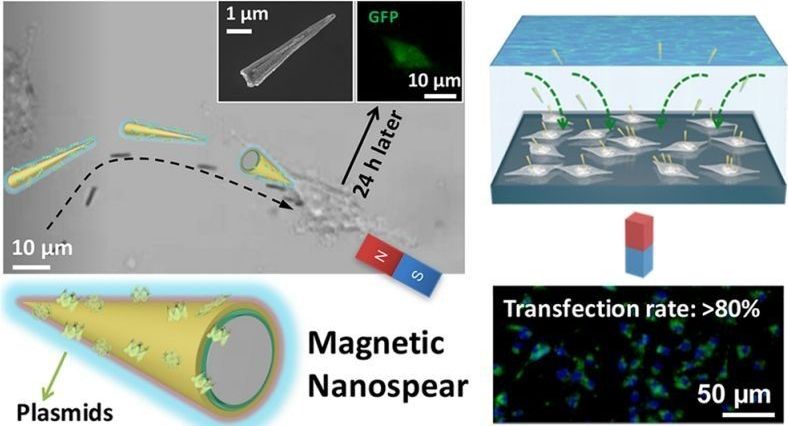
UCLA scientists have developed a new method that utilizes microscopic splinter-like structures called “nanospears” for the targeted delivery of biomolecules such as genes straight to patient cells. These magnetically guided nanostructures could enable gene therapies that are safer, faster and more cost-effective.
The research was published in the journal ACS Nano by senior author Paul Weiss, UC Presidential Chair and distinguished professor of chemistry and biochemistry, materials science and engineering, and member of the Eli and Edythe Broad Center of Regenerative Medicine and Stem Cell Research at UCLA.
Gene therapy, the process of adding or replacing missing or defective genes in patient cells, has shown great promise as a treatment for a host of diseases, including hemophilia, muscular dystrophy, immune deficiencies and certain types of cancer.

A team of plant geneticists at Cold Spring Harbor Laboratory (CSHL) has identified a protein receptor on stem cells involved in plant development that can issue different instructions about how to grow depending on what peptide (protein fragment) activates it.
This is the first such multi-functional receptor found to work in this way to control plant development. The new findings obtained by CSHL Professor David Jackson and colleagues may have important implications for efforts to boost yields of essential food crops such as corn and rice.
Plant growth and development depend on structures called meristems — reservoirs in plants that contain stem cells. When prompted by peptide signals, stem cells in the meristem develop into any of the plant’s organs — roots, leaves, or flowers, for example. These signals generally work like a key (the peptide) fitting into a lock on the surface of a cell (the protein receptor). The lock opens momentarily, triggering the release of a chemical messenger inside the cell. The messenger carries instructions for the cell to do something, such as grow into a root or flower cell or even stop growing altogether. Conventionally, one or more peptides fit into a receptor to release a single type of chemical messenger.
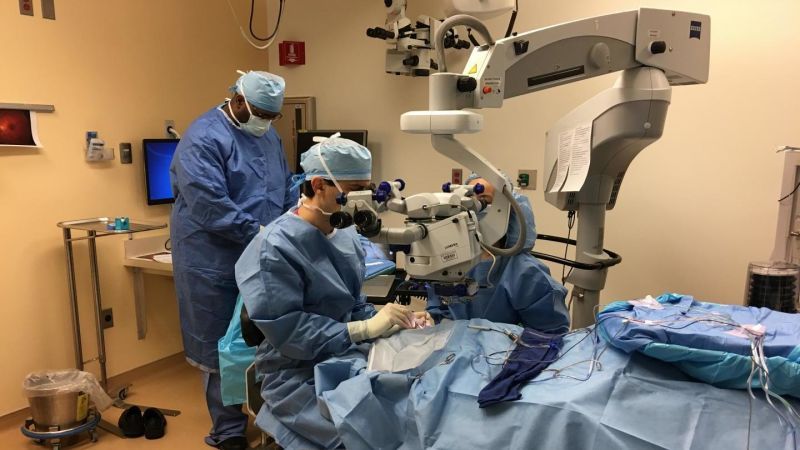
On Tuesday, a 13-year-old boy from New Jersey was at the center of medical history as he became the first person in the US to receive an FDA-approved gene therapy for an inherited disease. The event marks the beginning of a new era of medicine, one in which devastating genetic conditions that we are born with can be simply edited out of our DNA with the help of modern biomedical technologies.
The therapy, Luxturna, from Spark Therepeutics, was approved by the FDA in December to treat a rare, inherited form of blindness. Its price tag, set at $850,000—or $425,000 per eye—made it the most expensive drug in the US and sparked mass sticker-shock. But the therapy, which in high-profile clinical trials has allowed patients to see the stars for the first times, also offered the almost miraculous possibility of giving sight to the blind.
The therapy is intended to treat retinal diseases, including leber congenital amaurosis or retinitis pigmentosa, caused by mutations in the RPE65 gene. The RPE65 gene produces an enzyme that helps the eye process light. In these disorders, severe visual impairment begins often in infancy, and sometimes degrades over time. Some people with a mutated copy of the gene can see during the day; others are legally blind. The drug works by delivering a correct copy of the RP65 gene to retinal cells, allowing the patient to produce the deficient enzyme—and, hopefully, restoring their vision. (Luxturna is considered by some to be the first “true gene therapy” approved by the FDA, since other approved therapies, like those for blood cancers, involve removing a patient’s cells from their body, modifying them externally, and then infusing them back into the body.)

Breast and ovarian cancers are scary, anxiety-provoking diseases, and with good reason. Although breast cancer isn’t the cancer that kills the most women (lung cancer holds that distinction), it is the most commonly diagnosed cancer in women. And ovarian cancer is difficult to find in its early stages. But anyone willing to spit in a tube and pay $199 will soon be able to find out if they have a particular genetic predisposition to either of these cancers.
This month, the FDA granted the genetics company 23andMe permission to offer direct-to-consumer testing for three of the more than 1,000 known variants of the genes BRCA1 and BRCA2The variants may also boost the risk of prostate cancer and melanoma.