Category: genetics – Page 616
Transhumanists’ Posthuman Plan
https://paper.li/e-1437691924#/
Cyborgs, chimera, body modifications, genetic modification, AI & transhumanism Is there a posthuman future? Will it be the end of humanity? Steve Quayle & Tim Alberino join David Knight to survey the dark side of tech & the new NWO religion. More From The Author: Whites.
Scientists identify two hormones that burn fat faster, prevent and reverse diabetes in mice
Two hormones called #notum and #lipocalin5 that speed up the body’s ability to burn fat.
UCLA geneticists have created a new technique to hunt for hormones that influence how organs and tissues communicate with each other. The method enabled them to find naturally occurring molecules that play major roles in Type 2 diabetes, obesity and cardiovascular disease.
In particular, they discovered:
Rejuvenation Roundup April 2018
As April ends and, at least in the Northern Hemisphere, summer approaches, let’s have a look at the progress of worldwide efforts to extend the summer of life.
Kazan 2018: Interventions to Extend Healthspan and Lifespan
The highlight of April was unquestionably the Interventions to Extend Healthspan and Lifespan Conference, which was held in Kazan, Russia on April 23–26. Featuring over 40 distinguished speakers from the field of aging research, this conference, which was the fifth in the series, included talks on epigenetics, genomics, metabolomics, aging biomarkers, bioinformatics, effective advocacy, and more. LEAF board director Elena Milova attended the event and had the chance to interview several of the experts present, such as Dr. Andrei Gudkov and Professor David Gems. We will publish more interviews of these speakers in the coming weeks, so stay tuned!

Interventions to Extend Healthspan and Lifespan 2018 – Professor David Gems
Elena Milova was at the Interventions to extend healthspan and lifespan 2018 conference in Kazan this week. This is an important conference in the aging research field, and it includes a variety of leading experts giving talks about their research. During the event, Elena had the opportunity to talk with professor David Gems about his work and his views on aging.
Professor Gems is a British geneticist and biogerontologist. He is Professor of Biology of Ageing at University College London, where he is also Deputy Director of the Institute of Healthy Ageing. His work focuses on understanding aging through the genetics of the nematode worm C. elegans.
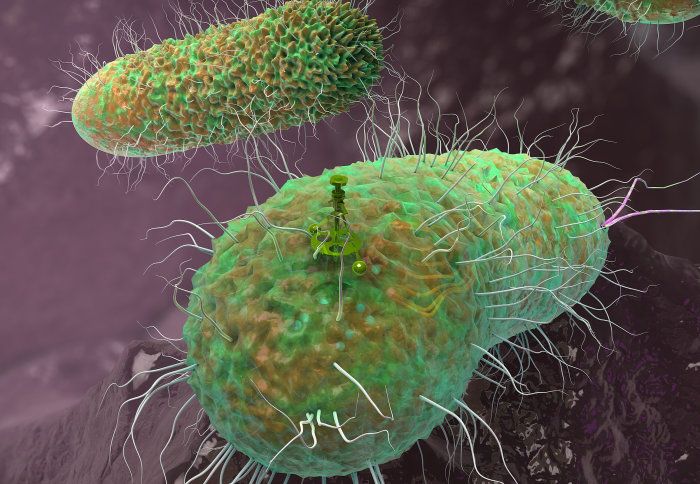
E. coli rewired to control growth as experts let them make proteins for medicine
Experts have equipped biotech workhorse bacteria with feedback control mechanism to balance growth with making protein products.
Medicines like insulin and interferon are manufactured using genetically engineered bacteria, such as E. coli. E. coli grow quickly and can be given DNA that instructs them to make proteins used in medicines and other materials.
However, the extra burden of producing new proteins hampers bacterial growth, which slows production. Solving this problem is an area of great interest for biotechnology and synthetic biology.
Deniers and Critics of AI Will Only Be Left Behind
This month I’m participating in Cato Institute’s Cato Unbound discussion. Cato is one of the world’s leading think tanks. Here’s my new and second essay for the project:
Professor David D. Friedman sweeps aside my belief that religion may well dictate the development of AI and other radical transhumanist tech in the future. However, at the core of a broad swath of American society lies a fearful luddite tradition. Americans—including the U.S. Congress, where every member is religious—often base their life philosophies and work ethics on their faiths. Furthermore, a recent Pew study showed 7 in 10 Americans were worried about technology in people’s bodies and brains, even if it offered health benefits.
It rarely matters what point in American history innovation has come out. Anesthesia, vaccines, stem cells, and other breakthroughs have historically all battled to survive under pressure from conservatives and Christians. I believe that if formal religion had not impeded our natural secular progress as a nation over the last 250 years, we would have been much further along in terms of human evolution. Instead of discussing and arguing about our coming transhumanist future, we’d be living in it.
Our modern-day battle with genetic editing and whether our government will allow unhindered research of it is proof we are still somewhere between the Stone Age and the AI Age. Thankfully, China and Russia are forcing the issue, since one thing worse than denying Americans their religion is denying them the right to claim the United States is the greatest, most powerful nation in the world.
A general theme of government regulation in American science is to rescind red tape and avoid religious disagreement when deemed necessary to remain the strongest nation. As unwritten national policy, we broadly don’t engage science to change the human species for the better. If you doubt this, just try to remember the science topics discussed between Trump and Clinton in the last televised presidential debates. Don’t remember any? No one else does either, because mainstream politicians regretfully don’t talk about science or take it seriously.
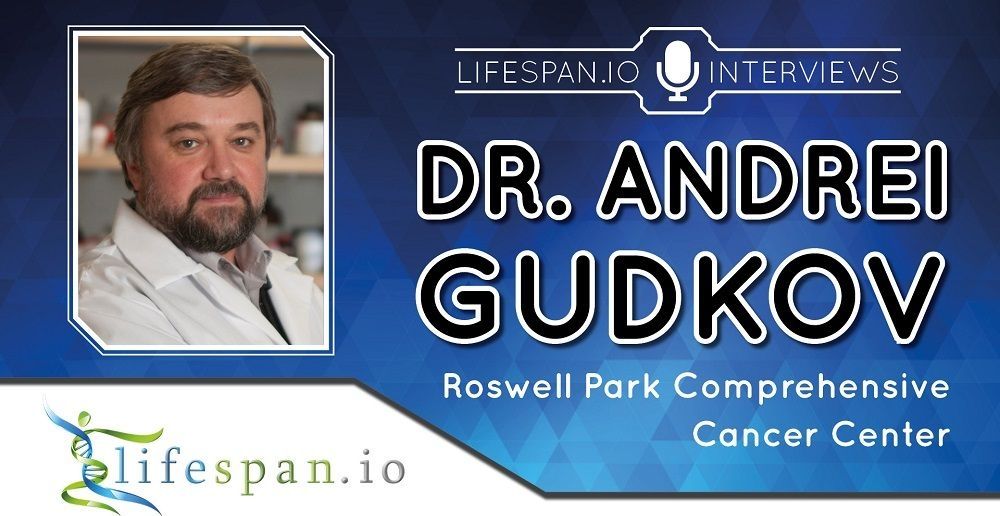
Interventions to extend healthspan and lifespan 2018- Dr. Andrei Gudkov
Elena Milova is at the Interventions to extend healthspan and lifespan 2018 conference in Kazan this week. This is an important conference in the aging research field, and it includes a variety of leading experts giving talks about their research. One of these experts is Andrei Gudkov, and Elena had the opportunity to talk with him about his research.
Dr. Andrei V. Gudkov, Ph.D., D.Sci, is a Scientific Co-Founder of Cleveland Biolabs, Inc. and has been its Chief Scientific Officer since June 2003. Dr. Gudkov serves as Chief Scientific Officer and Founder at Everon Biosciences, Inc. He co-founded Mega Biotech & Electronics Co., Ltd. and serves as its Chief Scientific Officer. Dr. Gudkov serves as Senior Vice President of Basic Science at Roswell Park Cancer Institute. He has over 25 years of experience in biomedical research. Prior to 1990, he worked with the National Cancer Research Center in Moscow (USSR), where he led a broad research program focused on virology and cancer drug resistance.
In 1990, he re-established his lab at the University of Illinois at Chicago, where he became a tenured faculty member in the Department of Molecular Genetics. In 1999, he defined p53 as a major determinant of cancer treatment side effects and suggested this protein as a target for therapeutic suppression. In 2001, Dr. Gudkov moved his laboratory to the Lerner Research Institute at the Cleveland Clinic Foundation, where he served as Chairman of the Department of Molecular Biology and Professor of Biochemistry at Case Western Reserve University. He has served as a Director of Cleveland Biolabs, Inc. since June 2003.