Toggle light / dark theme

Turning back the aging clock

SENS makes official comment on the excellent news about Mitochondrial repair from UCLA and Caltech.


So the big news is progress has been made on Mitochondrial repair. Our resident expert at the SENS Research Foundation, Dr. Matthew O’Connor of the MitoSENS project had this to say about the exciting news:

“New work from UCLA and Caltech has shown that a genetic pathway can be harnessed to selectively remove mutant mitochondria from the muscles of fruit flies. This work from Kandul et al is exciting because it raises the possibility of someday finding a way to control this genetic pathway in such a way to selectively delete mutant mitochondria. Further they did it in live flies in a tissue (muscle) where we are especially concerned about the impact of mitochondrial DNA mutations. Our ability to selectively control genetic pathways in non-genetically engineered animals (such as humans) is, however, extremely limited so it may be a long time before any clinical benefits can be realized from this research.” — Dr. Matthew O’Connor SRF

#aging #crowdfundthecure

New era of ‘cut and paste’ humans close as man injected with genetically-edited blood

A world where DNA can be rewritten to fix deadly diseases has moved a step closer after scientists announced they had genetically-edited the cells of a human for the first time using a groundbreaking technique.

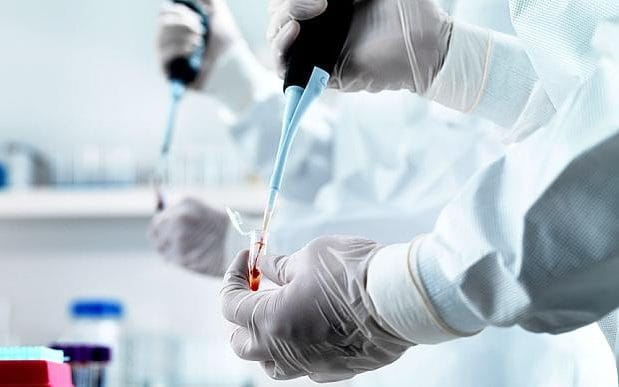
A man in China was injected with modified immune cells which had been engineered to fight his lung cancer. Larger trials are scheduled to take place next year in the US and Beijing, which scientists say could open up a new era of genetic medicine.

The technique used is called Crispr, which works like tiny molecular scissors snipping away genetic code and replacing it with new instructions to build better cells.

Synthetic Cells to Isolate Genetic Circuits Created

Luv it! Wait until we make the marriage of QC meets Synbio — QC for the infrastructure and communications, and Synbio makes us all connected.


Cambridge, MA (Scicasts) — Synthetic biology allows scientists to design genetic circuits that can be placed in cells, giving them new functions such as producing drugs or other useful molecules. However, as these circuits become more complex, the genetic components can interfere with each other, making it difficult to achieve more complicated functions.

MIT researchers have now demonstrated that these circuits can be isolated within individual synthetic “cells,” preventing them from disrupting each other. The researchers can also control communication between these cells, allowing for circuits or their products to be combined at specific times.

“It’s a way of having the power of multicomponent genetic cascades, along with the ability to build walls between them so they won’t have cross-talk. They won’t interfere with each other in the way they would if they were all put into a single cell or into a beaker,” says Edward Boyden, an associate professor of biological engineering and brain and cognitive sciences at MIT. Boyden is also a member of MIT’s Media Lab and McGovern Institute for Brain Research, and an HHMI-Simons Faculty Scholar.

DNA-editing breakthrough could fix ‘broken genes’ in the brain, delay ageing and cure incurable diseases

Scientists have discovered a new way to edit DNA that could fix “broken genes” in the brain, cure previously incurable diseases and potentially even extend the human lifespan.

The breakthrough – described as a “holy grail” of genetics – was used to partially restore the sight of rats blinded by a condition which also affects humans.

Previously researchers were not able to make changes to DNA in eye, brain, heart and liver tissues.

CRISPR gene-editing tested in a person for the first time

I said over a year ago that if the US will not do it China will. Whilst there was talk about a moratorium on CRISPR in the US the Chinese were forging ahead and taking steps to become a world leader in biotech. Well here we are, they have deployed CRISPR in humans for cancer and this is only the start. As George Church advocates, we should have appropriate engineering safety measures in place but we should push ahead and do these things.


The move by Chinese scientists could spark a biomedical duel between China and the United States.

/* */