Toggle light / dark theme

Cisco finally confirms attackers exploiting Unified CM flaw

Cisco confirmed that attackers are now exploiting a Unified Communications Manager (Unified CM) vulnerability patched in early June.

Unified CM (formerly known as Cisco CallManager) is the central control system for Cisco IP telephony systems, handling call routing, device management, and telephony features.

Threat actors without privileges can exploit the vulnerability (CVE-2026–20230) remotely in low-complexity server-side request forgery (SSRF) attacks by sending a crafted HTTP request.

A Zen Priest explains how spirituality will evolve in the future

Love it or hate it, the world’s religions are in no danger of disappearing any time soon. But that doesn’t mean religious and spiritual sensibilities aren’t going to evolve. To learn more about religion’s future, we talked to Michael LaTorra. By day, he’s a mild-mannered Assistant Professor of English at New Mexico State University, and by night he’s a black-garbed Zen priest at the Zen Center of Las Cruces.

He is also the author of A Warrior Blends with Life: A Modern Tao, a book about spirituality in modern life.

LaTorra: The old ways are dying. The largest world religions, Christianity and Islam, continue to grow in membership. But internally, they are riven with factionalism. People may become members of these religions because they are seeking God or maybe just community fellowship or simply because they were born into families associated with those religions. What some people find, after a while, is that their religion has many dogmatic beliefs and rules for living that sometimes do not fit with what seems like a good life, a fulfilling life. Nevertheless, some people remain affiliated with a religion due to social pressure that would make leaving very difficult. The lesson to draw from this is that people belong to religions for lots of different reasons, and not always because they believe every dogma in it. Often times, people stay in a religion because leaving it would put them at odds with their families and friends.


Misinformation exploits outrage to spread online

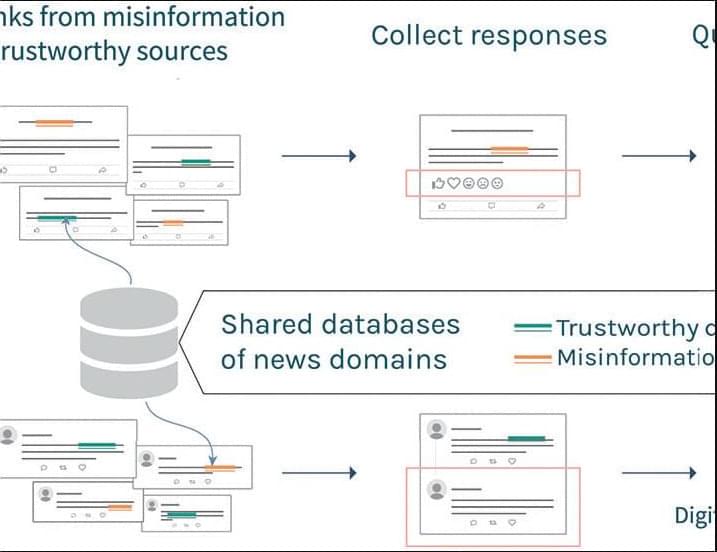
We tested a hypothesis that misinformation exploits outrage to spread online, examining generalizability across multiple platforms, time periods, and classifications of misinformation. Outrage is highly engaging and need not be accurate to achieve its communicative goals, making it an attractive signal to embed in misinformation. In eight studies that used US data from Facebook (1,063,298 links) and Twitter (44,529 tweets, 24,007 users) and two behavioral experiments (1475 participants), we show that (i) misinformation sources evoke more outrage than do trustworthy sources; (ii) outrage facilitates the sharing of misinformation at least as strongly as sharing of trustworthy news; and (iii) users are more willing to share outrage-evoking misinformation without reading it first.