SMOKE#SCREEN uses fake Adobe and Zoom updates, document lures, and trusted cloud services to install ScreenConnect for persistent remote access.

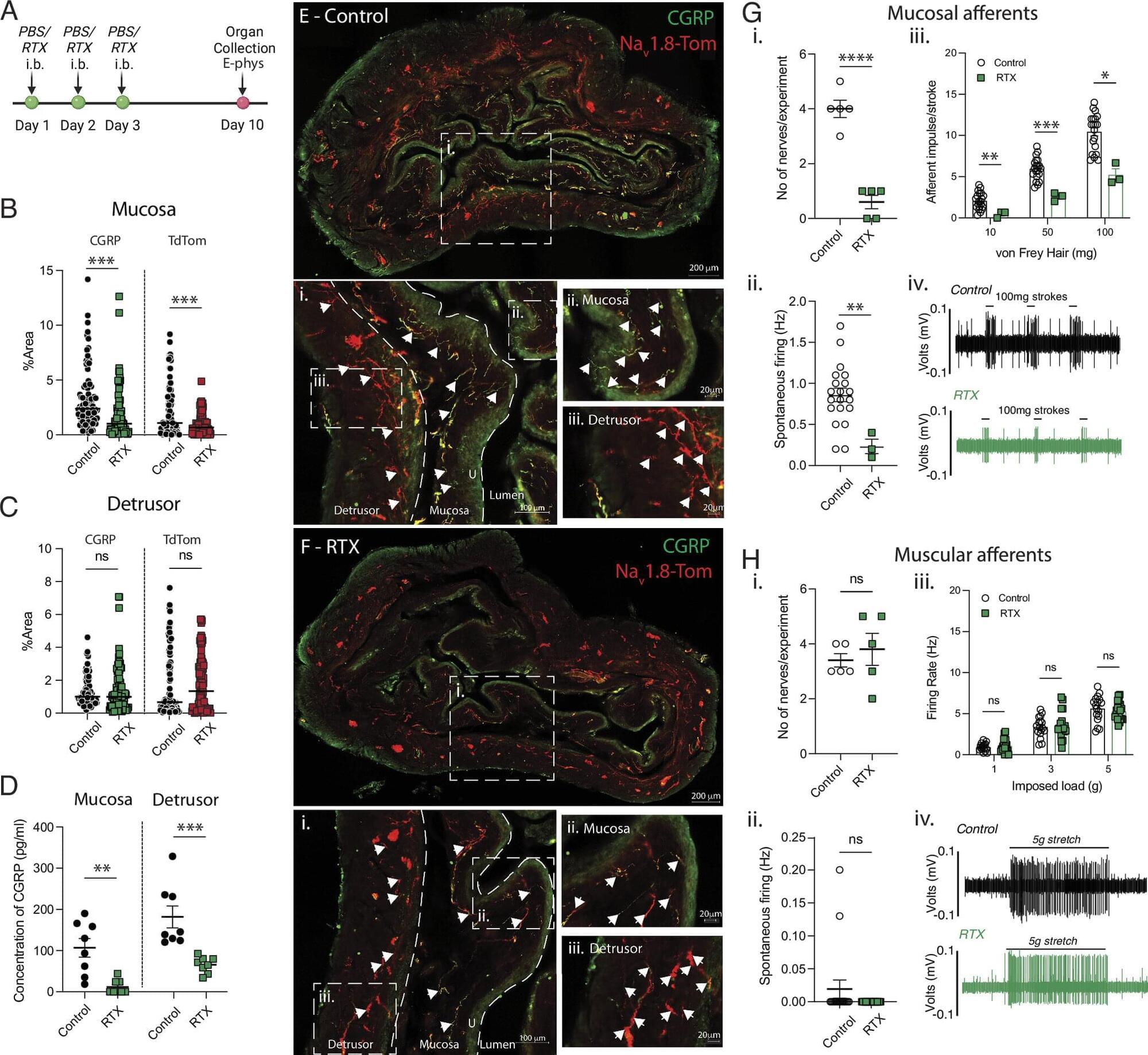
Australian researchers have discovered a previously overlooked group of bladder nerves that help detect urinary tract infections (UTIs) and trigger the body’s response to clear them, providing a potential new target for future bladder pain therapies.
The study shows that bladder nerves located close to the bladder lining act as frontline infection sensors, helping the body recognize UTIs and trigger responses that reduce the severity and spread of infection. The work is published in the journal Proceedings of the National Academy of Sciences.
UTIs are among the most common bacterial infections worldwide, with more than 400 million cases reported every year. Nearly one in three women will experience UTIs before the age of 24, and many older people and those with bladder issues from spinal cord injuries can experience multiple UTIs in a single year.
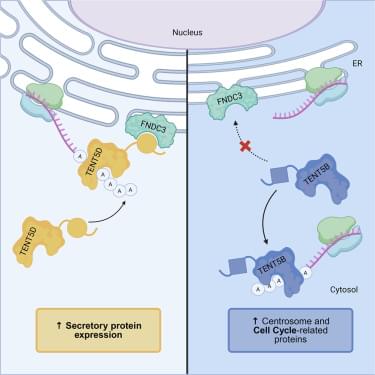
Viviani et al. identify the molecular determinants that recruit TENT5 poly(A) polymerases to the endoplasmic reticulum. A divergent C-terminal region mediates interaction with FNDC3 proteins, enabling ER localization and broad stabilization of transcripts encoding secretory pathway components. This spatial mechanism explains functional divergence among TENT5 paralogs.
We’re just waiting for the right time.
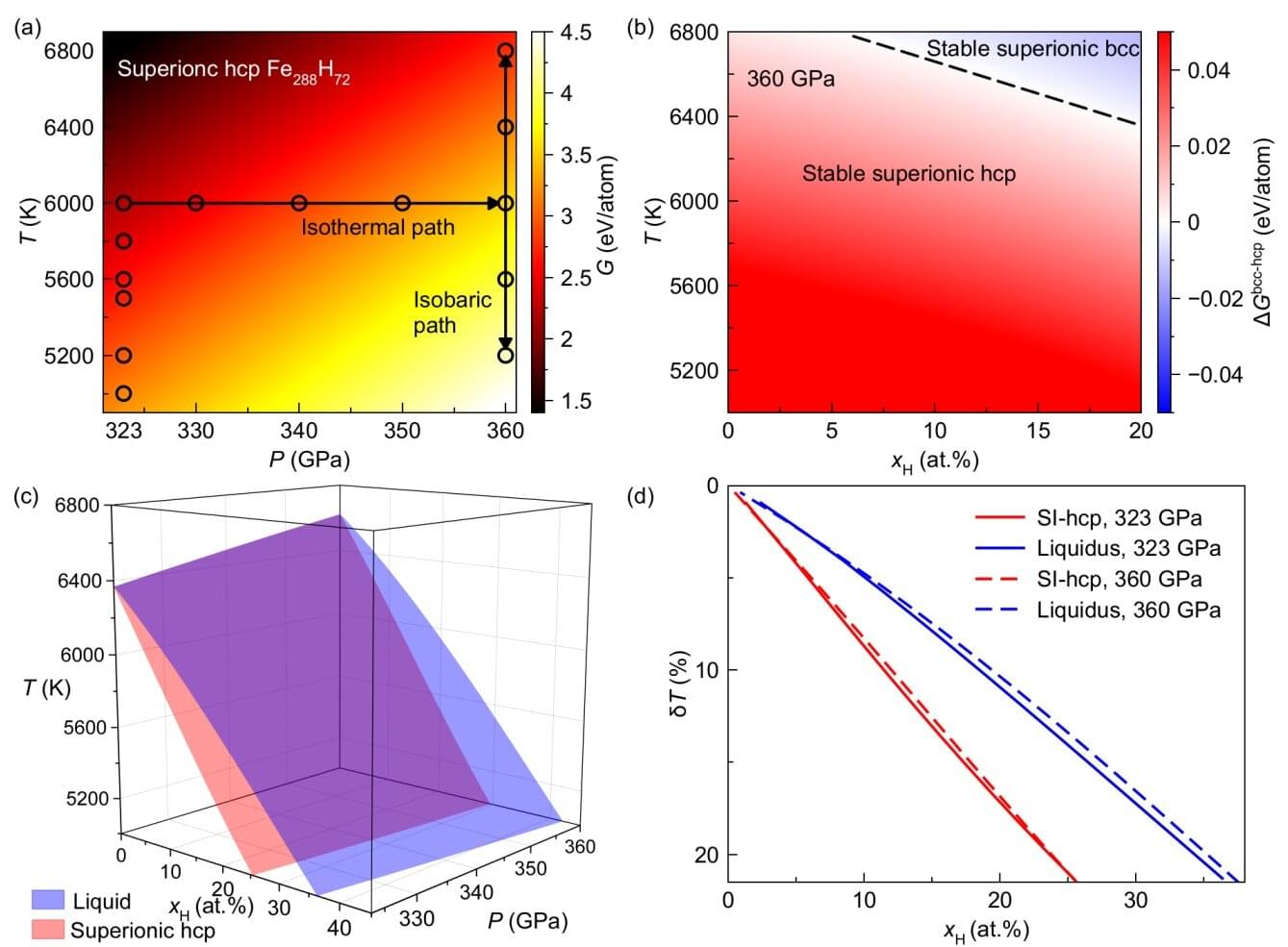
While Earth’s core consists mostly of iron, its density implies that lighter elements are also mixed in. Because hydrogen is abundant in the universe and can mix with iron under certain conditions, scientists suspect it makes up part of the lighter-element composition. Data from earthquakes suggest the inner part of the core also changes with depth, but scientists aren’t sure exactly how this occurs. Now, a new study published in the Proceedings of the National Academy of Sciences indicates that hydrogen likely exists in a gradient within the inner and outer core that arises from thermodynamic equilibrium.
Hydrogen can dissolve into iron under extreme conditions, like the high-temperature, high-pressure conditions in Earth’s core. In the inner core, hydrogen may become superionic, allowing it to move through a solid iron crystal structure almost like a liquid. This superionic state does not behave like a conventional solid and can affect the thermodynamic properties of different phases. It’s thought that the inner core has a hexagonal close-packed (hcp) crystal structure, but other elements can take on a body-centered cubic (bcc) phase under similar conditions.
While it’s believed that hydrogen exists in a superionic state in an hcp lattice, it’s not clear whether hydrogen can also exist as a superionic species in a bcc lattice. The study authors say it’s also unclear how hydrogen might influence the competition between hcp and bcc phases in the inner core. It’s also not clear how or whether hydrogen abundance changes between the liquid outer core and the solid inner core. Previous modeling attempts have yielded conflicting results.
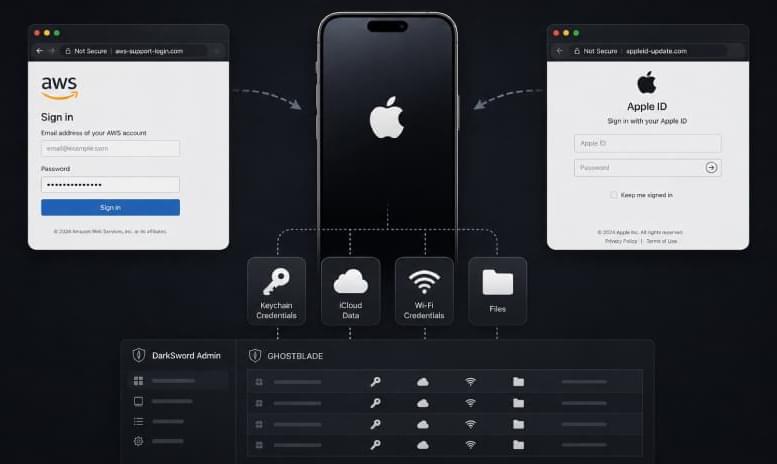
An unknown Chinese-speaking threat actor has been observed running a campaign targeting Apple iOS devices by leveraging a publicly leaked version of the DarkSword exploit kit.
Attack surface management platform Censys said it identified the threat actor running more than 100 web properties, most of which are fake Amazon Web Services (AWS) sign-in pages on a domain that also hosts the exploit toolkit.
“The hosting concentrates in Hong Kong but reaches into Japan, the United States, and Europe,” Censys researcher Aidan Holland said in an analysis published on July 31, 2026.
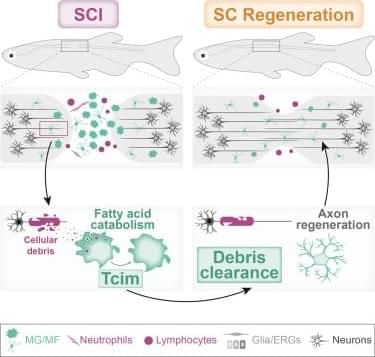
Klatt Shaw et al. report that transient activation of zebrafish macrophages directs spontaneous regeneration after spinal cord injury. By comparing regenerative and non-regenerative vertebrates, they identify Tcim as a central regulator of lipid metabolism and phagocytosis following injury. Tcim expression enhances lipid and debris clearance in zebrafish and mouse macrophages.