Toggle light / dark theme

Discovery of hidden faults sheds light on mystery of ‘slow earthquakes’

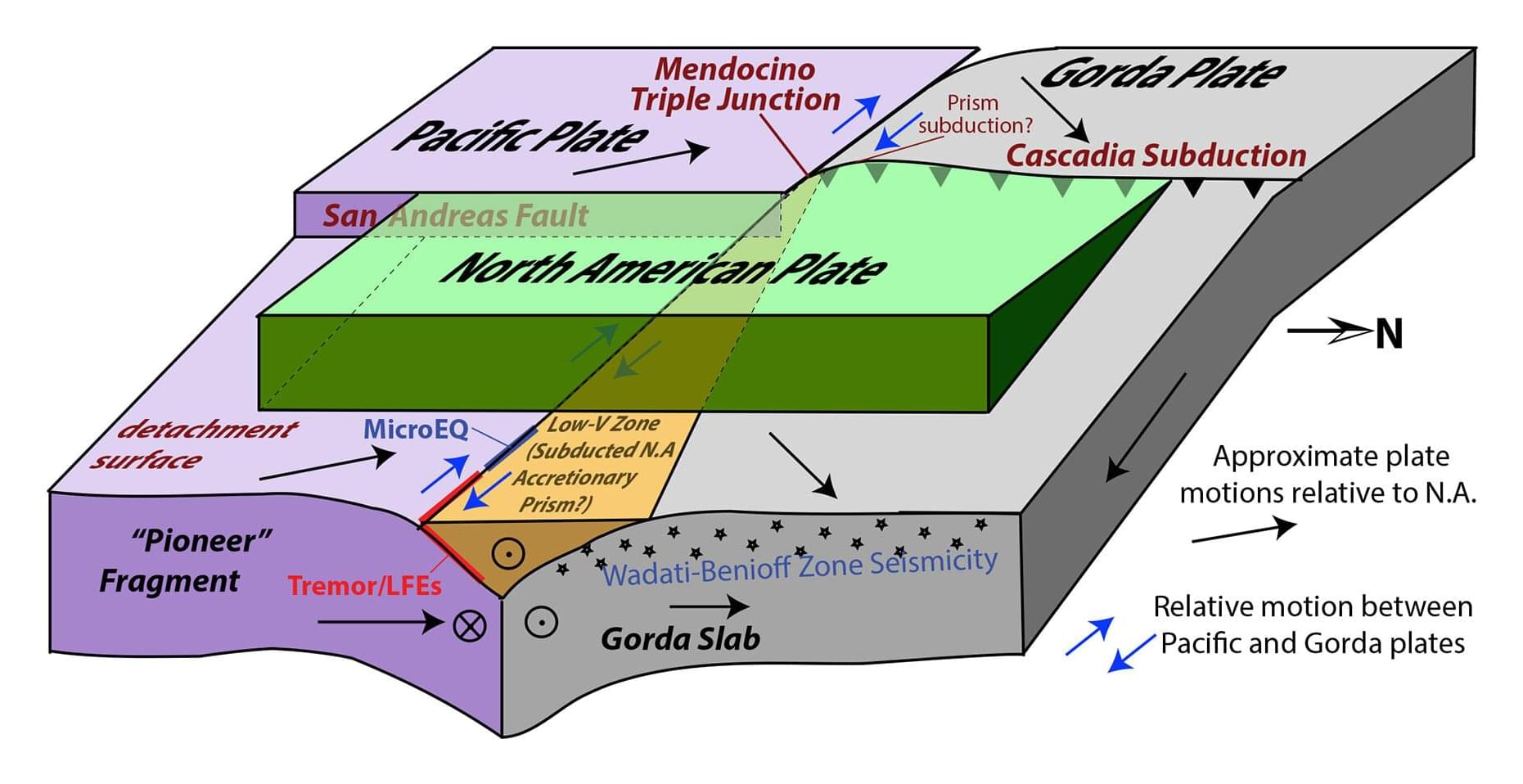
Scientists have uncovered a key piece of the puzzle behind the unusual “slow earthquakes” occurring off the east coast of New Zealand’s North Island.

A new international study, published in Science Advances, identifies hidden fault structures called polygonal fault systems (PFSs) as a major influence on the behavior of the northern Hikurangi subduction zone.

These shallow geological features, found in sediments entering the subduction zone, appear to play a critical role in where and how slow slip earthquakes occur.

Triangle structured illumination microscopy developed for sustained live-cell super-resolution imaging

Structured illumination microscopy (SIM) is the most preferable system for live-cell super-resolution imaging. It enables the observation of intricate subcellular dynamics. However, conventional SIM has long relied on the complex rotation of one-dimensional stripe illumination at three angles, requiring nine exposures to reconstruct a uniform super-resolution image. This greatly hinders imaging speed and causes unnecessary photobleaching, limiting the available information flux in live-cell imaging.

Professor Xi Peng’s team from the College of Future Technology at Peking University has developed a triangle-beam interference SIM (3I-SIM) that enables gentler, sustained super-resolution live-cell imaging. This novel method upgrades the super-resolution imaging to an unprecedented kilo-Hz speed and half-day-long duration, enabling the study of complex and rapid biological processes with higher data throughput.

The work is published in Nature Photonics.

NASA Probe Could Intercept Interstellar Comet, Scientists Say

Astronomers at the Pan-STARRS Observatory in Hawaii made history in 2017 when they detected ’Oumuamua, the first interstellar object (ISO) ever observed.

Two years later, the interstellar comet 2I/Borisov became the second ISO ever observed. And on July 1st, 2025, the Asteroid Terrestrial-impact Last Alert System (ATLAS) in Rio Hurtado detected a third interstellar object in our Solar System, the comet now known as 3I/ATLAS (or C/2025 N1 ATLAS).

Like its predecessors, the arrival of this object has fueled immense scientific interest and led to proposals for missions that could rendezvous with future ISOs.

/* */