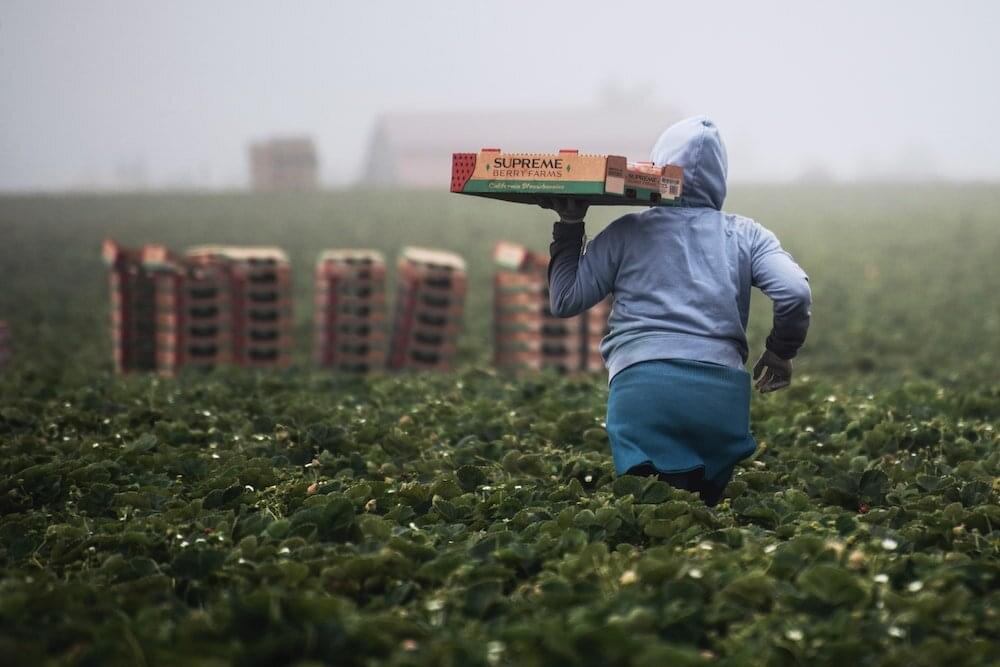
Food recalls could be a thing of the past if artificial intelligence (AI) is utilized in food production, according to a recent study from UBC and the University of Guelph.
The average cost of a food recall due to bacterial or microbial contamination, like E. coli, is US$10 million according to study co-author Dr. Rickey Yada, a professor and the dean of the UBC faculty of land and food systems.
We spoke with Dr. Yada about how AI can help optimize the current systems used in the food processing industry, and how it can help make our food supply safer.
The challenge: Just 100 years ago, vegetable oils were practically nonexistent in the human diet. Today, they’re a major part of it: 740 million acres — an area that would cover 90% of India — are dedicated to growing soybeans, palm trees, and other oilseed crops.
While these cooking oils can make food extra tasty, oilseed crop production releases greenhouse gasses, contributes to biodiversity loss, and consumes freshwater that could otherwise be used for drinking or to grow other food.
Cultured oil: Instead of dedicating land and other farming resources to oilseed crops, alt-food startup Zero Acre Farms wants us to start using a cultured oil it produces through fermentation.
From Alice in Wonderland to The Lord of the Rings, our stories have long depicted magical worlds hidden underground. Yet the most magical account of all might turn out to be reality, as scientists reveal a complex network of reactions between plants, fungi, bacteria, and more, interacting below the soil surface to support the foundations of life. At USDA’s Agricultural Research Service, one part of the research into this intricate underground world involves identifying techniques that will keep nitrogen—a vital element for plant growth—in the soil.
Like all good stories, this one has heroes and villains whose actions can wreak havoc or save us. When properly sequestered underground, some forms of nitrogen like ammonium and nitrate perform heroic feats, fertilizing the plants that we depend on for our food. Yet when they escape the soil in the wrong ways, they morph into closely-related super-villains malignant forms of nitrogen like nitrous oxide that, in the atmosphere, is 300 times more powerful than carbon dioxide in trapping heat, and lingers far longer. In fact, N2O is the largest source of greenhouse gas from agriculture. Escaped nitrogen can also get into groundwater or run off fields and into waterways; once there, it can fuel algae blooms in coastal waters that consume oxygen, harming fish and other aquatic creatures.
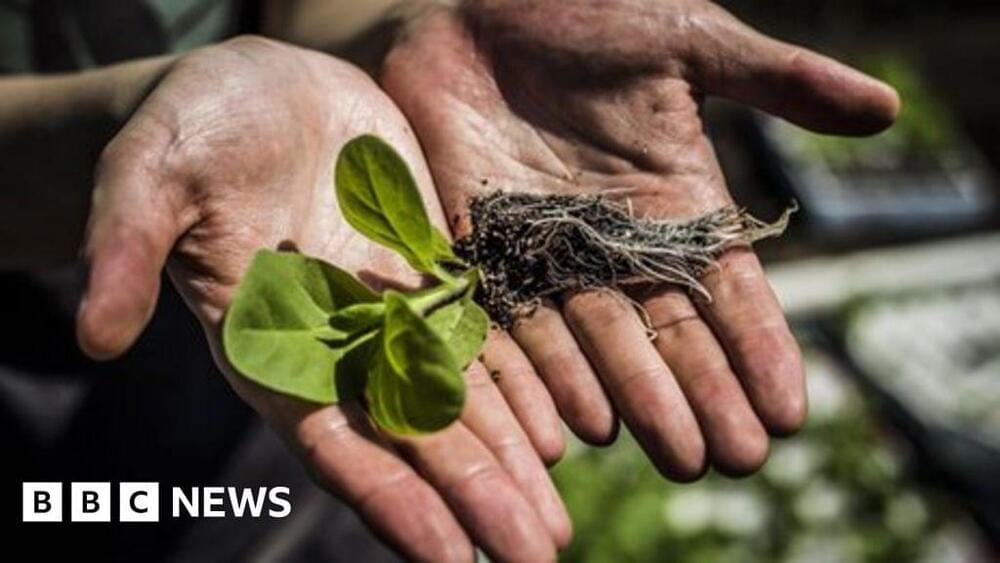
To keep nitrogen where it can do us the most good, a team of ARS scientists is developing new techniques for cover crop breeders. Their goal: to help the breeders identify plants whose extended underground root systems (known as the rhizosphere) are most effective at keeping nitrogen in the soil. The root systems, which include microbes that interact with the plants, secure nitrogen via a process called biological nitrification inhibition. Nitrification is a process in which nitrogen is transformed from one form, ammonium, to other forms, like nitrate. When the plants’ root systems inhibit that process, the nitrogen remains safely within the soil, benefiting plants—and those who eat them.
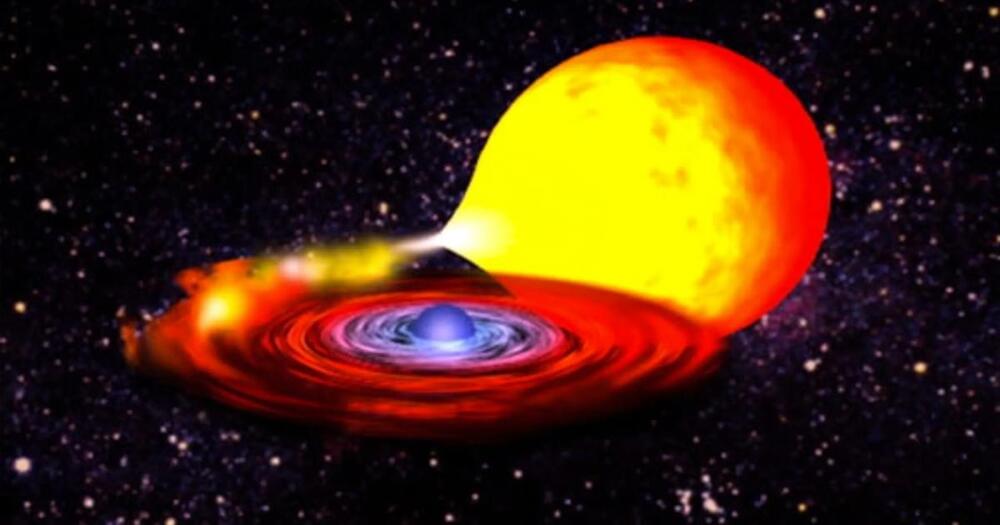
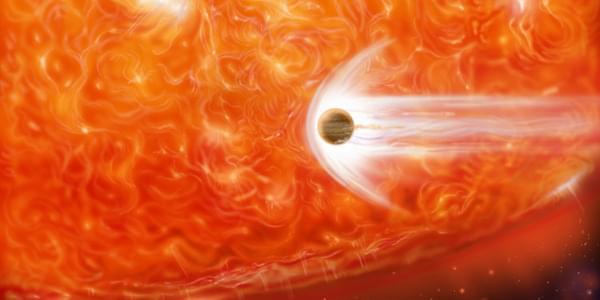
You’ve likely heard the story by now: As the Sun grows old, it will swell up into a red giant. And as it expands, it will certainly swallow Mercury and Venus — and potentially Earth and even Mars — along the way.
This process, called planetary engulfment, is likely common across the galaxy, as aging stars eat up their own planets (and even companion stars or brown dwarfs). But astronomers still don’t understand exactly what happens to an unlucky planet that suddenly finds itself inside its parent star. Now, complex models called hydrodynamical simulations are shedding some light on the phenomenon, showing that factors such as a planet’s mass and the age of its star when it’s engulfed can have profound effects on what happens as the world is overtaken.
Researchers have optically synced the motion of two micrometer-sized objects separated by 5 km, a distance around a hundred million times longer than previous demonstrations.
Simulations indicate that plankton can gain quicker access to food by riding ascending turbulent ocean currents.
Simulations indicate that plankton can gain quicker access to food by riding ascending turbulent ocean currents.
Turbulence can be a nuisance for planes and boats, but for marine plankton, researchers have now shown that turbulence can be a boon. In simulations, they found that plankton that can hitch rides on the right turbulent ocean plumes can double their swimming speeds [1]. The researchers say that this ability could help a variety of tiny ocean organisms quickly rise to the water’s surface to reach food at night before returning to its murky depths to escape daytime predators.
Plankton consist of a wide variety of small and microscopic organisms that drift in the ocean. Unable to propel themselves very effectively, they travel by riding ocean currents. For example, the planktonic larvae of the Chesapeake blue crab ride vertical and horizontal water currents when migrating toward the shore and up an estuary.
Many say that human beings have destroyed our planet. Because of this these people are endeavoring to save it through the help of artificial intelligence. Famine, animal extinction, and war may all be preventable one day with the help of technology.
The Age of A.I. is a 8 part documentary series hosted by Robert Downey Jr. covering the ways Artificial Intelligence, Machine Learning and Neural Networks will change the world.
0:00 Poached. 8:32 Deploying Cameras. 11:47 Avoiding Mass Extinction. 23:04 Plant Based Food. 26:16 Protecting From Nature. 36:06 Preventing Calamity. 41:41 DARPA