Toggle light / dark theme

Researchers develop new method to program nanoparticle organization in polymer thin films

Controlling the organization of nanoparticles into patterns in ultrathin polymer films can be accomplished with entropy instead of chemistry, according to a discovery by Dr. Alamgir Karim, UA’s Goodyear Tire and Rubber Company Professor of Polymer Engineering, and his student Dr. Ren Zhang. Polymer thin films are used in a variety of technological applications, for example paints, lubricants, and adhesives. Karim and Zhang have developed an original method—soft-confinement pattern-induced nanoparticle segregation (SCPINS)—to fabricate polymer nanocomposite thin films with well-controlled nanoparticle organization on a submicron scale. This new method uniquely controls the organization of any kind of nanoparticles into patterns in those films, which may be useful for applications involving sensors, nanowire circuitry or diffraction gratings, with proper subsequent processing steps like thermal or UV sintering, that are likely required but the self-organization into directed patterns.

This work, “Entropy-driven segregation of -grafted nanoparticles under confinement,” has been published in the February 2017 issue of Proceedings of the National Academy of Sciences (PNAS).

Intuitively, entropy is associated with disorder of a system. However, for colloidal matter, it has been shown that a system can experience transitions which increase both entropy and visible order. Inspired by this observation, Karim and Zhang investigated the role of entropy in directed organization of polymer-grafted nanoparticles (PGNPs) in polymer . By simply imprinting the blend films into patterned mesa-trench regions, nanoparticles are spontaneously enriched within mesas, forming patterned microdomain structures which coincide with the topographic pattern. This selective segregation of PGNPs is induced by entropic penalty due to the alteration of the grafted chain conformation when confined in ultrathin trench regions.

Scientists reveal new super-fast form of computer that ‘grows as it computes’

Researchers from The University of Manchester have shown it is possible to build a new super-fast form of computer that “grows as it computes”.

Professor Ross D King and his team have demonstrated for the first time the feasibility of engineering a nondeterministic universal Turing machine (NUTM), and their research is to be published in the prestigious Journal of the Royal Society Interface.

The theoretical properties of such a computing machine, including its exponential boost in speed over electronic and quantum computers, have been well understood for many years – but the Manchester breakthrough demonstrates that it is actually possible to physically create a NUTM using DNA molecules.

NASA Wants to Launch a Giant Magnetic Field to Make Mars Habitable

NASA scientists have proposed a bold plan that could give Mars its atmosphere back and make the Red Planet habitable for future generations of human colonists.

By launching a giant magnetic shield into space to protect Mars from solar winds, the space agency says we could restore the Red Planet’s atmosphere, and terraform the Martian environment so that liquid water flows on the surface once again.

Mars may seem like a cold, arid wasteland these days, but the Red Planet is thought to have once had a thick atmosphere that could have maintained deep oceans filled with liquid water, and a warmer, potentially habitable climate.

In the face of danger: ESCHER, Virginia Tech’s firefighting robot primed for extreme heat conditions

Virginia Tech’s Visual Arts Department and Engineering Department have been joining forces to design ESCHER, a firefighting robot.

ESCHER was originally created at the beginning of 2015 in the Terrestrial Robotics Engineering and Controls Laboratory. ESCHER is short for Electronic Series Compliant Humanoid for Emergency Response.

“The special application for this project is the idea that ESCHER could go on naval ships and fight fires and go places that would normally be hazardous to humans,” said Meaghan Dee, assistant professor and chair of Visual Communications. “If you think of something like the Fukushima Disaster, you could have just sent in a robot, and that’s what these emergency robots are designed to do.”

Novel 3D manufacturing leads to highly complex, bio-like materials

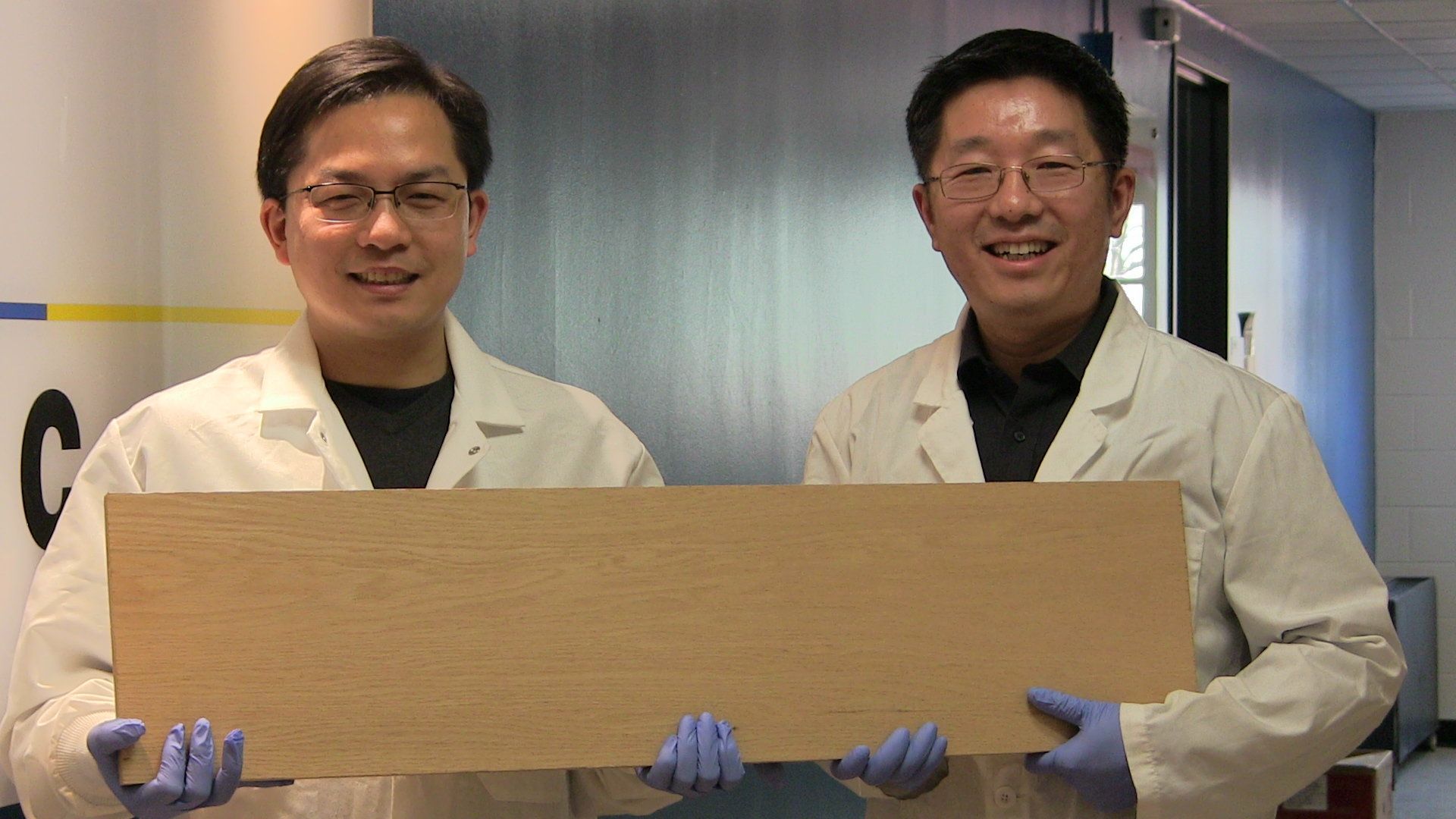
Washington State University researchers have developed a unique, 3D manufacturing method that for the first time rapidly creates and precisely controls a material’s architecture from the nanoscale to centimeters. The results closely mimic the intricate architecture of natural materials like wood and bone.

They report on their work in the journal Science Advances and have filed for a patent.

The work has many high-tech engineering applications.

Space Mining: Luxembourg and lunar robotic company ispace shoot for the moon

(sth/T.L.) – Luxembourg’s government and Tokyo-based space lunar robotic exploration company ispace Inc. on Thursday signed a Memorandum of Understanding (MoU) in the context of the SpaceResources.lu initiative with focus on developing miniaturized technology to discover, map, and utilize resources on the Moon.

Japanese start-up ispace was created by Hakuto, a finalist team of Google’s prestigious innovation competition Google Lunar XPRIZE. The company already works together with the Luxembourg Institute of Science and Technology (LIST) and will continue to do so.

Within the framework of this MoU, ispace intends to focus, through its new European office based in Luxembourg, on business development, R&D and on several key technical services, including payload development, engineering and integration.

Researchers coax colloidal spheres to self-assemble into photonic crystals

Colloidal particles, used in a range of technical applications including foods, inks, paints, and cosmetics, can self-assemble into a remarkable variety of densely-packed crystalline structures. For decades, though, researchers have been trying to coax colloidal spheres to arranging themselves into much more sparsely populated lattices in order to unleash potentially valuable optical properties. These structures, called photonic crystals, could increase the efficiency of lasers, further miniaturize optical components, and vastly increase engineers’ ability to control the flow of light.

A team of engineers and scientists from the NYU Tandon School of Engineering Department of Chemical and Biomolecular Engineering, the NYU Center for Soft Matter Research, and Sungkyunkwan University School of Chemical Engineering in the Republic of Korea report they have found a pathway toward the self-assembly of these elusive photonic crystal structures never assembled before on the sub-micrometer scale (one micrometer is about 100 times smaller than the diameter of a strand of human hair).

The research, which appears in the journal Nature Materials, introduces a new design principle based on preassembled components of the desired superstructure, much as a prefabricated house begins as a collection of pre-built sections. The researchers report they were able to assemble the colloidal spheres into diamond and pyrochlore crystal structures — a particularly difficult challenge because so much space is left unoccupied.

Super resolution imaging helps determine a stem cell’s future

Scientists at Rutgers and other universities have created a new way to identify the state and fate of stem cells earlier than previously possible.

Understanding a stem cell’s fate—the type of cell it will eventually become—and how far along it is in the process of development can help scientists better manipulate for .

The beauty of the method is its simplicity and versatility, said Prabhas V. Moghe, distinguished professor of biomedical engineering and chemical and biochemical engineering at Rutgers and senior author of a study published recently in the journal Scientific Reports. “It will usher in the next wave of studies and findings,” he added.

Researchers find new clues for nuclear waste cleanup

With Hanford Site; I would hope and imagine so after all this time.


A Washington State University study of the chemistry of technetium-99 has improved understanding of the challenging nuclear waste and could lead to better cleanup methods.

The work is reported in the journal Inorganic Chemistry. It was led by John McCloy, associate professor in the School of Mechanical and Materials Engineering, and chemistry graduate student Jamie Weaver. Researchers from Pacific Northwest National Laboratory (PNNL), the Office of River Protection and Lawrence Berkeley National Laboratory collaborated.

Technetium-99 is a byproduct of plutonium weapons production and is considered a major U.S. challenge for environmental cleanup. At the Hanford Site nuclear complex in Washington state, there are about 2,000 pounds of the element dispersed within approximately 56 million gallons of in 177 storage tanks.

/* */