Otherlab, an engineering R&D lab based in San Francisco, have created the world’s most advanced industrial paper airplane. Meet the APSARA Gilder.
Sharing in case folks would like to listen in.
Microsoft’s Station Q was founded in 2006. The focus of the team has always been topological quantum computing. By taking a full systems architecture approach, we have reached the point where we now able to start engineering a scalable quantum computer. The goal is to be able to solve major problems in areas of interest (e.g., Chemistry, Materials and Machine Learning). This talk will focus on the types of applications that we will be trying to solve as well as the unique approach to quantum computation that we’ve developed. For reference, see:
Current Approach: https://arxiv.org/abs/1610.05289 Chemistry Application: https://arxiv.org/abs/1605.03590 Other papers: https://arxiv.org/find/all/1/all:+wecker_d/0/1/0/all/0/1
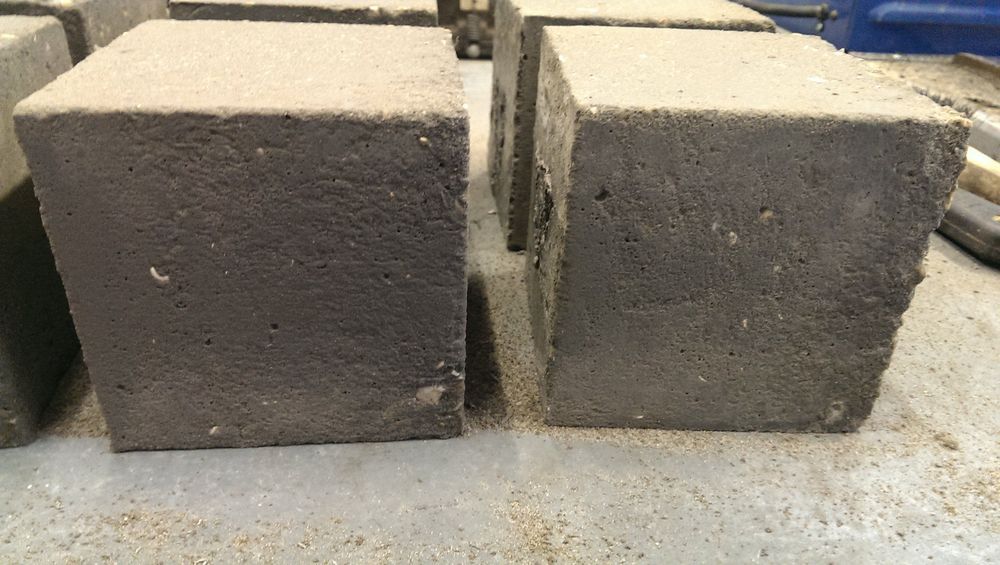
NASA has enlisted a professor from the University of Central Florida (UCF) in order to find a way of 3D printing structures on Mars.
Pegasus Professor Sudipta Seal, interim chair of UCF’s Materials Science and Engineering program is looking at how metals can be extracted from Martian soil. Speaking about the project, Seal said,
It’s essentially using additive-manufacturing techniques to make constructible blocks. UCF is collaborating with NASA to understand the science behind it.
“Launched in 2007, the Fuller Challenge has defined an emerging field of practice: the whole systems approach to understanding and intervening in complex and interrelated crises for wide-scale social and environmental impact. The entry criteria have established a new framework through which to identify and measure effective, enduring solutions to global sustainability’s most entrenched challenges. The rigorous selection process has set a unique standard, gaining renown as “Socially-Responsible Design’s Highest Award.”
The Fuller Challenge attracts bold, visionary, tangible initiatives focused on a well-defined need of critical importance. Winning solutions are regionally specific yet globally applicable and present a truly comprehensive, anticipatory, integrated approach to solving the world’s complex problems.”
Deadline is March 31, 2017
Ford is investing $1 billion in a secretive artificial intelligence startup headed by former Google and Uber execs to advance its self-driving car efforts.
The startup, Argo AI, was founded by Bryan Salesky, the former director of hardware for Google’s self-driving-car efforts, and Peter Rander, Uber’s engineering lead at its autonomous cars center.
The $1 billion investment will be spread out over five years as Ford looks to commercialize its self-driving technology by 2021.
NASA has selected proposals for the creation of two multi-disciplinary, university-led research institutes that will focus on the development of technologies critical to extending human presence deeper into our solar system.
The new Space Technology Research Institutes (STRIs) created under these proposals will bring together researchers from various disciplines and organizations to collaborate on the advancement of cutting-edge technologies in bio-manufacturing and space infrastructure, with the goal of creating and maximizing Earth-independent, self-sustaining exploration mission capabilities.
“NASA is establishing STRIs to research and exploit cutting-edge advances in technology with the potential for revolutionary impact on future aerospace capabilities,” said Steve Jurczyk, associate administrator for NASA’s Space Technology Mission Directorate in Washington. “These university-led, multi-disciplinary research programs promote the synthesis of science, engineering and other disciplines to achieve specific research objectives with credible expected outcomes within five years. At the same time, these institutes will expand the U.S. talent base in areas of research and development with broader applications beyond aerospace.”
Another new interface method.
Engineering researchers at The University of Texas at Austin have designed ultra-flexible, nanoelectronic thread (NET) brain probes that can achieve more reliable long-term neural recording than existing probes and don’t elicit scar formation when implanted.
The researchers described their findings in a research article published in Science Advances (“Ultraflexible nanoelectronic probes form reliable, glial scar–free neural integration”).
This is a rendering of the ultra-flexible probe in neural tissue gives viewers a sense of the device’s tiny size and footprint in the brain.
Nice.
CAMBRIDGE, Mass. — Determining the exact configuration of proteins and other complex biological molecules is an important step toward understanding their functions, including how they bind with receptors in the body. But such imaging is difficult to do. It usually requires the molecules to be crystallized first so that X-ray diffraction techniques can be applied — and not all such molecules can be crystallized.
Now, a new method developed by researchers at MIT could lead to a way of producing high-resolution images of individual biomolecules without requiring crystallization, and it could even allow zoomed-in imaging of specific sites within the molecules. The technique could also be applied to imaging other kinds of materials, including two-dimensional materials and nanoparticles.
The findings are reported this week in the Proceedings of the National Academy of Sciences, in a paper by Paola Cappellaro, the Esther and Harold E. Edgerton Associate Professor of Nuclear Science and Engineering at MIT, and others at MIT and at the Singapore University of Technology and Design.
Great read and highlights what I have been showing folks around the convergence that is occurring between technology and biology via Quantum. We’re achieving (in the Epoch chart on Singularity Evolution) Epoch 5 via Quantum Bio and our work we’re seeing from DARPA, Microsoft, Amazon, Google, and others. Synbio has to mimic the properties we see with Quantum Biology/ Biosystems. And, things like DARPA’s own RadioBio will enable and expose many things on multiple fronts in Biosensors (including security), IoT, healthcare/ medical prevention management and treatments, AI, etc.
Singularity – the state of being singular; Oneness.
The biological system is a natural form of technology. A simple examination of the nanobiology of the macromolecular system of any cell will attest to this – enzymes and structural proteins are veritable nanomachines, linked to the information processing network of DNA and plasma membranes. Far from being a primordial or rudimentary organic technology – we are discovering more and more the level of complexity and paragon technological sophistication of living systems, which as is being discovered, even includes non-trivial quantum mechanical phenomena once thought to only be possible in the highly specialized and controlled environment of the laboratory.
Reciprocally, soon our technologies will become living systems – particularly through nanotechnology (which is being accomplished through reverse engineering and hybridization with biomolecules, particularly DNA) and general artificial intelligence – machine sentience. Following this parallelization of biology with technology, we can examine how humanity as a technological supraorganism is undergoing a period of punctuated speciation – an evolutionary transformation of both our inner and outer world.
MIT spinout Manus Biosynthesis engineers microbes to produce rare and expensive ingredients for noncaloric beverages, perfumes, toothpastes, detergents, pesticides, and therapeutics. Spun out of the MIT Department of Chemical Engineering, Manus technologies could lead to new discoveries in drug development and product ingredients.