Planentary magnetic fields how do they work —
Astonishing geomagnetic spike hit the ancient kingdom of Judah.
If this were to happen again today, the electrical grid could be a smoking ruin.


Science mimicking nature’s dew in a lab. Important btw in how we looking at H2O harvesting and improving how we advance green energy; however, I see usage of this research in other emerging technologies as well.
Understanding how droplet condensation happens plays an essential role for our fundamental insights of wetting behaviors in nature and numerous applications. Since there is a lack of study of the initial formation and growing processes of condensed droplets down to nano-/submicroscale, relevant underlying mechanisms remain to be explored. We report an in situ observation of vapor condensation on nano-/microtextured superhydrophobic surfaces using optical microscopy. An interesting picture of the vapor condensation, from the initial appearance of individual small droplets (≤1 μm) to a Cassie-Baxter wetting state (30 μm), are exhibited. It is found that individual droplets preferentially nucleate at the top and the edge of single micropillars with very high apparent contact angles on the nanotextures. Scenarios of two distinguished growing modes are reported statistically and the underlying mechanisms are discussed in the view of thermodynamics. We particularly reveal that the formation of the Cassie-Baxter wetting state is a result of a continuous coalescence of individual small droplets, in which the nanotexture-enhanced superhydrophobicity plays a crucial role. We envision that these fundamental findings can deepen our understanding of the nucleation and development of condensed droplets in nanoscale, so as to optimize design strategies of superhydrophobic materials for a broad range of water-harvesting and heat-transfer systems.
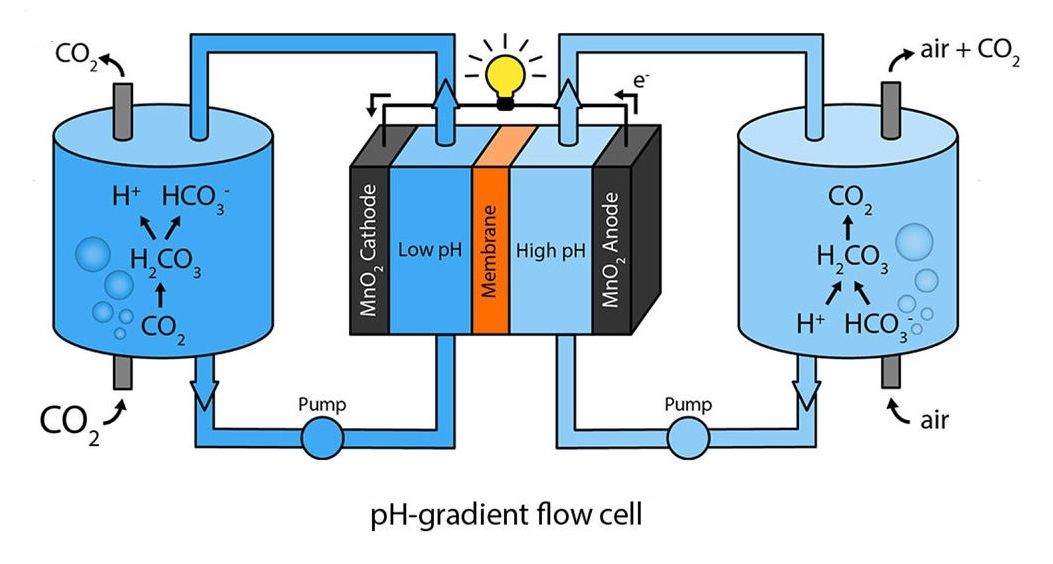
(Phys.org)—Researchers have developed a type of rechargeable battery called a flow cell that can be recharged with a water-based solution containing dissolved carbon dioxide (CO2) emitted from fossil fuel power plants. The device works by taking advantage of the CO2 concentration difference between CO2 emissions and ambient air, which can ultimately be used to generate electricity.
The new flow cell produces an average power density of 0.82 W/m, which is almost 200 times higher than values obtained using previous similar methods. Although it is not yet clear whether the process could be economically viable on a large scale, the early results appear promising and could be further improved with future research.
The scientists, Taeyong Kim, Bruce E. Logan, and Christopher A. Gorski at The Pennsylvania State University, have published a paper on the new method of CO2-to-electricity conversion in a recent issue of Environmental Science & Technology Letters.

Engineers at the U.S. Army Armament Research, Development and Engineering Center, or ARDEC, have been making advancements in an initiative called “Component Miniaturization.”
Its mission focuses on making armament systems more precise, energy efficient, scalable and effective by reducing the size of critical components in sub-systems such as safe and arm devices, electronics packages, power supplies and inertial measurement systems. Size reductions in one sub-system can have a positive effect on another. For example, a smaller and more efficient electronics package design can reduce power supply demands as well as reduce the need for heavier supporting structures. The space savings and mass savings could then be used to add a larger explosive warhead or increase control surfaces for additional maneuverability. The reduced size and mass could also allow for additional portability to smaller calibers or to systems with greater launch velocities.
The initiative involves several discrete projects, some of which are described below:
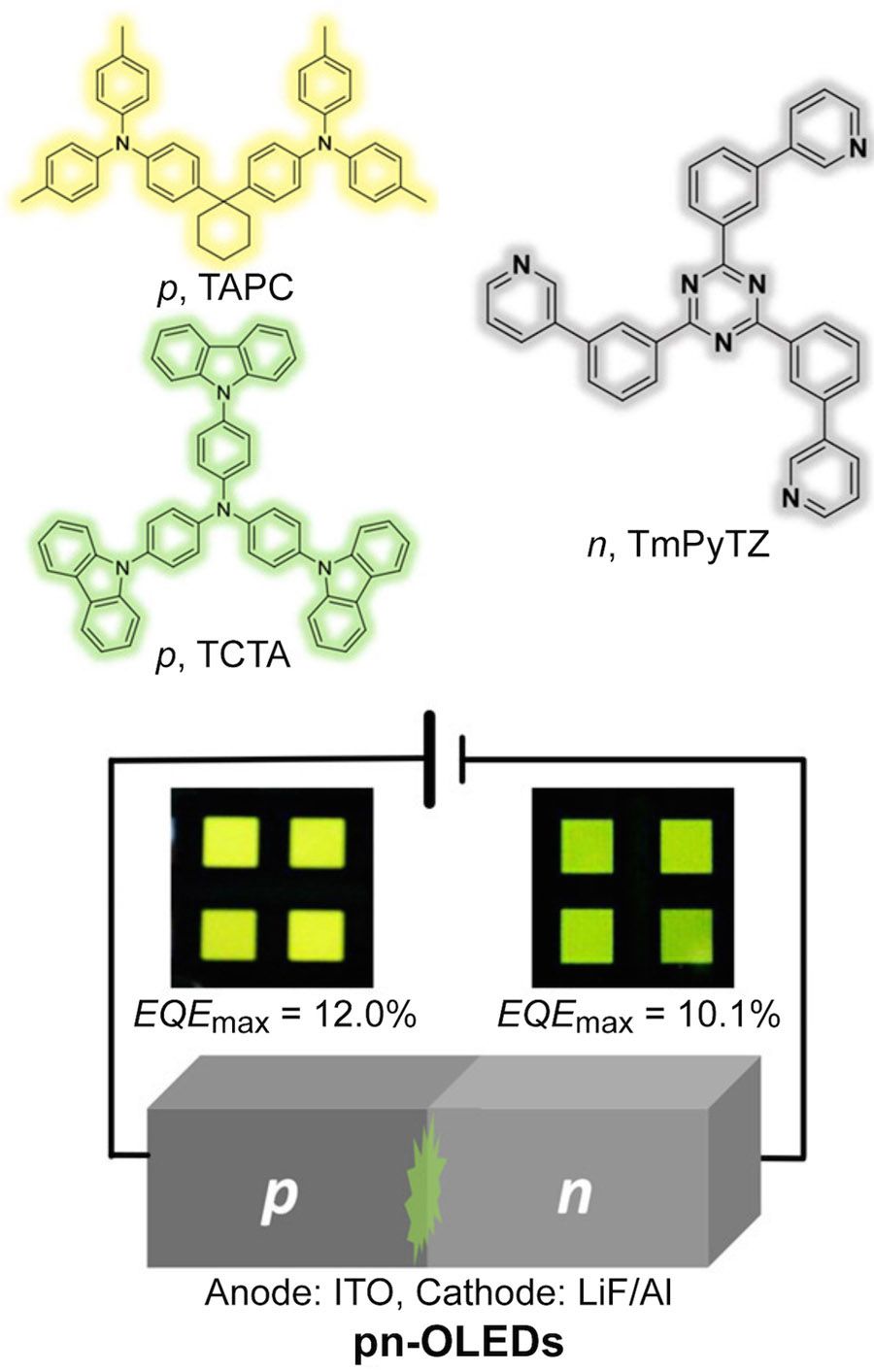
A purely organic p–n junction is used as the luminescent center in a novel planar device that exhibits a high external quantum efficiency and an extremely low driving voltage.
In recent years, organic LEDs (OLEDs) have become a popular option for creating digital displays. These devices generally consist of three types of semiconductors (i.e., a p-type hole-transport layer, an n-type electron-transport layer, and an emission layer).1–3 The emission layer (normally capable of bipolar transport) provides a platform for carrier capture, exciton generation, and transition, and the luminescent property of an OLED mainly depends on the fluorescence behavior of single-molecule emitters. However, the incorporation of the emission layer within the structure of an OLED causes two energy barriers to be induced at the interfaces with the emission and transport layers. This means that the driving voltages for OLEDs are generally much larger than for traditional inorganic LEDs (with similarly chromatic emission). Moreover, the excitons that are generated at most purely organic emitters have a strong binding energy.


Nice write up and anyone working or researching central nervous system should not find this research and findings shocking.
Re: Scam hunter’s question; “Can you explain what a scalar torsion field model is?”
The History of Scalar Energy
The discovery of Scalar Energy can be attributed to James Clark Maxwell, a Scotsman who was born in the 19th century. Maxwell was a mathematical genius whose work led to the development of quantum physics. Albert Einstein worked on Maxwell’s findings and discovered “The Theory of Relativity”.
However, it took another fifty years after Maxwell’s discovery to prove the existence of Scalar Energy. It took one Nikola Tesla, who was born in Yugoslavia around 1856–1857 to demonstrate the existence of this form energy. Tesla, who became a US citizen in 1891 carried on Maxwell’s work and soon began to harness Scalar Energy without using any wires. Tesla referred to this energy as standing energy or universal waves. Albert Einstein and Otto Stern acknowledged the existence of this form of energy and made due reference to Scalar Energy in the 1920s. Nikola Tesla is generally considered the father of scalar electromagnetics. Tesla’s name for this was ‘Radiant Energy’.

In Brief A team of Chinese chemists have developed a method that could allow plastics to be turned into diesel fuel.
While several companies and institutions have been working at reducing the world’s plastic waste, they are hampered by the lack of means to dispose of them. The most common plastic, polyethylene, happens to also be the hardest to break down. But a solution seems at hand.
A team of Chinese chemists has developed a method for degrading polyethylene and turning it into a liquid fuel.
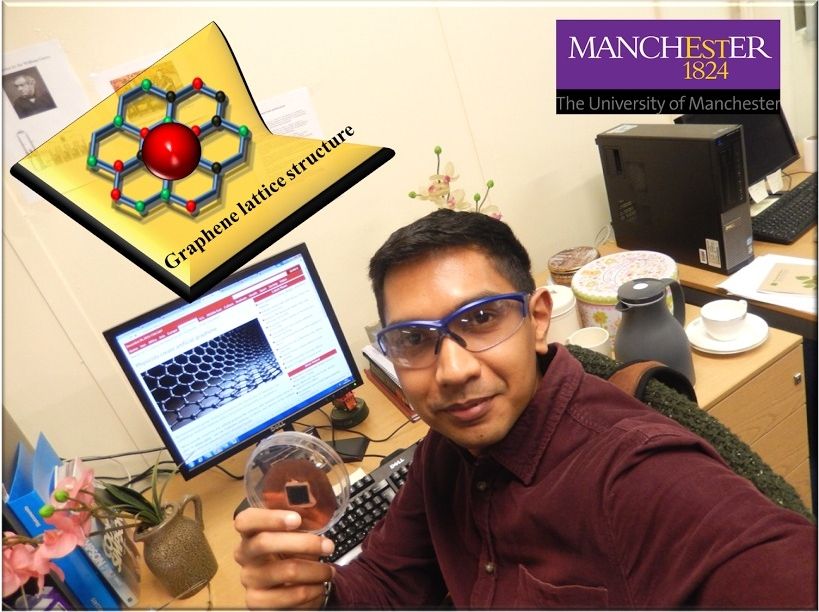
Prabhuraj Balakrishnan, a PhD student researcher at the University of Manchester, talks about his recent discovery that could see a major leap in sustainable energy production, realised using graphene and other 2D materials in fuel cell systems.
1st February 2017 in News, Science & Technology
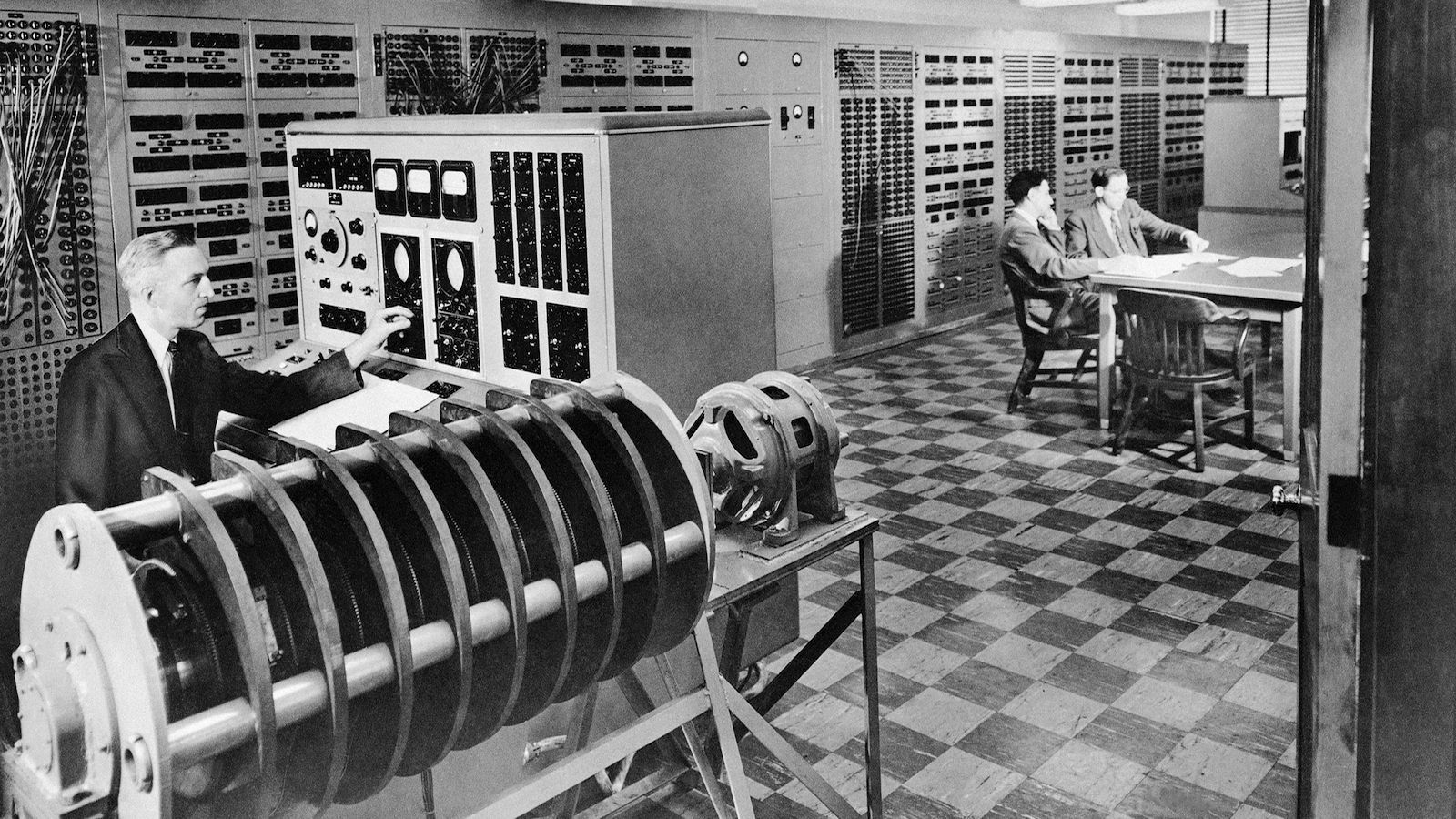
Will we finally solve world peace though with AI on QC? Hmmm.
I work in computational quantum condensed-matter physics: the study of matter, materials, and artificial quantum systems. Complex problems are our thing.
Researchers in our field are working on hyper-powerful batteries, perfectly efficient power transmission, and ultra-strong materials—all important stuff to making the future a better place. To create these concepts, condensed-matter physics deals with the most complex concept in nature: the quantum wavefunction of a many-particle system. Think of the most complex thing you know, and this blows it out of the water: A computer that models the electron wavefunction of a nanometer-size chunk of dust would require a hard drive containing more magnetic bits than there are atoms in the universe.
I started thinking about how machine learning and artificial intelligence could help our field when Google DeepMind defeated world champion Lee Sedol in the ancient game of Go.