The editorial was authored by Jacque L. Duncan, MD, professor of ophthalmology and chair of the Department of Ophthalmology, University of California, San Francisco, who did not participate in the PRIMA study.
In a press release issued by Science Corporation, the company described the implant as “consisting of a tiny wireless chip implanted in the retina combined with a pair of special glasses, based on work conducted by Professor Daniel Palanker at Stanford University.”
A total of 38 patients were included in the study. All underwent implantation of the PRIMAretinal prosthetic chip with the goal of restoring vision.
Could AI and biology trigger a longevity singularity? Dr. Natasha Vita-More maps the AI-biology longevity flywheel and three frontiers reshaping longevity culture: nanorobots, biostasis, and AI prosthetics.
As longevity grows from a scientific movement into a global industry and cultural force, Natasha presents her Three Frontiers of Longevity Culture:
• Nanorobots — precision repair, sensing, and therapeutic delivery at the cellular scale. • Biostasis — preserving cells, tissues, organs, and potentially more complex biological systems. • AI prosthetics — intelligent, adaptive technologies moving from restored function toward expanded human capability.
We separate what is possible today from what is experimental and what remains a long-term vision. How close are we to medical nanorobots? Could organ banking become the bridge to human biostasis? When does an intelligent prosthetic stop being a tool and begin becoming part of the person?
The conversation also examines the AI–biology longevity flywheel: how artificial intelligence could accelerate biological discovery, diagnostics, drug development, personalized interventions, regenerative medicine, and the broader effort to extend healthy human life.
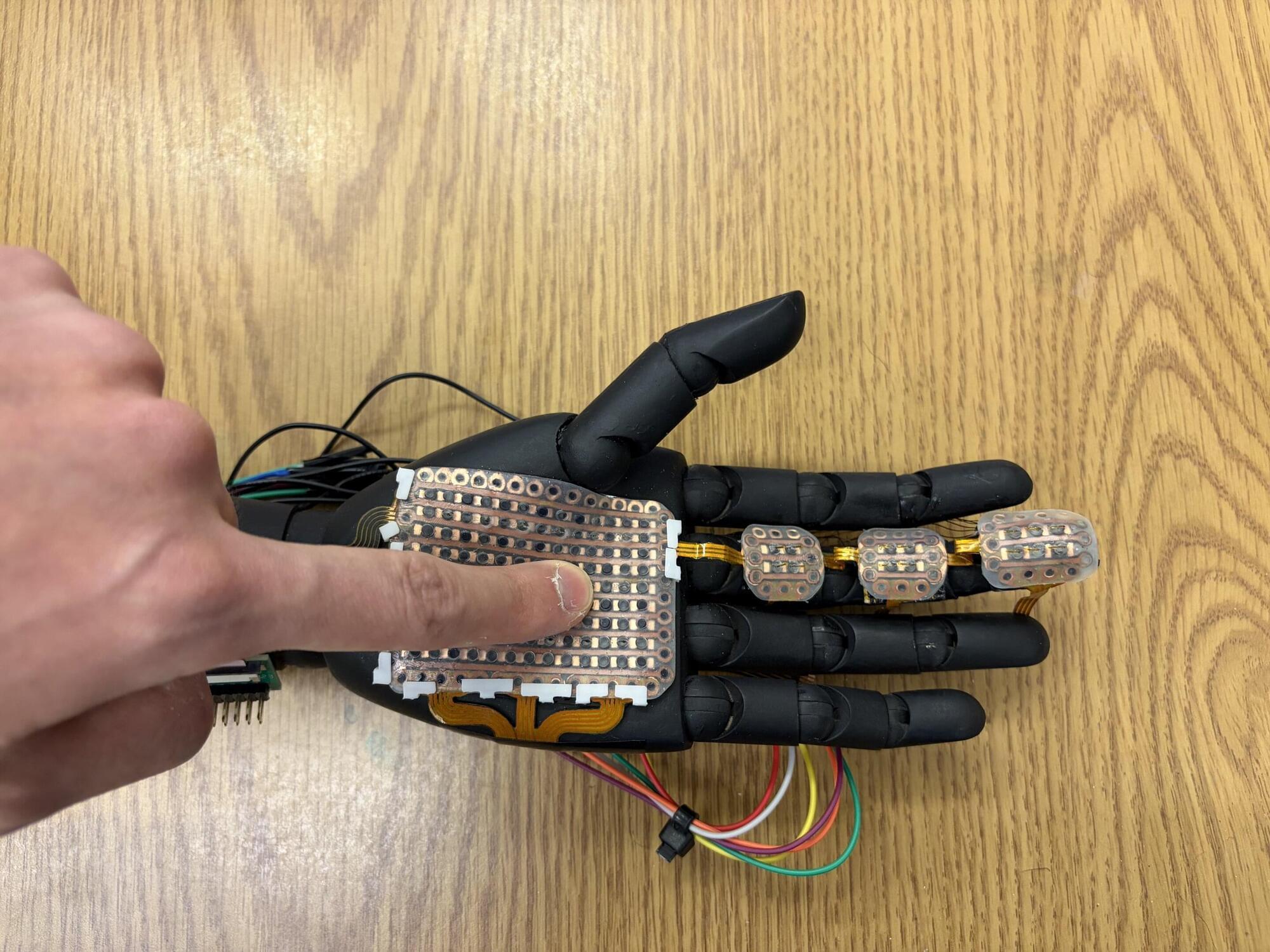
An electronic skin with a sensing system that can detect pressure and temperature could someday help amputees gain feeling in their prosthetics. The work, led by Washington State University researchers and published in the journal Cell Reports Physical Science, can sense at a scale 10 times finer than current commercial glove sensors.
“This approach democratizes the production of medical-grade e-skins, making advanced tactile feedback viable for widespread clinical adoption,” said Hongyi Shen, a graduate student in the School of Mechanical and Materials Engineering and first author on the paper. “This work lays a crucial foundation for a full bionic skin with both sensing and haptic stimulation functions on prosthetics.”
Haptic stimulation replicates the sense of touch. Providing even partial sensation for amputees could greatly improve their ability to perform tasks.
The convergence of AI with robotics, biotechnology, neuromorphic computing, and brain-computer interfaces is accelerating innovation, ushering in a “cyborg horizon.”
When people work in pairs or teams, they can often solve a wider range of problems, completing some tasks faster and more efficiently than they would alone. To assist users similarly to how other humans would, robots should be able to rapidly interpret human behaviors and commands, using their predictions to plan and precisely execute helpful actions.
Researchers at GenerativeBionics, Italian Institute of Technology (IIT) and University of Manchester recently introduced a framework that could guide the design of robots that interact with humans more safely, efficiently and adaptively. Their design strategy, introduced in a paper published in Nature Machine Intelligence, was already used to create a new humanoid robot called ergoCub.
“Our work grew out of many years of experience developing different generations of humanoid robots,” Carlotta Sartore and Daniele Pucci, the paper’s first and senior authors, respectively, told Tech Xplore. “During this time, we repeatedly observed that robot hardware was often treated as fixed, while the control system was expected to compensate for its physical limitations.
2010, I sat down with a man who had a computer wired into the median nerve of his left arm and asked him if it was worth the risk.
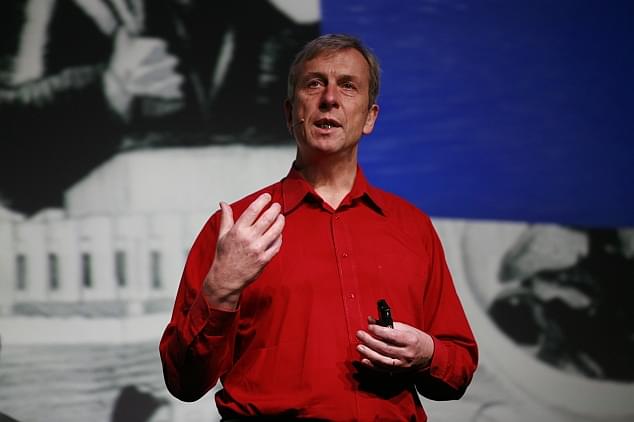
Kevin Warwick did not hedge: You have to take risks to be part of the future, he told me.
Back then it sounded reckless. Warwick had already done what nobody else would do to their own body: a neurosurgical implant linking his nervous system directly to a machine, the first ultrasonic sense ever added to a human being, and the first purely electronic signal sent from one person’s nervous system to another. The other person was his wife, Irena.
Nearly sixteen years later, there is a billion-dollar #BrainComputerInterface industry circling the same territory, complete with funding rounds, FDA trials, and product launches. Warwick got there first, in a lab at Reading, with a surgeon and a spouse willing to go under the knife with him. That is what being the first #Cyborg actually cost.
He also put a question to Ray Kurzweil that has never really been answered: why hasn’t Ray experimented with implant technology yet? Talking about merging with machines is cheap. Getting cut open is not.
We spent an hour on human and artificial intelligence, robotics, God, the beginning of the universe, and the #Singularity. The part that has aged the strangest is not the hardware. It is his line about who gets to shape the future and who just stands there watching it arrive.
Humanoids and humans are increasingly sharing factory floors, but one is made of metal and the other of flesh and bones, a mismatch that rarely ends well for us in a collision. Italian startup Generative Bionics thinks it has a fix: a humanoid robot covered in sensing skin that feels people approaching and adjusts its movements before any contact occurs.
The robot, called Gene.01, is wrapped in a network of sensors running from its torso to its limbs. This smart skin tracks touch, temperature, proximity, and force simultaneously, letting the robot anticipate a person’s presence and react before and during contact. It’s a bit like pulling your hand away from a hot stove before you actually touch it. The heat you feel from a distance is enough to make you stop.
The same sensors let humans physically teach the robot new tasks. Rather than only showing Gene.01 a movement on video, a person can guide its arm directly, helping it learn exactly how much force to apply. Generative Bionics says this solves one of humanoid robotics’ persistent headaches: teaching a machine to grip an object firmly enough that it doesn’t drop it but gently enough that it doesn’t crush it – a skill that’s hard to learn from video alone.
In February 2011, IBM’s Watson had just beaten two human champions at Jeopardy, and most people filed it under party trick.
A few days later, I sat down with Prof. Kevin Warwick for the second time. He had already run a wire into the median nerve of his own left arm and sent a signal from his nervous system straight into his wife’s. The press called him an eccentric. A few of his colleagues used a less generous word.
So I asked him where the line between genius and madness actually sits. We also got into the magnetic implants and sensory substitution devices his students were building, the trouble his rat-brain-cell robot kept running into, and why Alan Turing was owed far more than Britain ever gave him.
Fifteen years on, #BCI implants have moved from stunt to clinical trial, #AI writes the code that writes the code, and the open question is no longer whether we merge with our machines. It is on whose terms, and who gets a vote.
Kevin’s answer back in 2011 was three words: be/come the #cyborg.
Prophecy or warning? Watch it and tell me which one you hear.
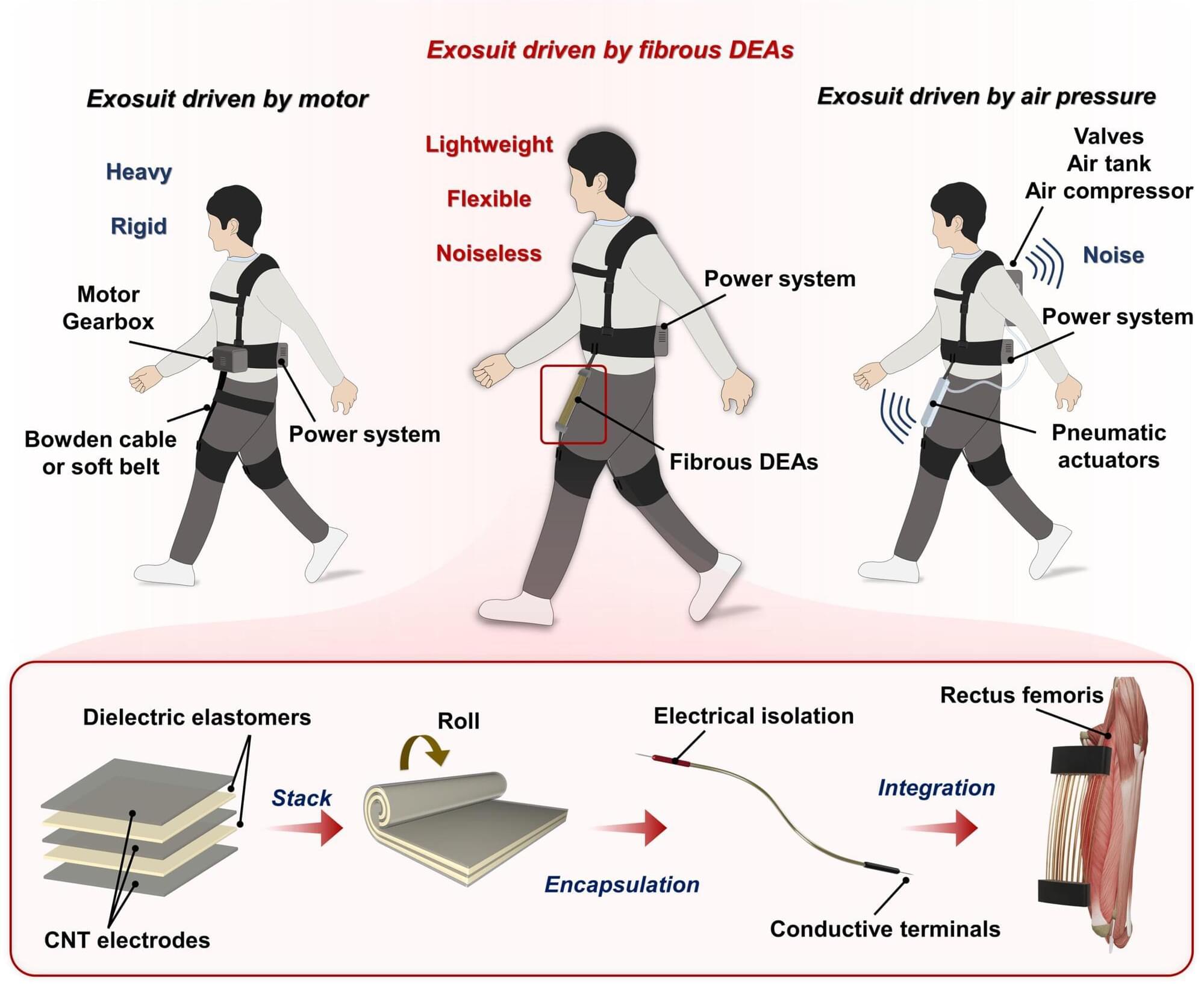
Researchers in China have unveiled a new robotic exosuit driven entirely by soft artificial muscles instead of traditional motors. This technology could make it easier for older adults, injured patients or factory workers to walk with much less effort. Current exosuits that aid walking use heavy motors, gearboxes and noisy air-pressure pumps that restrict a person’s natural movement.
Soft muscles, on the other hand, are made of thin, flexible rubber fibers that behave more like human muscles and are considerably lighter, making it easier for people to move.
Details of the work are in a paper published in the journal Science Advances.
A neuroprosthetic system has helped a man with paralysis move his hand and feel touch again following a spinal cord injury, reports research published in Nature Medicine. Some of the system’s benefits continued even when the device was turned off, suggesting that it may support longer-term recovery as well as help movement in real time.
Spinal cord injury is a leading cause of paralysis, and more than half of cases involve tetraplegia, in which movement of the arms and legs is affected. Complete spinal cord injuries, in which there is no voluntary movement or feeling below the level of the injury, are particularly difficult to treat. Previous brain–computer interface systems have helped restore some movement but have not yet restored a sense of touch or supported longer-term recovery.
Chad Bouton and colleagues developed a “double neural bypass” system that reads brain signals linked to a person’s intention to move. It then uses these signals to help control a person’s own hand by delivering targeted stimulation to the spinal cord and the part of the brain involved in touch, the primary somatosensory cortex.