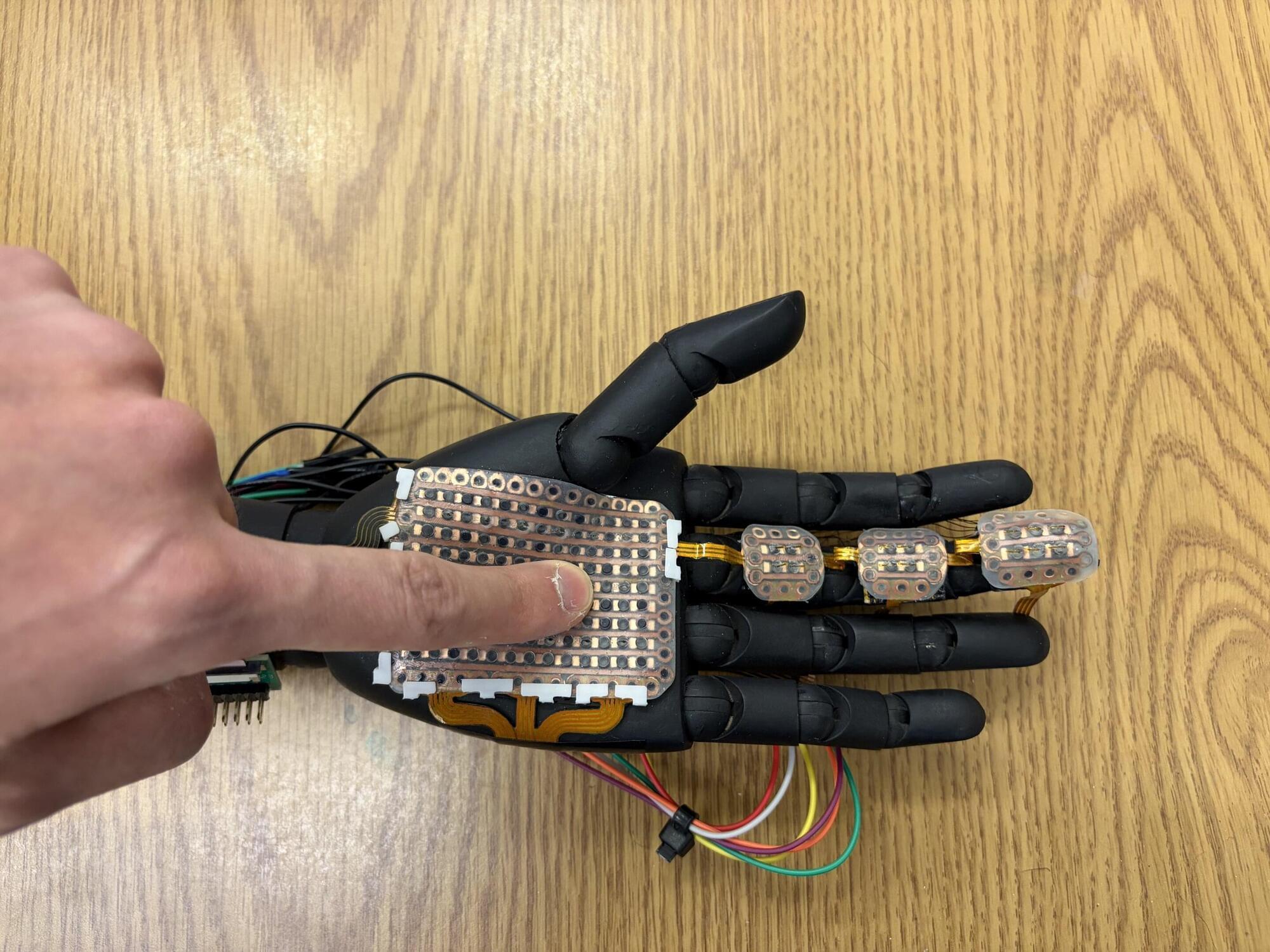
An electronic skin with a sensing system that can detect pressure and temperature could someday help amputees gain feeling in their prosthetics. The work, led by Washington State University researchers and published in the journal Cell Reports Physical Science, can sense at a scale 10 times finer than current commercial glove sensors.
“This approach democratizes the production of medical-grade e-skins, making advanced tactile feedback viable for widespread clinical adoption,” said Hongyi Shen, a graduate student in the School of Mechanical and Materials Engineering and first author on the paper. “This work lays a crucial foundation for a full bionic skin with both sensing and haptic stimulation functions on prosthetics.”
Haptic stimulation replicates the sense of touch. Providing even partial sensation for amputees could greatly improve their ability to perform tasks.