Toggle light / dark theme

Cyborg Brain Implants: The Organoid Brain-Computer Interface (Human + Mouse + Computer)

Try brilliant FREE for 30 days: https://brilliant.org/ihm/
And get 20% off an annual membership!

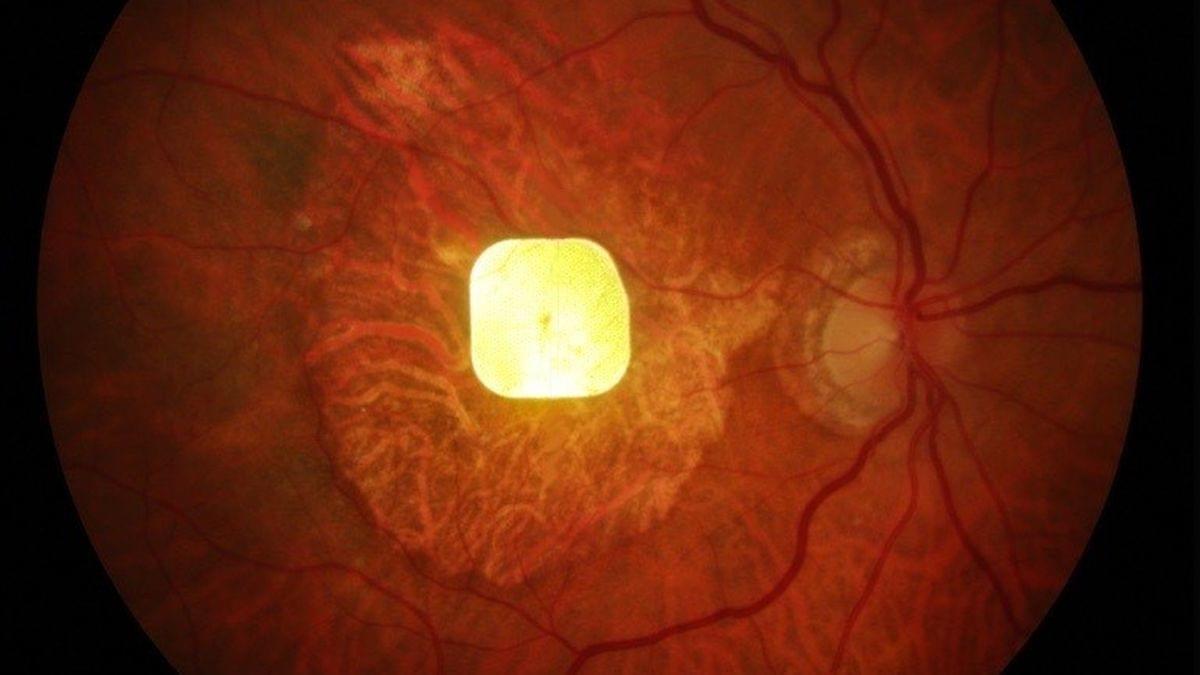
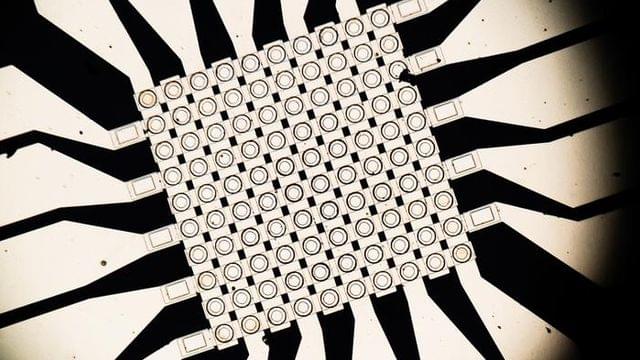
Can you implant lab-grown brain tissue to heal brain damage? Kind of. What if you also implant an electrical stimulation device? The next generation of brain implants may be the Organoid Brain-Computer Interface (OBCI).

Learn about: brain organoids, dendritic spines, synapses, presynaptic and postsynaptic neurons, neurotransmitters.

Story of Einstein’s Brain: https://www.npr.org/2005/04/18/4602913/the-long-strange-jour…eins-brain

US-built fusion reactor structure delivered for 60-ft-tall ITER magnet

Fusion is inching closer to reality with continuous development in this field as the United States Domestic Agency for the International Thermonuclear Experimental Reactor (ITER) recently completed the delivery of critical components for the support structure of central solenoid.

Described as an exoskeleton, or a cage, the support structure surrounds the central solenoid, which is a 60-foot-tall superconducting magnet at the heart of the ITER fusion machine.

3D printing approach strings together dynamic objects to assemble bionic robots, sculptures and more

It’s difficult to build devices that replicate the fluid, precise motion of humans, but that might change if we could pull a few (literal) strings. At least, that’s the idea behind “cable-driven” mechanisms in which running a string through an object generates streamlined movement across an object’s different parts. Take a robotic finger, for example: You could embed a cable through the palm to the fingertip of this object and then pull it to create a curling motion.

While cable-driven mechanisms can create real-time motion to make an object bend, twist, or fold, they can be complicated and time-consuming to assemble by hand. To automate the process, researchers from MIT’s Computer Science and Artificial Intelligence Laboratory (CSAIL) have developed an all-in-one 3D printing approach called “Xstrings.” Part design tool, part fabrication method, Xstrings can embed all the pieces together and produce a cable-driven device, saving time when assembling bionic robots, creating art installations, or working on dynamic fashion designs.

In a paper to be presented at the 2025 Conference on Human Factors in Computing Systems (CHI2025), the researchers used Xstrings to print a range of colorful and unique objects that included a red walking lizard robot, a purple wall sculpture that can open and close like a peacock’s tail, a white tentacle that curls around items, and a white claw that can ball up into a fist to grab objects.

Artificial muscle flexes in multiple directions, offering a path to soft, wiggly robots

We move thanks to coordination among many skeletal muscle fibers, all twitching and pulling in sync. While some muscles align in one direction, others form intricate patterns, helping parts of the body move in multiple ways.

In recent years, scientists and engineers have looked to muscles as potential actuators for “biohybrid” robots—machines powered by soft, artificially grown . Such bio-bots could squirm and wiggle through spaces where traditional machines cannot. For the most part, however, researchers have only been able to fabricate artificial muscle that pulls in one direction, limiting any robot’s range of motion.

Now MIT engineers have developed a method to grow artificial muscle tissue that twitches and flexes in multiple coordinated directions. As a demonstration, they grew an artificial, muscle-powered structure that pulls both concentrically and radially, much like how the iris in the human eye acts to dilate and constrict the pupil.

New Wearable Device Allows You To “Feel” Virtual Worlds

The device provides a range of sensations, such as vibrations, pressure, and twisting. A team of engineers led by Northwestern University has developed a new wearable device that stimulates the skin to deliver a range of complex sensations. This thin, flexible device gently adheres to the skin, offering more realistic and immersive sensory experiences. While it is well-suited for gaming and virtual reality (VR), the researchers also see potential applications in healthcare. For instance, the device could help individuals with visual impairments “feel” their surroundings or provide feedback to those with prosthetic limbs.

Nervous System — Brain-Computer-Interfaces (Brains & Machines)

00:00 Intro.
00:20 José Delgado’s beginnings with BCIs.
00:42 Use of BCI to reduce aggression.
00:57 How the brain and nerve cells work.
03:00 Stimulation of brain areas (motor cortex)
03:51 How Utah arrays works!
05:16 Measurement of voltage peaks (spikes)
06:06 How the Neuralink N1 works!
08:20 How the Stentrode by Synchron works!
09:40 The future of exoskeletons.
09:53 Are we becoming machines ourselves?

Researchers create gel that can self-heal like human skin

We all encounter gels in daily life – from the soft, sticky substances you put in your hair, to the jelly-like components in various foodstuffs. While human skin shares gel-like characteristics, it has unique qualities that are very hard to replicate. It combines high stiffness with flexibility, and it has remarkable self-healing capabilities, often healing completely within 24 hours after injury.

Until now, artificial gels have either managed to replicate this high stiffness or natural skin’s self-healing properties, but not both. Now, a team of researchers from Aalto University and the University of Bayreuth are the first to develop a hydrogel with a unique structure that overcomes earlier limitations, opening the door to applications such as drug delivery, wound healing, soft robotics sensors and artificial skin.

In the breakthrough study, the researchers added exceptionally large and ultra-thin specific clay nanosheets to hydrogels, which are typically soft and squishy. The result is a highly ordered structure with densely entangled polymers between nanosheets, not only improving the mechanical properties of the hydrogel but also allowing the material to self-heal.

Regaining mobility quickly after a stroke

Twenty-four stroke patients have already used the complete system, consisting of an exoskeleton for the arm and shoulder in combination with FES as part of the ReHyb research project. Half of them were patients at the Schön Klinik Bad Aibling Harthausen, which is leading the study. The researchers also used a computer game that automatically adapts to the individual player’s capabilities. It trains them to grip and move their arms shortly after a stroke by reacting to colored balls flying toward them at varying speeds on a screen. The task is to catch the balls and match them with color-coded boxes.

At the center of TUM Professor Sandra Hirche’s setup is a digital twin that records the individual requirements of each patient and places them in a control loop. Among other things, the researchers have to determine how well each patient can move their arm and hand. In the event of a stroke, for example, paralysis can be caused by damage to the motor area in the brain responsible for movement. However, it is impossible to predict how severely the signals transmitted from the brain to the muscles in the forearm will be impaired after the stroke. “Individual muscle strands in the forearm can be stimulated to the right extent for hands and fingers to move,” says Prof. Hirche, who holds the Chair of Information-Oriented Control at TUM. In addition to information on muscle activity in the forearm, the researchers need to know how strongly the muscles should be stimulated in conjunction with the exoskeleton assistance.

/* */