Toggle light / dark theme

Microsoft’s $15 billion cybersecurity business is giving investors new reason for optimism

Nadella told analysts on an earnings call that the operation had reached $10 billion in annual revenue and was “up more than 40%” year over year. In other words, it was outpacing every other major Microsoft product.

The remarks were revelatory. Nadella was known for reviving Microsoft, overseeing a fivefold expansion in market cap by that point in his seven years at the helm. That growth was largely based on turning Microsoft’s cloud business into a more serious threat to Amazon Web Services in a giant market.

By letting investors in on the enormity of Microsoft’s security business, Nadella was casually uncovering a powerful growth engine. Total revenue across the company was up just 14% from the prior year. And by way of comparison, Palo Alto Networks, one of the largest pure-play security software companies, delivered 21% revenue growth over roughly the same period, on a base smaller than $4 billion.

Quantum ransomware seen deployed in rapid network attacks

The Quantum ransomware, a strain first discovered in August 2021, were seen carrying out speedy attacks that escalate quickly, leaving defenders little time to react.

The threat actors are using the IcedID malware as one of their initial access vectors, which deploys Cobalt Strike for remote access and leads to data theft and encryption using Quantum Locker.

The technical details of a Quantum ransomware attack were analyzed by security researchers at The DFIR Report, who says the attack lasted only 3 hours and 44 minutes from initial infection to the completion of encrypting devices.

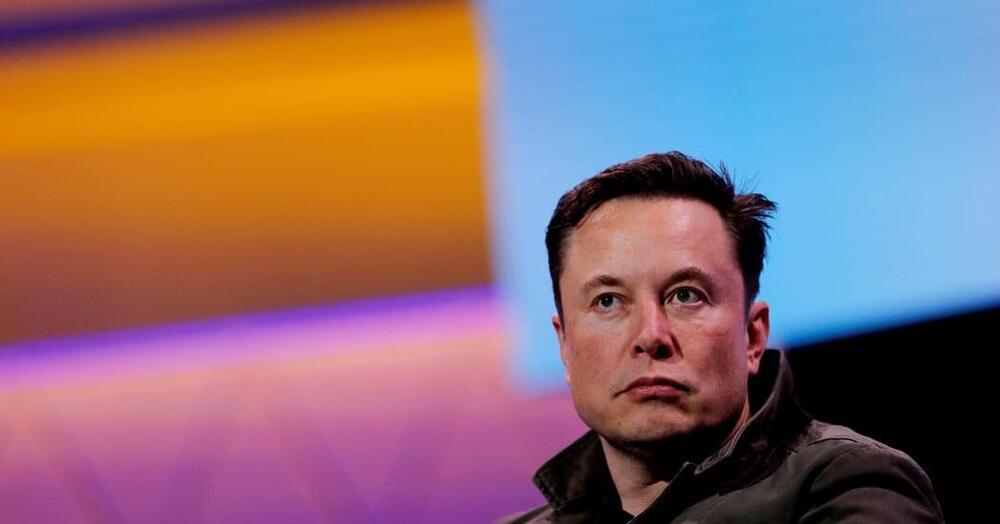
Elon Musk acquires Twitter for roughly $44 billion

The company’s board and the Tesla CEO hammered out the final details of his $54.20 a share bid.

The agreement marks the close of a dramatic courtship and a sharp change of heart at the social-media network.

Elon Musk acquired Twitter for $44 billion on Monday, the company announced, giving the world’s richest person command of one of its most influential social media sites — which serves as a platform for political leaders, a sounding board for experts across industries and an information hub for millions of everyday users.

The acquisition followed weeks of evangelizing on the necessity of “free speech,” as the Tesla CEO seized on Twitter’s role as the “de facto town square” and took umbrage with content moderation efforts he has seen as an escalation toward censorship. He said he sees Twitter as essential to the functioning of democracy and said the economics are not a concern.

Ownership of Twitter gives Musk power over hugely consequential societal and political issues, perhaps most significantly the ban on former president Donald Trump that the website enacted in response to the Jan. 6 riots.

Under the terms of the deal, Twitter will become a private company and shareholders will receive $54.20 per share, the company said in a news release. The deal is expected to close this year.

“Free speech is the bedrock of a functioning democracy, and Twitter is the digital town square where matters vital to the future of humanity are debated,” Musk said in the release. “I also want to make Twitter better than ever by enhancing the product with new features, making the algorithms open source to increase trust, defeating the spam bots, and authenticating all humans. Twitter has tremendous potential — I look forward to working with the company and the community of users to unlock it.”

This ‘Tamper-Evident Container’ Snitches on Meddlers and Thieves

The 3D-printed containers keep a log of all break-in attempts, meaning your snail mail just got way safer.


Suppose you want to mail a court document to someone across the country—you don’t want anyone to see the secure information inside, of course. So, you seal it into a container that has special sensors built into its walls, and electronics that monitor the shield of sensors. Now, the container is armed and monitoring.

On the way to its intended recipient, let’s say the container is hacked. When the intended recipient later opens the container, they pull out the court document, along with an SD card (just like the ones you might use to store digital photos). They plug the card into a computer and look at the file. They see an encrypted historical record of the container’s experiences, from the time you put that document into the container and sealed it, up until the time they opened it. In the list of messages is a notification about a tampering attack, along with the date and time of the incident. The message also specifies the type of breach detected, such as the container being opened or cut.

A team at Los Alamos National Laboratory in New Mexico hopes this ability to see recorded, real-time security information about sensitive physical materials will become an everyday tool. Using a 3D printer, engineers built a prototype “Tamper-Evident Container” (TEC) that looks like a cylindrical box on the outside, but inside holds a complex network of sensors and electronics that record potential break-ins.

Quasiparticles used to generate millions of truly random numbers a second

This could lead to a truly random number generator making things much more secure.


Random numbers are crucial for computing, but our current algorithms aren’t truly random. Researchers at Brown University have now found a way to tap into the fluctuations of quasiparticles to generate millions of truly random numbers per second.

Random number generators are key parts of computer software, but technically they don’t quite live up to their name. Algorithms that generate these numbers are still deterministic, meaning that anyone with enough information about how it works could potentially find patterns and predict the numbers produced. These pseudo-random numbers suffice for low stakes uses like gaming, but for scientific simulations or cybersecurity, truly random numbers are important.

In recent years scientists have turned to the strange world of quantum physics for true randomization, using photons to generate strings of random ones and zeroes or tapping into the quantum vibrations of diamond. And for the new study, the Brown scientists tried something similar.

Researchers break world record for quantum-encrypted communications

Researchers in Beijing have set a new quantum secure direct communication (QSDC) world record of 102.2 km (64 miles), smashing the previous mark of 18 km (11 miles), The Eurasian Times reported. Transmission speeds were extremely slow at 0.54 bits per second, but still good enough for text message and phone call encryption over a distance of 30 km (19 miles), wrote research lead Long Guilu in Nature. The work could eventually lead to hack-proof communication, as any eavesdropping attempt on a quantum line can be instantly detected.

QSDC uses the principal of entanglement to secure networks. Quantum physics dictates that entangled particles are linked, so that if you change the property of one by measuring it, the other will instantly change, too — effectively making hacking impossible. In theory, the particles stay linked even if they’re light-years apart, so such systems should work over great distances.

The same research team set the previous fiber record, and devised a “novel design of physical system with a new protocol” to achieve the longer distance. They simplified it by eliminating the “complicated active compensation subsystem” used in the previous model. “This enables an ultra-low quantum bit error rate (QBER) and the long-term stability against environmental noises.”

/* */