Toggle light / dark theme

Frozen in time: You can be cryogenically preserved, but will you ever be revived?

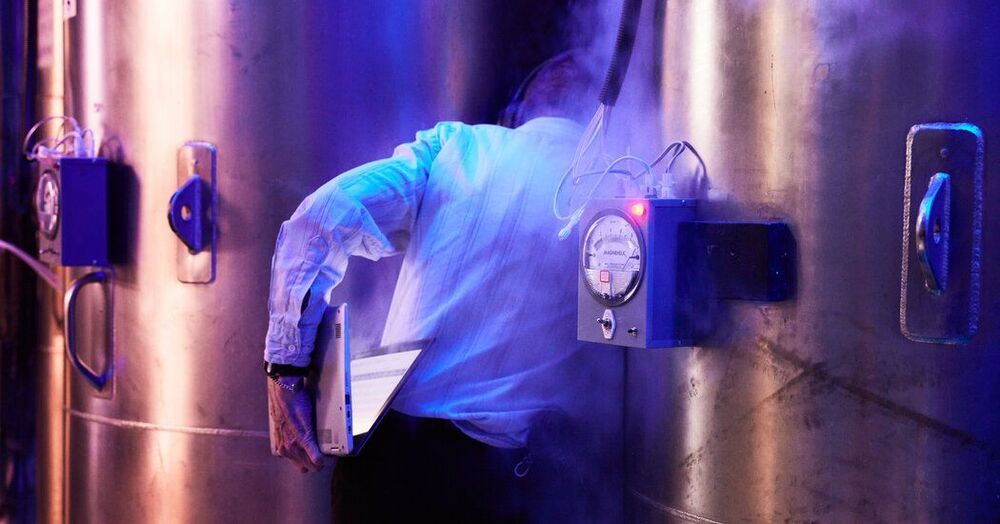
Why is Alcor in Arizona? The main reason is that the risk of earthquakes and other natural disasters is fairly low. People opting for cryonics expect that their bodies might be in stasis for timescales measured in centuries.

As far as financial matters go, many of Alcor’s clients use life insurance policies to cover the cost of preservation and maintenance ($200,000 for a whole body or $80,000 for just the head). People use trust funds if they have net worth they want to recover when revived in the future.

The rationale presented to those considering cryonics is that there’s no guarantee they will ever be revived, but that it is reasonable that they might be. Along with chemicals called cryoprotectants, bodies getting preserved receive a host of medications. The list of the agents used is constantly evolving and continuing research is likely to reveal alternative methods that preserve organ function and cell integrity better. This means that cryopreservation is likely to work better years and decades into the future than it works now, even before getting to the milestone of having somebody revived.

A Transhumanism future? — Anders Sandberg interview

I interviewed transhumanist thinker Anders Sandberg, research fellow at Oxford Universities Future of Humanity Institute. We discuss how the global transhumanist movement has changed, the potential political impact of technological revolutions and the debate around cryonics. Fairly new channel so very grateful for any subscribers smile


My interview with Anders Sandberg, a prominent transhumanist thinker and research fellow at the Future of Humanity Institute at Oxford University.

We discuss how the transhumanist movement has changed, how it should engage in politics, whether pre-natural death cryogenics should be allowed and how long humans could live for amongst other things. Hope you enjoy!

UK Cryonics and Cryopreservation Research Network

The UK Cryonics and Cryopreservation Research Network is a group of UK researchers who, together with international advisors, aim to advance research in cryopreservation and its applications.

Although we are a small group, we hope to promote academic and industrial activity on cryopreservation, and discuss its potential applications, including the idea of cryopreserving whole humans, commonly known as cryonics. We acknowledge that cryonics is a controversial topic, but like any unprovable approach we think its scientific discussion is necessary to permit its understanding by the public and by the wider scientific community, and it allows us to address many of the misunderstandings surrounding cryonics. We also think that cryopreservation, cryogenics and cryonics are fields with a huge potential impact on human medicine whose societal implications should be considered and debated.

We hope to attract and excite students and other researchers about cryobiology, contribute to knowledge exchange and help attract interest and funding to the field.

Yuri Deigin on epigenetic rejuvenation, longevity research and transhumanists in politics

Had a very frank discussion with Greg Mustreader about transhumanism, learned helplessness of society in the face of aging and death, insufficient sense of urgency among researchers of aging, epigenetic rejuvenation, cryonics, and so on. No filter! 😁.


My blog on Medium: https://medium.com/@mustreader

My Twitter: https://twitter.com/mustreader

My Instagram: https://instagram.com/mustreader

Support me on Patreon: https://patreon.com/mustreader

US$30 Million to Seed Hundreds of Bold, Innovative Ideas for Human Longevity! — Dr. Victor Dzau, President of the U.S. National Academy of Medicine — Healthy Longevity Global Grand Challenge — ideaXme — Ira Pastor

A new way to warm up frozen tissue could help with the organ shortage

This technology may one day be used to revive patient suspended in cryonics.


A new way to warm up frozen tissue using tiny vibrating particles could one day help with the problem of organ shortages.

We know how to cool organs to cryogenic temperatures, which is usually below 320 degrees Fahrenheit. But the organs can’t be stored for long — sometimes only four hours for heart and lungs — because they get damaged when you try to warm them up. As a result, more than 60 percent of donor hearts and lungs aren’t transplanted. In a study published today in Science Translational Medicine, scientists used nanoparticles to warm up frozen tissue quickly and without damaging the organs. Within a decade, this could lead to being able to store entire organs in organ banks for a long period of time, the authors say.

For today’s study, the team rewarmed 50 milliliters of tissue and solution with magnetic nanoparticles. Magnetic particles create heat in electromagnetic fields, says study co-author Zhe Gao, an post-doc studying nanotechnology at the University of Minnesota. Basically, the scientists infused a tissue with a special kind of nanoparticle made of silica-coated iron oxide. Then, they expose it to a magnetic field. Think of the nanoparticles as antennae. Once they get pick up the “signal” from the magnetic fields, they start to vibrate, and this creates the heat that warms up the organ quickly.

/* */