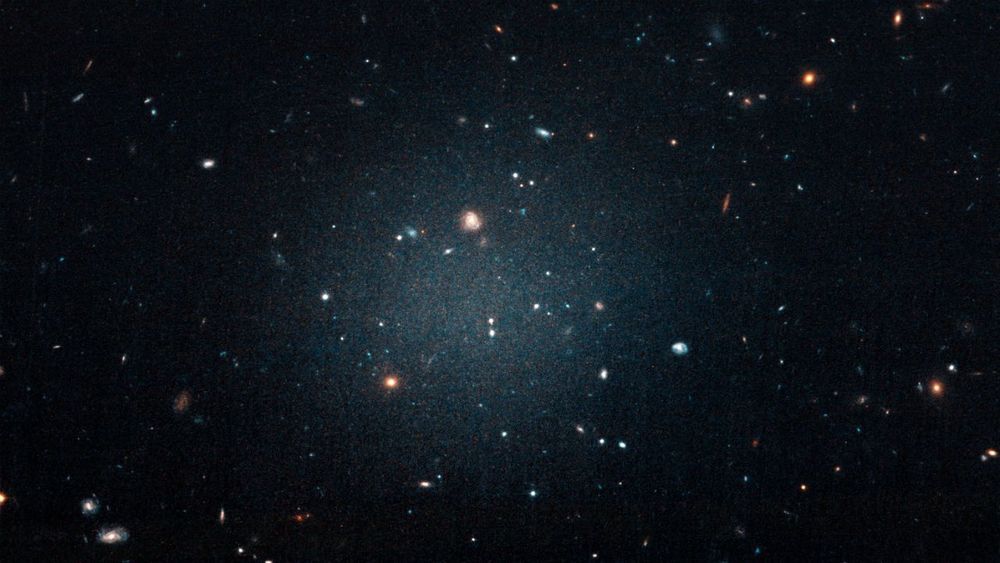
A rare, massive cloud of pure hydrogen gas could tell scientists what the universe looked like minutes after the Big Bang.
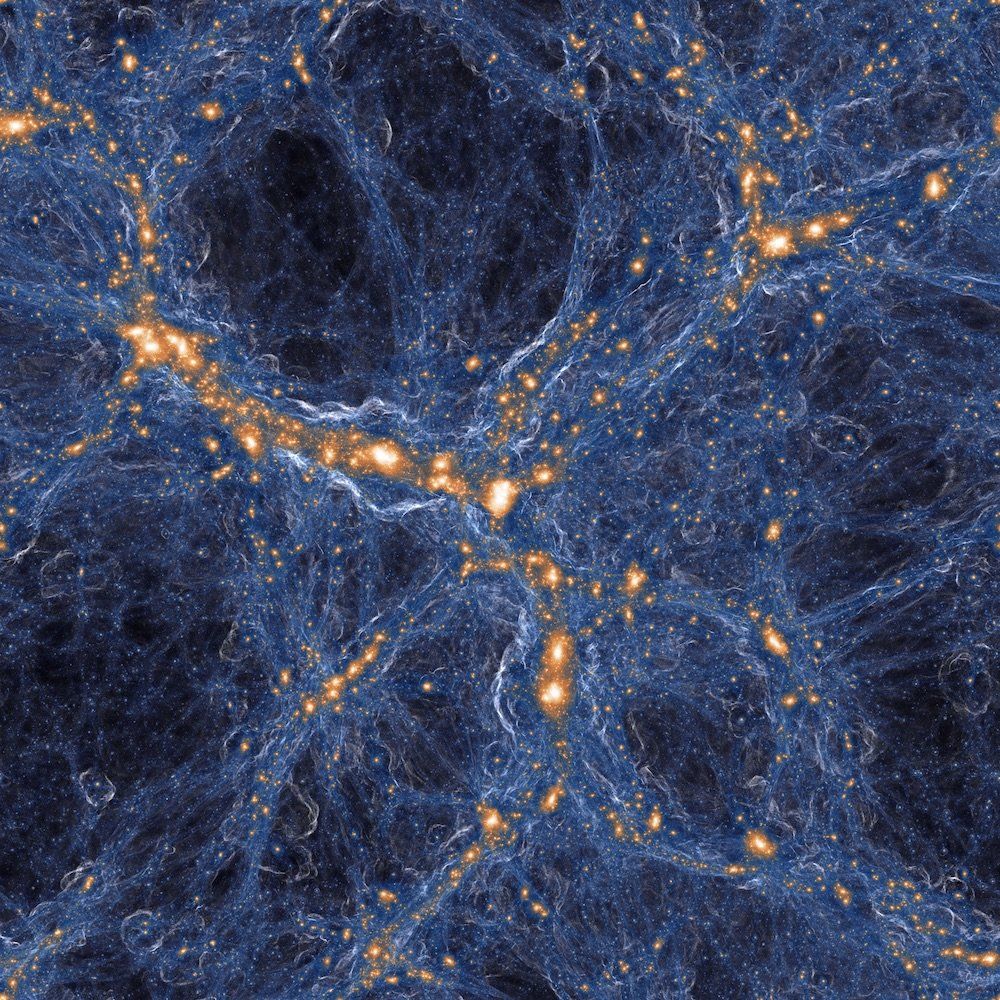


Uppsala University researchers have devised a new model for the universe – one that may solve the enigma of dark energy. Their new article, published in Physical Review Letters, proposes a new structural concept, including dark energy, for a universe that rides on an expanding bubble in an additional dimension.

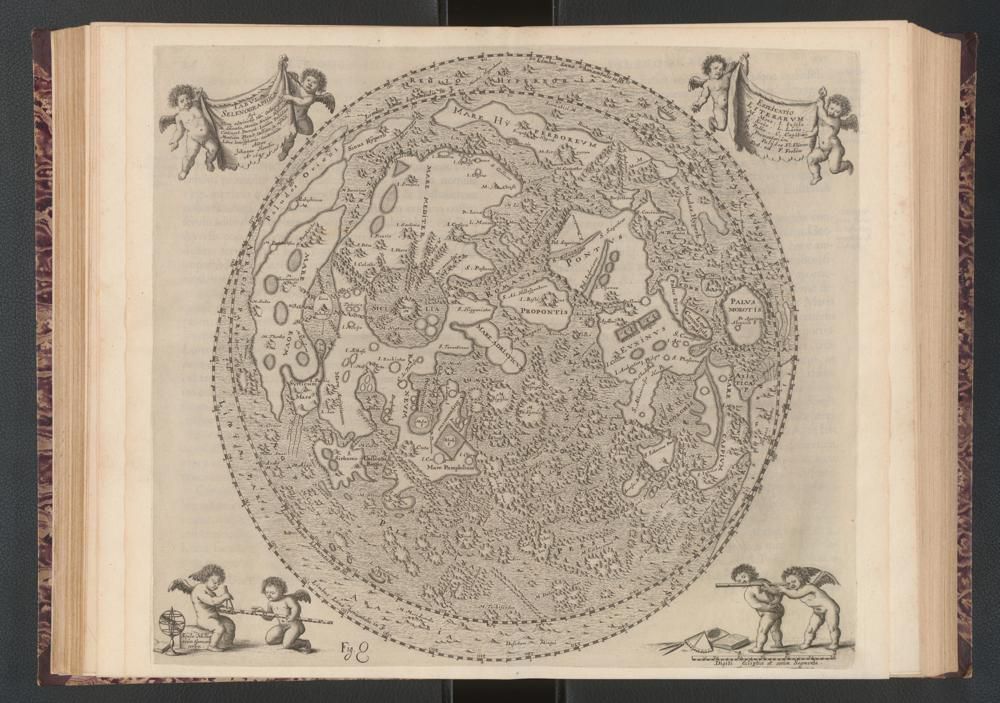
In the rare books collection of the Huntington Library in San Marino, California, a large tome tied with string sits in an ivory box that looks like it came from a bakery. At one point, the book belonged to Edwin Hubble, who revealed that galaxies exist beyond our own and that the universe is expanding, among other things, at nearby Mount Wilson Observatory. Between the well-worn leather cover boards, I find some of the first detailed maps of the lunar surface, illustrated and engraved in the 17th century. As I delicately place the volume back in the box, the covers leave a light brown residue on my fingertips—a small remnant of one man’s quest to tame the moon.
The book, titled Selenographia, was created by perhaps the most innovative Polish astronomer since Copernicus. But Johannes Hevelius, as we call him in the English-speaking world, has been somewhat more forgotten among history’s great scientists. Selenographia was the first book of lunar maps and diagrams, extensively covering the moon’s various phases. More than 300 years before humans stepped onto the moon’s surface, Hevelius was documenting every crater, slope and valley that he could see with his telescope. He conducted these observations, as well as others for a comprehensive star catalog, using his own equipment in a homemade rooftop observatory.
Published in 1647, Selenographia made Hevelius a celebrity of sorts. The Italian astronomer Niccolo Zucchi even showed a copy of the book to the pope. Of course, like Copernicus before him, Hevelius believed that that the Earth orbited the sun. And according to Johannes Hevelius and His Catalog of Stars, published by Brigham Young University Press, Pope Pius IX said Selenographia “would be a book without parallel, had it not been written by a heretic.”
New kinds of messengers from the distant universe are joining the photons collected by telescopes—and revealing what light can’t show. So-called multimessenger astrophysics got started with high-speed particles called cosmic rays and gravitational waves, the ripples in space-time first detected in 2015 that Science named Breakthrough of the Year in 2016. This year, another messenger has joined the party: neutrinos, tiny, almost massless particles that are extraordinarily hard to detect.
Snaring one of these extra-galactic will-o’-the-wisps took a cubic kilometer of ice deep below the South Pole, festooned with light detectors to record the faint flash triggered—very rarely—by a neutrino. Known as IceCube, the massive detector has logged many neutrinos before, some from outside the Milky Way, but none had been pinned to a particular cosmic source. Then, on 22 September 2017, a neutrino collided with a nucleus in the ice, and the light sensors got a good fix on the direction it had come from.
An alert sent out to other telescopes produced, after a few days, a match. As the researchers reported in July, NASA’s Fermi Gamma-ray Space Telescope found an intensely bright source known as a blazar right where the neutrino appeared to come from. A blazar is the heart of a galaxy centered on a supermassive black hole, whose gravity heats up gas swirling around it, causing the material to glow brightly and fire jets of particles out of the maelstrom.
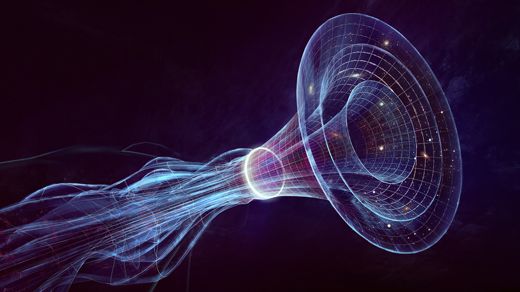
‘’As a result, it’s nonsensical to ask what happens to space-time beyond the Cauchy horizon because space-time, as it’s regarded within the theory of general relativity, no longer exists. “This gives one a way out of this philosophical conundrum,” said Dafermos.
Mathematicians have disproved the strong cosmic censorship conjecture. Their work answers one of the most important questions in the study of general relativity and changes the way we think about space-time.
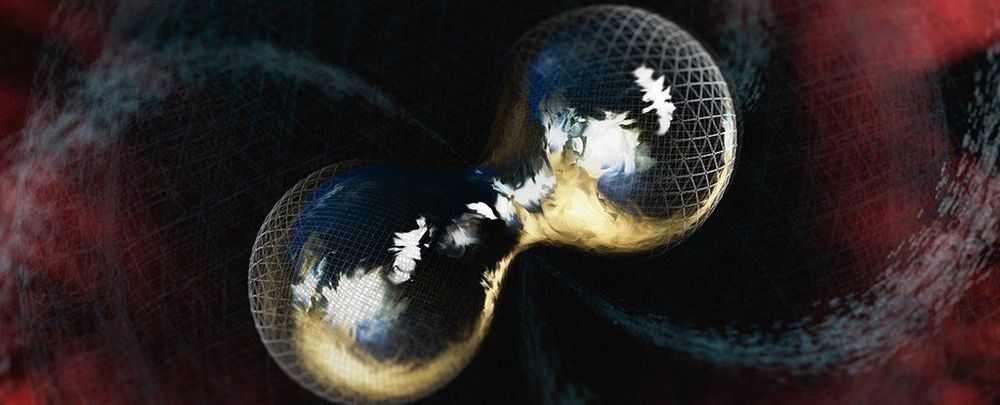
According to a straightforward interpretation of general relativity, the Big Bang wasn’t the start of ‘everything’.
Taking Einstein’s famous equations at face value and making as few assumptions as possible, a team of researchers has rewound the clock on our Universe to find it wouldn’t lead to a stopping point at all, but would take us through a different kind of beginning into a flipped space.
To understand what all the fuss over the Big Bang is, we need to rewind a bit to understand why physicists think it may not have been the start of everything.
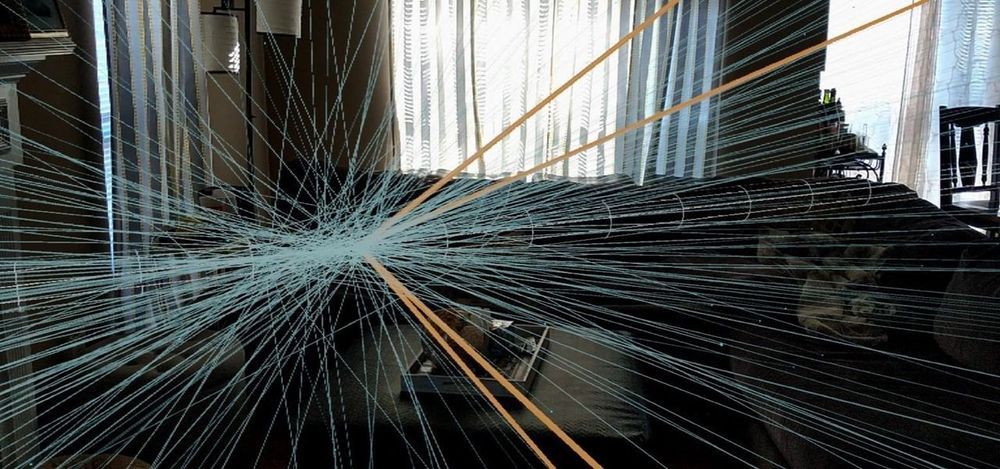
Although it’s impossible (at least for now) to travel back in time to see the Big Bang, The New York Times has provided its readers the closest simulation of the experience via its latest augmented reality feature.
On Friday, the Times published “It’s Intermission for the Large Hadron Collider,” an interactive story that gives readers a virtual tour of the Large Hadron Collider at the European Center for Nuclear Research (CERN) in Switzerland and explores its most famous discovery, the Higgs boson.