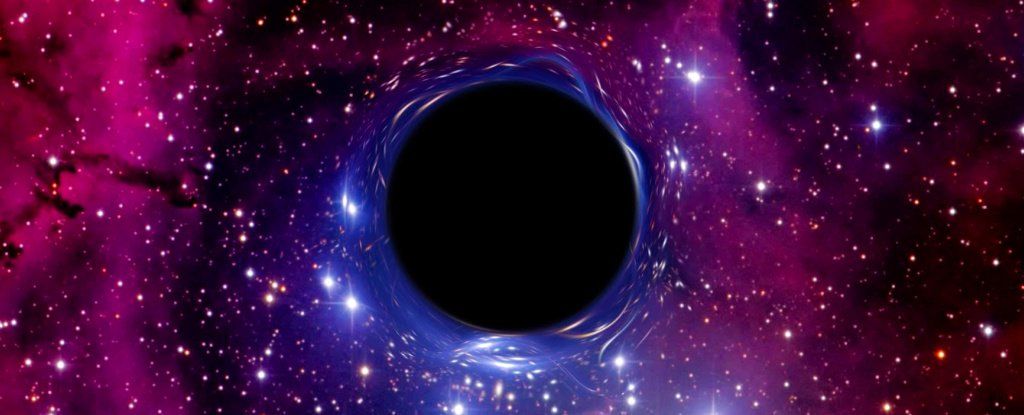
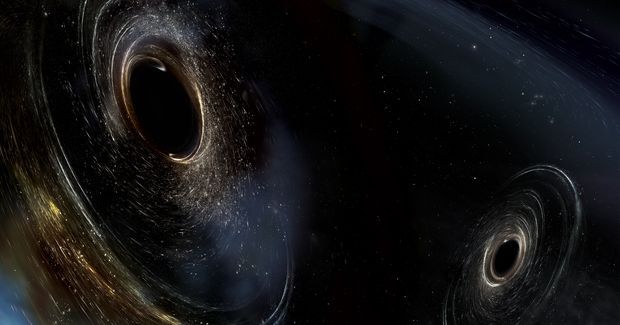
Black holes are great at sucking up matter. So great, in fact, that not even light can escape their grasp (hence the name).
But given their talent for consumption, why don’t black holes just keep expanding and expanding and simply swallow the Universe? Now, one of the world’s top physicists has come up with a new explanation.
Conveniently, the idea could also unite the two biggest theories in all of physics.
We’re taught at school that energy can’t be created, merely converted from one form to another. But at the birth of the Universe – that is, everything – the energy needed for the Big Bang must have come from somewhere. Many cosmologists think its origin lies in so-called quantum uncertainty, which is known to allow energy to emerge literally from nowhere. What isn’t clear, however, is why this cosmic energy persisted long enough to drive the Big Bang.
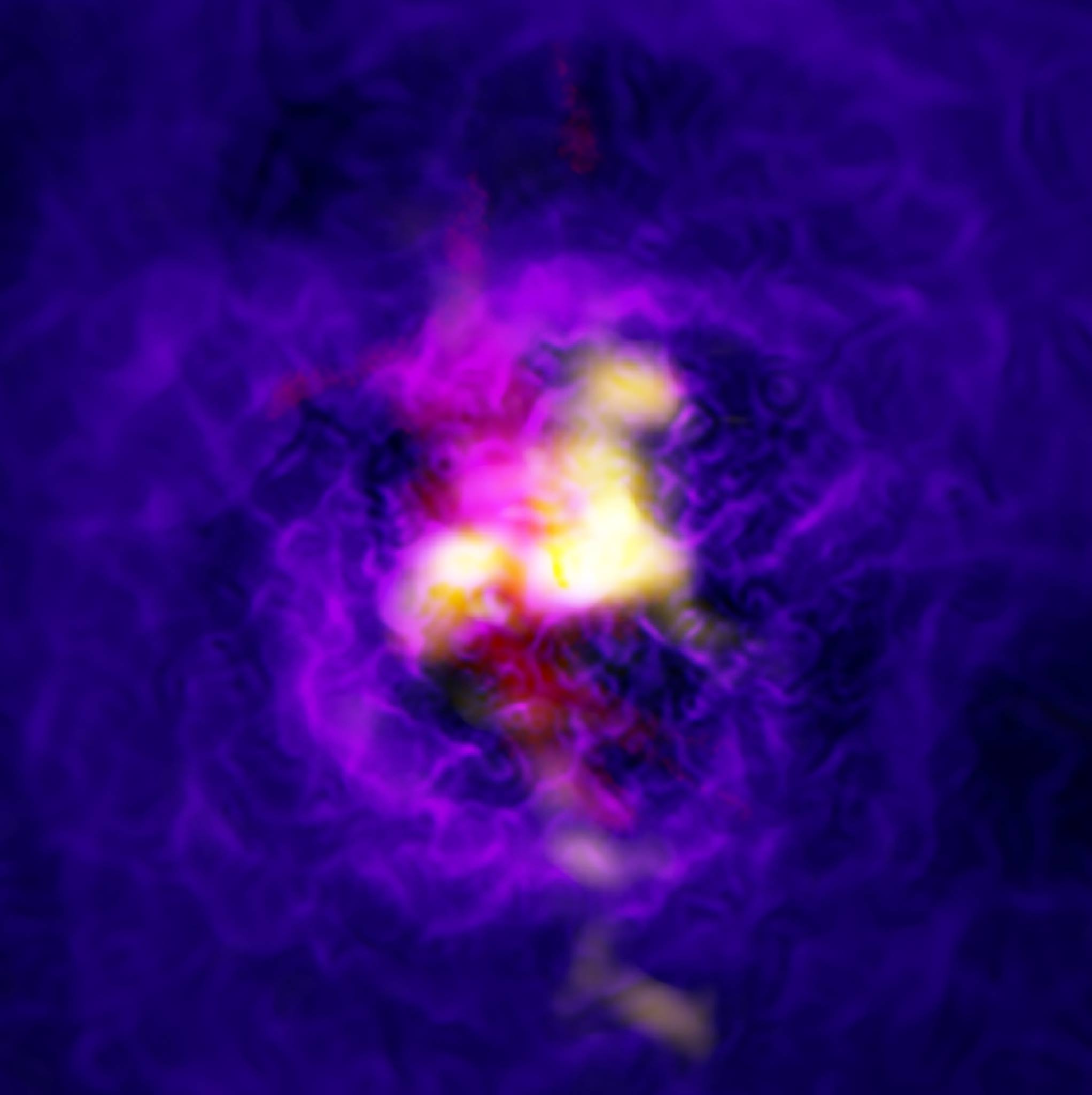
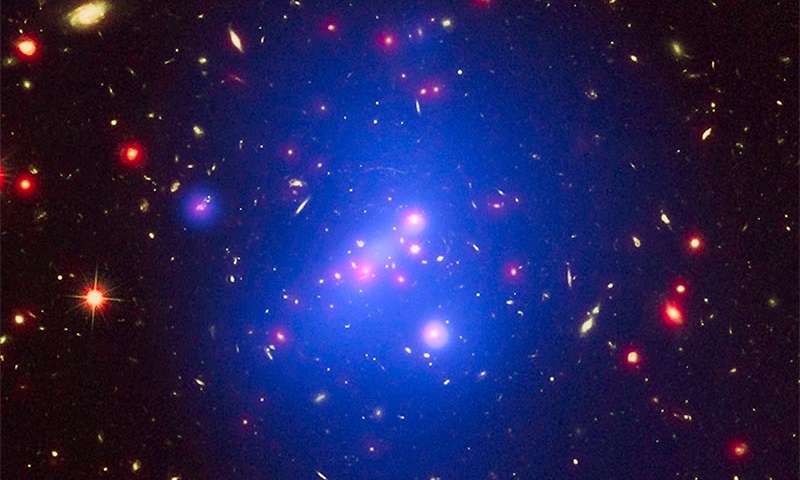
When vast amounts of gas fall toward a supermassive black hole at the center of a galaxy cluster, gravitational and electromagnetic forces spray most of the gas away continuously for tens of millions of years. See for yourself: https://go.nasa.gov/2GfhvLd
The concept of time travel has always captured the imagination of physicists and laypersons alike. But is it really possible? Of course it is. We’re doing it right now, aren’t we? We are all traveling into the future one second at a time.
But that was not what you were thinking. Can we travel much further into the future? Absolutely.
If we could travel close to the speed of light, or in the proximity of a black hole, time would slow down enabling us to travel arbitrarily far into the future. The really interesting question is whether we can travel back into the past.
And all three of these shapes were exactly what the PHENIX scientists observed. It’s our first good peek at what the universe began forming in its very earliest moments after the Big Bang.
If you have ever looked into the ‘many world’s theory’ you know that the world we live in is quite possibly one of many. Regardless of the multiverse hypotheses, you choose to follow/look into each one is truly fascinating for a number of reasons.
Basically, most of them touch on how there are many different worlds, universes, dimensions, or whatever you would like to call them. Each one the same as our own but also different in some way. For instance, in another world, you might be living the same life as you are now but perhaps politics had gone in a different direction. Maybe all of the presidents that were elected here in the US were opposite from how they are in our world. Maybe everything is the same except for you have different colored hair? The differences between worlds could be minuscule or extreme, it all varies.
While throughout the years’ many physicists and researchers, in general, have been trying hard to prove the existence of this kind of thing, it has proven to be quite the task. That being said, the concept itself has not been disproven. Now, what this article is about is a concept many do not realize is quite prevalent in these theories. We are all connected to these other worlds or universes. Each one might be separate from our own but it has been suggested time and time again that when we experience things like deja vu or peculiar dreams we are getting a glimpse into one of these other worlds.
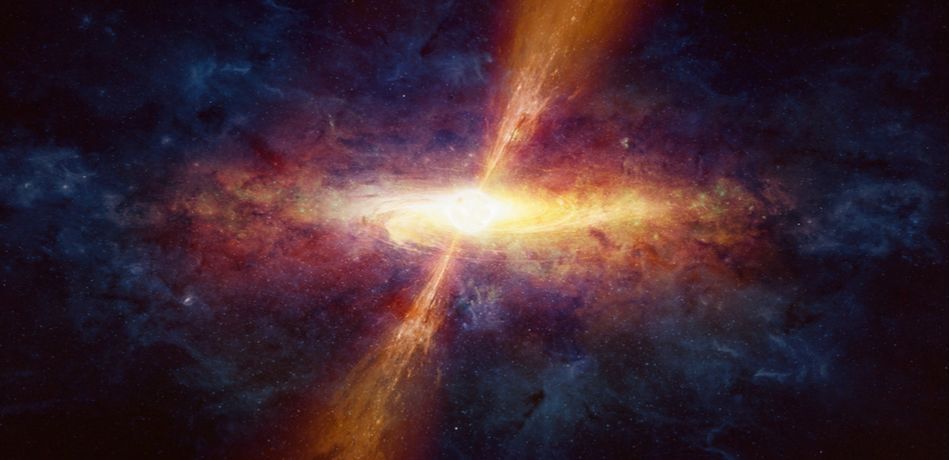
This is the farthest away that black hole wind has ever been known to extend.
Astronomers studying the universe’s first light — the light from the first stars, which ignited nearly 14 billion years ago, according to the European Southern Observatory (ESO) — have made an unexpected discovery.
While scouring the distant cosmos with the Atacama Large Millimeter/submillimeter Array (ALMA) in northern Chile, the scientists came across a streak of thermal wind spewed from a far-flung black hole, which had traveled a staggering distance from the galaxy where it originated.