Microsoft looks to the future with the upcoming release of its own quantum computing programming language.

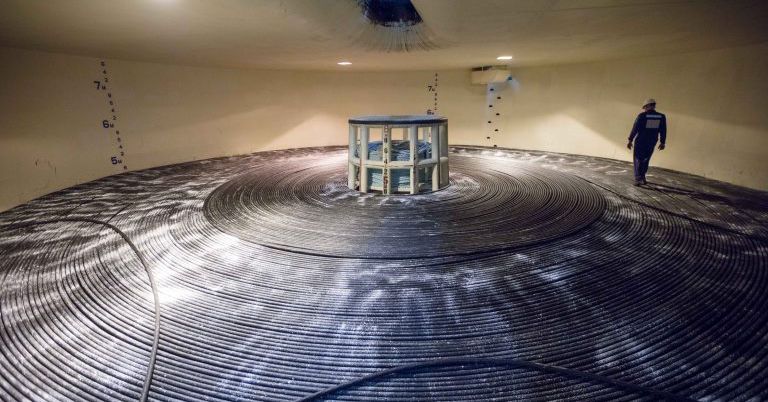
Microsoft, Facebook, and the telecoms infrastructure company Telxius have announced the completion of the highest capacity subsea cable to ever cross the Atlantic Ocean. The cable is capable of transmitting 160 terabits of data per second, the equivalent of streaming 71 million HD videos at the same time, and 16 million times faster than an average home internet connection, Microsoft claims. The cable will be operational by early 2018.
Called Marea, which is Spanish for “tide,” the 4,000 mile long subsea cable lies 17,000 feet below the ocean surface and extends between Virginia Beach, Virginia and the city of Bilbao in Spain. Marea also stretches a route south of most existing transatlantic cables. Because of this, Microsoft says the cable will provide resiliency for those living in the US and Europe by safeguarding against natural disasters or other major events that might cause disruptions to connections like those seen during Hurricane Sandy. More importantly to Microsoft and Facebook: both companies have large data center operations in Virginia.
“Marea comes at a critical time,” said Brad Smith, president of Microsoft. “Submarine cables in the Atlantic already carry 55 percent more data than trans-Pacific routes and 40 percent more data than between the US and Latin America. There is no question that the demand for data flows across the Atlantic will continue to increase.” For most of the route, the cable — made up of eight pairs of fiber optic cables enclosed by copper — lays on the ocean floor. Some parts are buried to protect from shipping traffic, usually in areas closer to the shore.
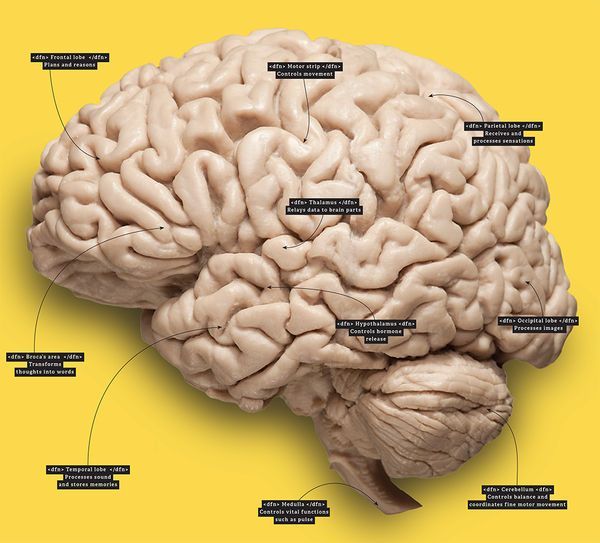
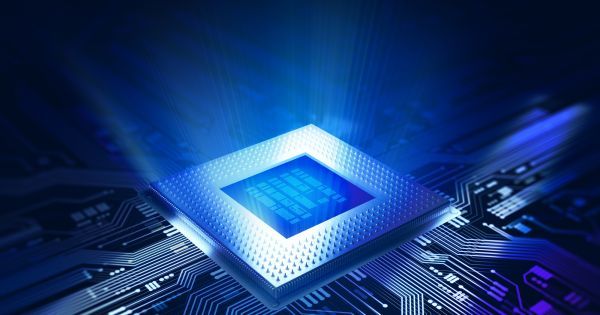
Scientists from several universities published a paper in Science Advances, in which they reveal their progress toward the “holy grail” of computing: a light-based microchip that truly rivals the speed and parallel processing of the human brain.
Scientists at the University of Exeter have made a landmark breakthrough in the quest for the “holy grail” of computing: human-brain-mimicking microchips able to store and process information on par with homo sapiens, according to a new Science Advances release.
Huge queues formed at airports around the world today after an IT system vital to scores of airlines crashed due to one faulty switch.
A program run by a huge tech firm called Amadeus is behind computers for British Airways, Air France, Lufthansa and other carriers, who use it every day to check passengers onto flights.
But the system was sent into meltdown today when the firm accidentally triggered a computer crash, causing long lines of upset passengers to form at airports across the globe.
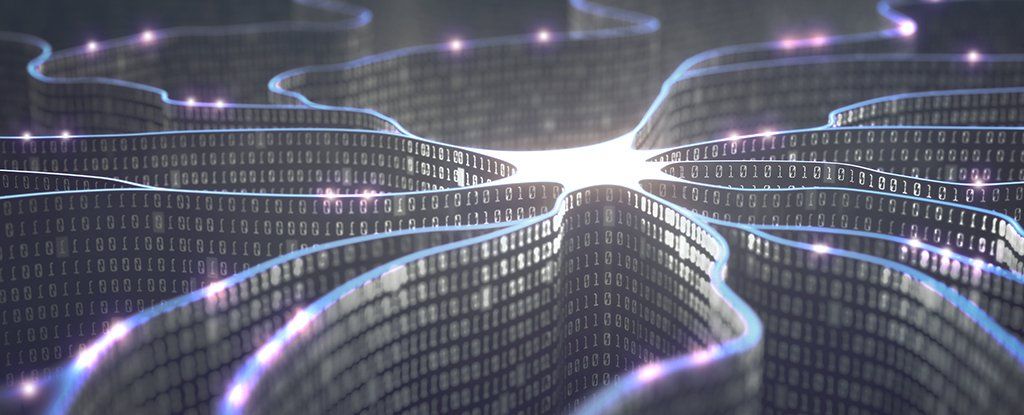
The human brain is used as a comparison for how computer’s function. But, honestly, computers are nothing like human brains. Not yet, at least.
That could change as researchers have developed computing technology that uses light to mimic the functionality of a nerve’s synapse, opening the way for hardware that combines the speed of modern processors with the efficiency of brainpower.
Brains and computers are both systems that can model, manipulate, and store information. From there, they don’t tend to have all that much in common.

Will any of the jobs that exist today still be around in 20 years? Fast Future’s Steve Wells, Alexandra Whittington and Rohit Talwar explore whether automation is destined to rewrite all our futures.
We are embarking on the so-called fourth industrial revolution – heralding an era where smart technologies could transform every aspect of business, work, government and our daily lives. We are already used to seeing faceless robots undertaking repetitive manufacturing tasks and smart applications determining our credit ratings, autopiloting planes and delivering an array of functionality to our mobile devices.
A pair of Japanese researchers believe their quantum computing method will increase the number of qubits processed from the dozens to the millions.
I did a new interview on #transhumanism for some journalism students at Germany’s Technical University of Dortmund. It’s in English:
Mechanical bodyparts are very common nowadays – a lot of humans have a hip replacement or a pacemaker. Technology helps saving our lives rather often. Some people want to take this a lot further – a philosophical and scientific movement called Transhumanism. Zoltan Istvan Gyurko is one of the most famous Transhumanists, he even ran for president in 2016. In this interview, he talks about his first experiences with Transhumanism, immortality and the future of humanity.
By Marie-Louise Timcke und Paul Klur
Why is Transhumanism important for our society nowadays?
Zoltan Istvan: Well, Transhumanism is perhaps the most important subject matter that we have actually existing in society at the moment. Because humankind has been moving forward very slowly developing science and technology. But in ways that haven’t really rudimentary changed the human being. But all of a sudden, since the invention of the microchip, humanity is changing dramatically because of data, because of the internet, because of computers, because of smartphones. And what we have seen is almost nothing compared to what we’re going to see over the next ten or twenty years. Transhumanism is the field that wants to use science and technology to modify the human being and realise this kind of digitization of the actual self. But most importantly, the next ten years are going to be completely disruptive to whatever we thought it meant to be human beings.