Toggle light / dark theme

Materials challenges and opportunities for quantum computing hardware

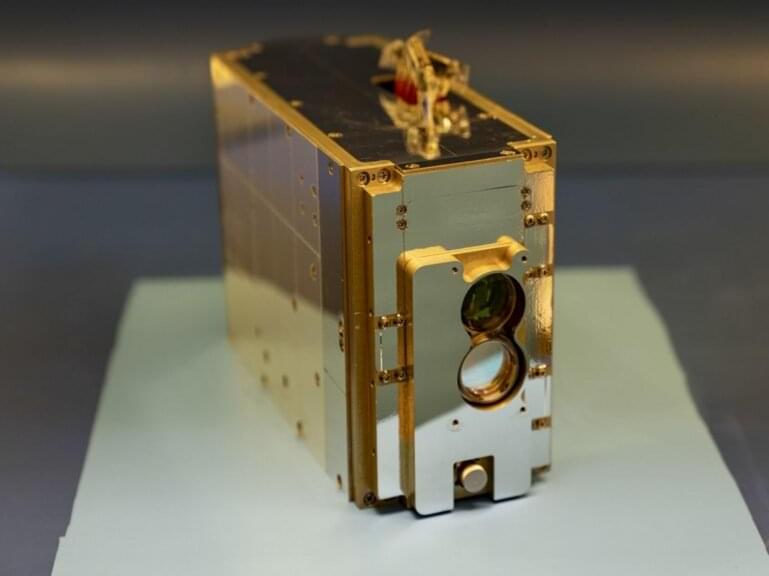
The potential of quantum computers to solve problems that are intractable for classical computers has driven advances in hardware fabrication. In practice, the main challenge in realizing quantum computers is that general, many-particle quantum states are highly sensitive to noise, which inevitably causes errors in quantum algorithms. Some noise sources are inherent to the current materials platforms. de Leon et al. review some of the materials challenges for five platforms for quantum computers and propose directions for their solution.

Science, this issue p. eabb2823.

Out of a total of 23 monkeys implanted with Elon Musk’s Neuralink brain chips at the University of California Davis between 2017 and 2020, at least 15 reportedly died

Via Business Insider and the New York Post, the news comes from the Physicians Committee for Responsible Medicine, an animal-rights group that viewed over 700 pages of documents, veterinary records, and necropsy reports through a public records request at the university.

-Wren Graves.

Researchers Have Achieved Sustained Long-Distance Quantum Teleportation

In a way, entangled particles behave as if they are aware of how the other particle is behaving. Quantum particles, at any point, are in a quantum state of probabilities, where properties like position, momentum, and spin of the particle are not precisely determined until there is some measurement. For entangled particles, the quantum state of each depends on the quantum state of the other; if one particle is measured and changes state, for example, the other particle’s state will change accordingly.

The study aimed to teleport the state of quantum qubits, or “quantum bits,” which are the basic units of quantum computing. According to the study, the researchers set up what is basically a compact network with three nodes: Alice, Charlie, and Bob. In this experiment, Alice sends a qubit to Charlie. Bob has an entangled pair of qubits, and also sends one qubit to Charlie, where it interferes with Alice’s qubit. Charlie projects Alice’s qubit onto an entangled quantum Bell State that transfers the state of Alice’s original qubit to Bob’s remaining qubit.

The breakthrough is notable for a few reasons. Many previous demonstrations of quantum teleportation have proven to be unstable over long distances. For example, in 2016, researchers at the University of Calgary were able to perform quantum teleportation at a distance of six kilometers. This was the world record at the time and was seen as a major achievement.

Scientists Discover a Mysterious Transition in an Exotic Electronic Crystal

Thermal span in a layered compound promises applications in next-generation electrical switches and nonvolatile memory.

When temperature changes, many materials undergo a phase transition, such as liquid water to ice, or a metal to a superconductor. Sometimes, a so-called hysteresis loop accompanies such a phase change, so that the transition temperatures are different depending on whether the material is cooled down or warmed up.

In a new paper in Physical Review Letters, a global research team led by MIT physics professor Nuh Gedik discovered an unusual hysteretic transition in a layered compound called EuTe4, where the hysteresis covers a giant temperature range of over 400 kelvins. This large thermal span not only breaks the record among crystalline solids, but also promises to introduce a new type of transition in materials that possess a layered structure. These findings would create a new platform for fundamental research on hysteretic behavior in solids over extreme temperature ranges. In addition, the many metastable states residing inside the giant hysteresis loop offer ample opportunities for scientists to exquisitely control the electrical property of the material, which can find application in next-generation electrical switches or nonvolatile memory, a type of computer memory that retains data when powered off.

Social Security Is The World’s Largest Ponzi Scheme

When the next generations are fewer and less wealthy than the previous generations(who are living longer), problems can arise.

| Invest in blue-chip art for the very first time by signing up for Masterworks: https://masterworks.art/wallstreet.

See important disclosures: https://mw-art.co/37WwvbD

This video is sponsored by Masterworks.

In this video we look at the structure of the US Social Security system and how it closely resembles aa Ponzi Scheme. Current retirees are paid from payroll taxes collected from existing workers. In recent years the demographic trends in the US have deteriorated significantly and Social Security expected to become insolvent by 2033.

0:00 — 1:39 Intro.

Nvidia’s next generation Lovelace architecture may not differ all that much from Ampere

But with more of everything?


Every day brings us closer to the launch of next generation video cards. The RX 6,000 series and Nvidia RTX 30 series have been with us for well over a year, and we’re looking forward to what’s coming next. Well known leaker Greymon55 loves a good tease and his latest tweet indicates that the fundamental architecture of the upcoming Lovelace, or RTX 40 series GPUs isn’t all that different from those of current Ampere RTX 30 GPUs.

The Lovelace architecture doesn’t change much. February 5, 2022

See more.

The Large Hadron Collider is sucking in graphics cards at a rapidly increasing rate

It’s no secret that, while the humble GPU was originally conceived for the express purpose of chucking polygons around a screen in the most efficient way, it turns out the parallel processing prowess of modern graphics chips makes for an incredibly powerful tool in the scientific community. And an incredibly efficient one, too. Indeed A Large Ion Collider Experiment (ALICE) has been using GPUs in its calculations since 2010 and its work has now encouraged their increased use in various LHC experiments.

The potential bad news is that it does mean there’s yet another group desperate for the limited amount of GPU silicon coming out of the fabs of TSMC and Samsung. Though at least this lot will be using it for a loftier purpose than mining fake money coins.

New brain imaging technique suggests memories are stored in the connections between your neurons

All memory storage devices, from your brain to the RAM in your computer, store information by changing their physical qualities. Over 130 years ago, pioneering neuroscientist Santiago Ramón y Cajal first suggested that the brain stores information by rearranging the connections, or synapses, between neurons.

Since then, neuroscientists have attempted to understand the physical changes associated with memory formation. But visualizing and mapping synapses is challenging to do. For one, synapses are very small and tightly packed together. They’re roughly 10 billion times smaller than the smallest object a standard clinical MRI can visualize. Furthermore, there are approximately 1 billion synapses in the mouse brains researchers often use to study brain function, and they’re all the same opaque to translucent color as the tissue surrounding them.

A new imaging technique my colleagues and I developed, however, has allowed us to map synapses during memory formation. We found that the process of forming new memories changes how brain cells are connected to one another. While some areas of the brain create more connections, others lose them.

/* */