The search giant plans to reach a milestone in computing history before the year is out.

“Our brains produce enough data to stream 4 HD movies every second. The problem is that the best way we have to get information out into the world — speech — can only transmit about the same amount of data as a 1980s modem,” CEO Mark Zuckerberg said in a Facebook post.
At Facebook’s annual developer conference, F8, on Wednesday, the group unveiled what may be Facebook’s most ambitious—and creepiest—proposal yet. Facebook wants to build its own “brain-to-computer interface” that would allow us to send thoughts straight to a computer.
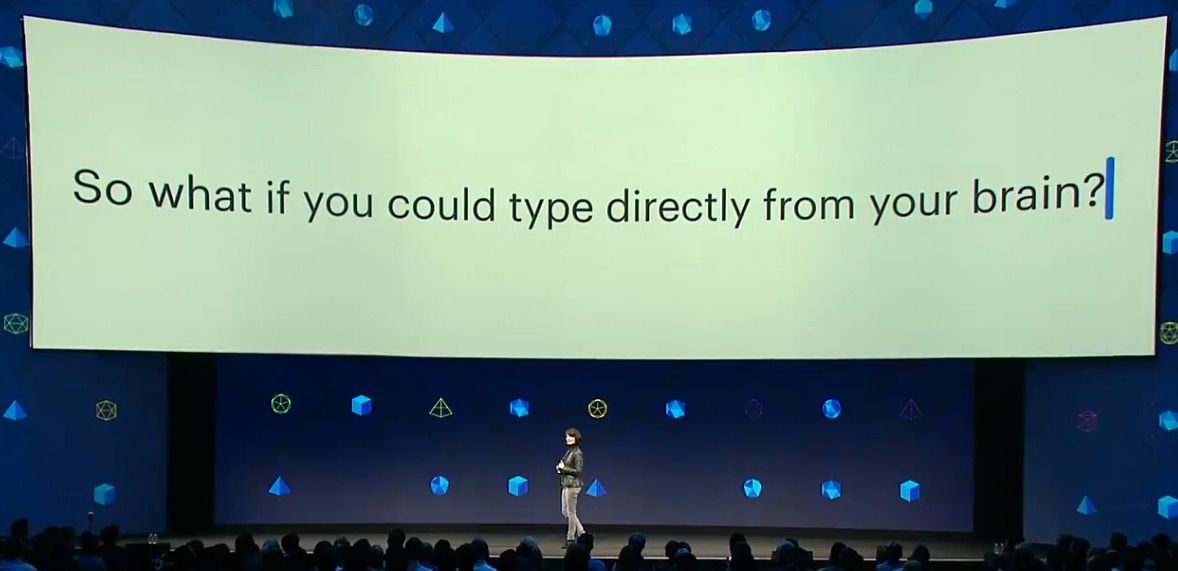
Regina Dugan, PhD, Facebook VP of Engineering, Building8, revealed today (April 19, 2017) at Facebook F8 conference 2017 a plan to develop a non-invasive brain-computer interface that will let you type at 100 wpm — by decoding neural activity devoted to speech.
Dugan previously headed Google’s Advanced Technology and Projects Group, and before that, was Director of the Defense Advanced Research Projects Agency (DARPA).

Facebook today unveiled a project from its secretive Building 8 research group that’s working to create a brain-computer interface that lets you type with your thoughts. Regina Dugan, a former director of DARPA and the ex-head of Google’s experimental ATAP research group, announced the news today onstage at Facebook’s F8 developer conference. Dugan, who now heads up Building 8, says the goal is “something as simple as a yes-no brain click” that could fundamentally change how we interact with and use technology. While it does not exist today outside of very specific medical research trials, Dugan says her team is actively working to make it a reality.
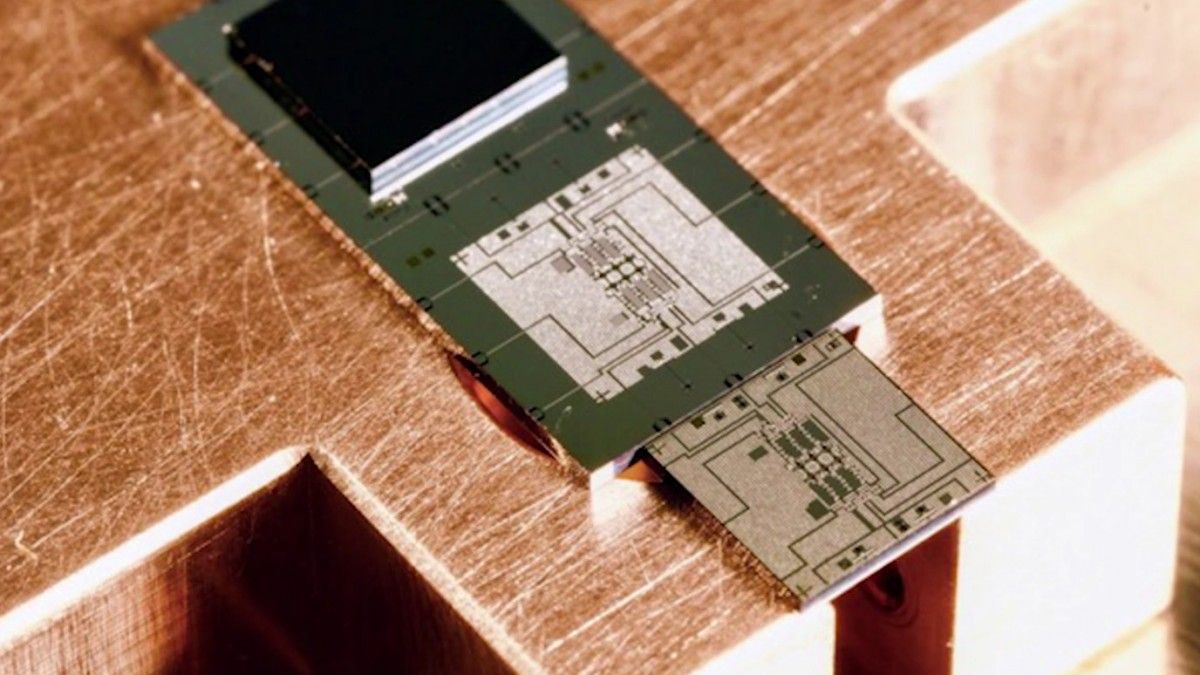
The blind may be able to see with help from this chip.

Drawing inspiration from the plant world, researchers have invented a new electrode that could boost our current solar energy storage by an astonishing 3,000 percent.
The technology is flexible and can be attached directly to solar cells — which means we could finally be one step closer to smartphones and laptops that draw their power from the Sun, and never run out.
A major problem with reliably using solar energy as a power source is finding an efficient way to store it for later use without leakage over time.
Unimaginable Radical Abundance:
Yesterday I took the time to read chapter 11 of Eric Drexler’s book Radical Abundance as to get a glimpse of what might be possible with Atomically Precise Manufacturing (APM). I highly recommend the book.
The potential of APM is truly unimaginable.
Try to imagine billion core processors, memory storage in the billions of gigabytes per cm2. Solar panels far exceeding todays best laboratory efficiencies. Batteries that are a billion times more energy dense. All this with a negligible impact on the environment.
APM can produce these products and many more at costs of roughly 20¢ per kilogram!
Just let that sink in. Just to illustrate this $1 would buy you more memory storage than is currently available throughout the entire world (roughly 10 Zettabytes).
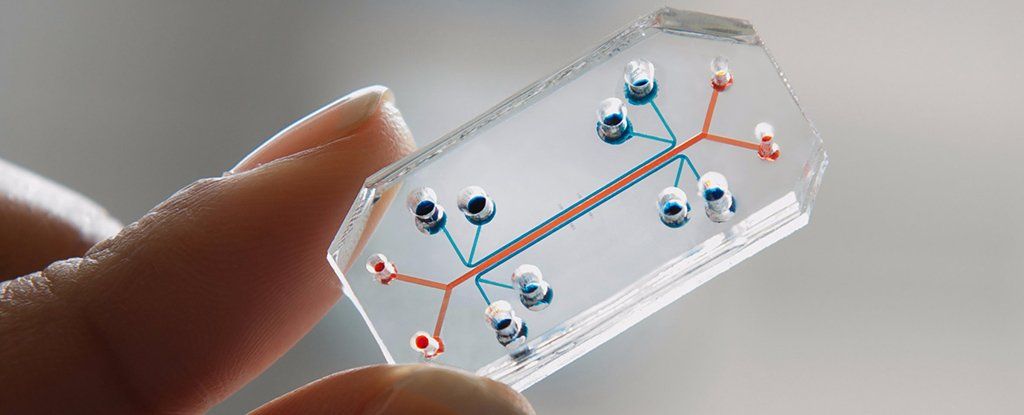
“A future without animal testing is getting closer. On Tuesday, the Food and Drug Administration agreed to a research-and-development collaboration with Emulate, a company that makes “organs-on-chips” technology.
The hope is that instead of testing new drugs or supplements on animals, researchers can use Emulate’s chips.
To start, the collaboration between the FDA and Emulate will focus on the company’s Liver-Chips, which are meant to show how an animal’s liver may react to a certain drug.
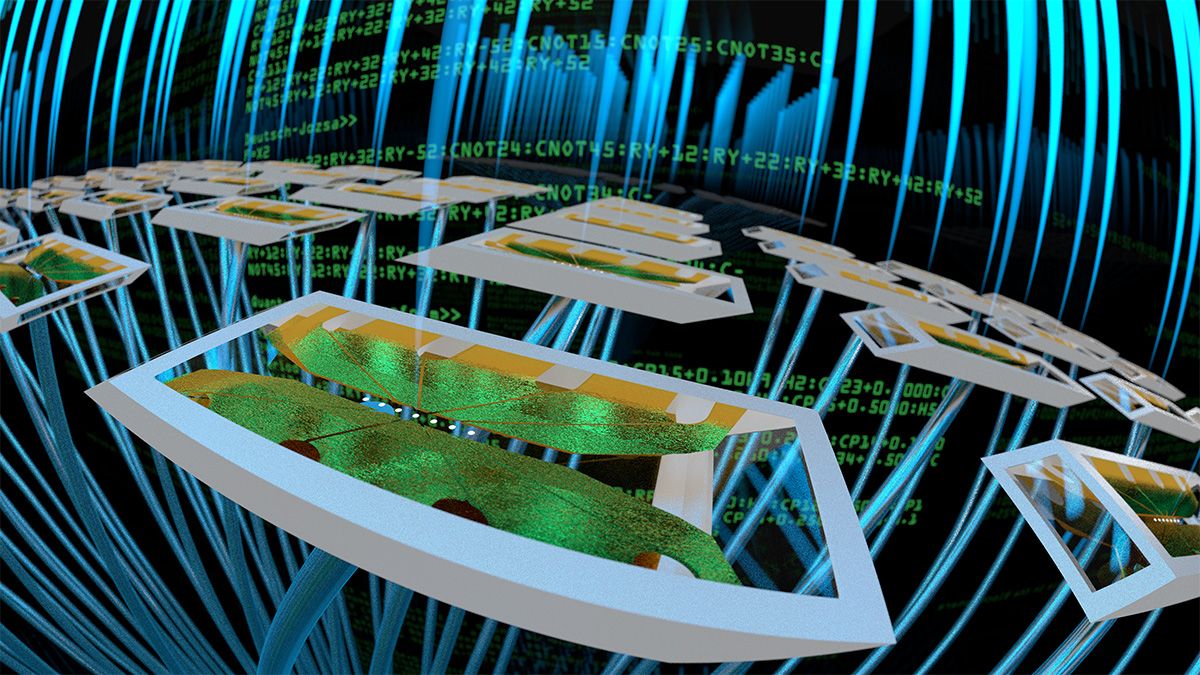
The race to build larger and larger quantum computers is heating up, with several technologies competing for a role in future devices. Each potential platform has strengths and weaknesses, but little has been done to directly compare the performance of early prototypes. Now, researchers at the JQI have performed a first-of-its-kind benchmark test of two small quantum computers built from different technologies.
The team, working with JQI Fellow Christopher Monroe and led by postdoctoral researcher Norbert Linke, sized up their own small-scale quantum computer against a device built by IBM. Both machines use five qubits—the fundamental units of information in a quantum computer—and both machines have similar error rates. But while the JQI device relies on chains of trapped atomic ions, IBM Q uses coupled regions of superconducting material.
To make their comparison, the JQI team ran several quantum programs on the devices, each of which solved a simple problem using a series of logic gates to manipulate one or two qubits at a time. Researchers accessed the IBM device using an online interface, which allows anyone to try their hand at programming IBM Q.
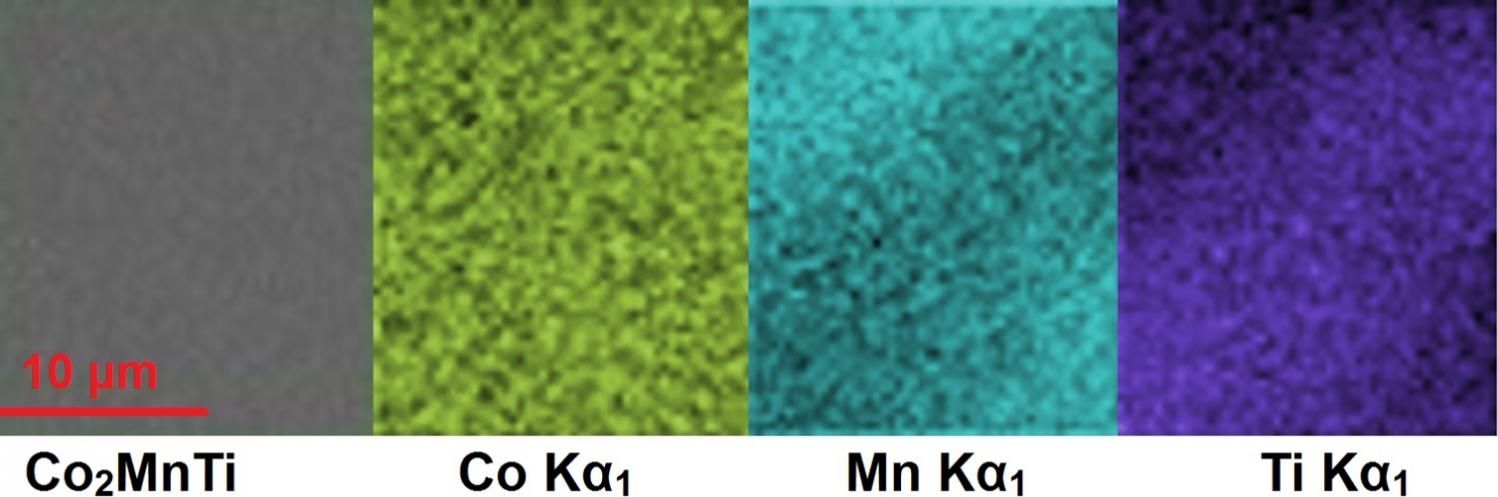
Material scientists have predicted and built two new magnetic materials, atom-by-atom, using high-throughput computational models. The success marks a new era for the large-scale design of new magnetic materials at unprecedented speed.
Although magnets abound in everyday life, they are actually rarities—only about five percent of known inorganic compounds show even a hint of magnetism. And of those, just a few dozen are useful in real-world applications because of variability in properties such as effective temperature range and magnetic permanence.
The relative scarcity of these materials can make them expensive or difficult to obtain, leading many to search for new options given how important magnets are in applications ranging from motors to magnetic resonance imaging (MRI) machines. The traditional process involves little more than trial and error, as researchers produce different molecular structures in hopes of finding one with magnetic properties. Many high-performance magnets, however, are singular oddities among physical and chemical trends that defy intuition.