Toggle light / dark theme

Bentley wants to put a holographic butler in your car

Bots and artificial intelligence are all the rage right now. Whether it’s Siri or Cortana, computers are trying to take things off our plate and make life easier. Making life easier and more comfortable — and more luxurious — is what Bentley is about, too, and that’s why the company is imagining what the future of automotive luxury might be like.

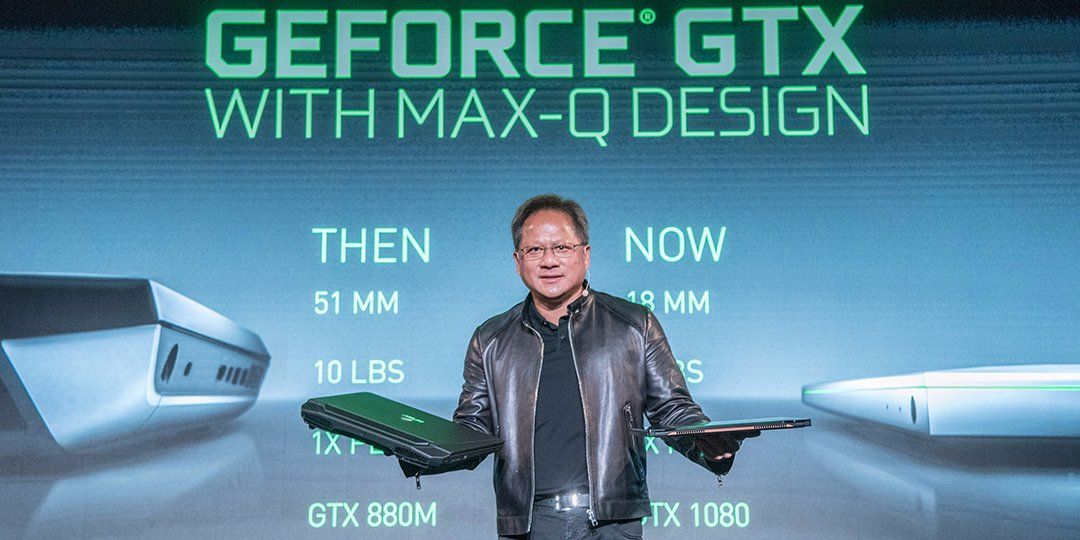
One of those things, according to this mock-up image provided by Bentley, is a holographic butler that could appear in the car and help you out. Perhaps it would make restaurant recommendations and reservations, or you’d tell the digital Jeeves where you’re looking to go before your autonomous car takes over.

Bentley design director Stefan Sielaff said, according to The Mirror, that how these sorts of “yet-to-be-invented connectivity and technologies… are integrated into the cabin will become ever more important.” The holographic butler could put a more human face on the self-driving car, so just call out “Home, James!” and you’ll be on your way.

Engineers develop first transistors made entirely of nanocrystal ‘inks’

The transistor is the most fundamental building block of electronics, used to build circuits capable of amplifying electrical signals or switching them between the 0s and 1s at the heart of digital computation. Transistor fabrication is a highly complex process, however, requiring high-temperature, high-vacuum equipment.

Now, University of Pennsylvania engineers have shown a new approach for making these devices: sequentially depositing their components in the form of liquid nanocrystal “inks.”

Their new study, published in Science, opens the door for electrical components to be built into flexible or wearable applications, as the lower-temperature process is compatible with a wide array of materials and can be applied to larger areas.

Solar Cells Will be Made Obsolete

Rectenna Naval Optical 150928122542_1_540x360
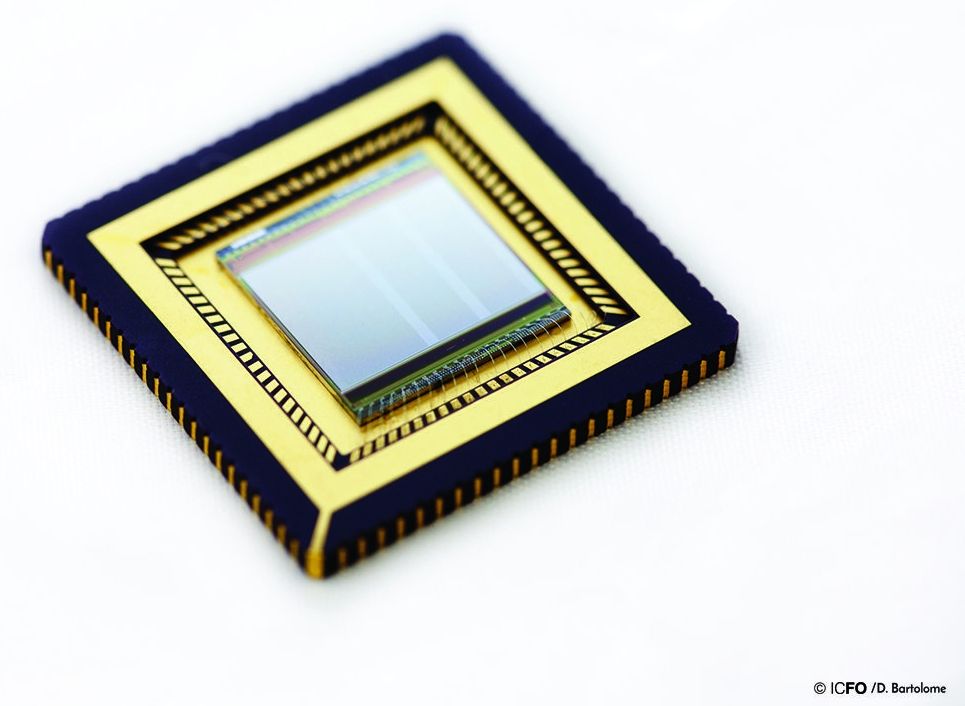
A new kind of nanoscale rectenna (half antenna and half rectifier) can convert solar and infrared into electricity,
plus be tuned to nearly any other frequency as a detector.

Right now efficiency is only one percent, but professor Baratunde Cola and colleagues at the Georgia Institute of Technology (Georgia Tech, Atlanta) convincingly argue that they can achieve 40 percent broad spectrum efficiency (double that of silicon and more even than multi-junction gallium arsenide) at a one-tenth of the cost of conventional solar cells (and with an upper limit of 90 percent efficiency for single wavelength conversion).

It is well suited for mass production, according to Cola. It works by growing fields of carbon nanotubes vertically, the length of which roughly matches the wavelength of the energy source (one micron for solar), capping the carbon nanotubes with an insulating dielectric (aluminum oxide on the tethered end of the nanotube bundles), then growing a low-work function metal (calcium/aluminum) on the dielectric and voila–a rectenna with a two electron-volt potential that collects sunlight and converts it to direct current (DC).

“Our process uses three simple steps: grow a large array of nanotube bundles vertically; coat one end with dielectric; then deposit another layer of metal,” Cola told EE Times. “In effect we are using one end of the nanotube as a part of a super-fast metal-insulator-metal tunnel diode, making mass production potentially very inexpensive up to 10-times cheaper than crystalline silicon cells.”

MIT researchers develop 3D printing process that creates fully functional robots as soon as they come off printer

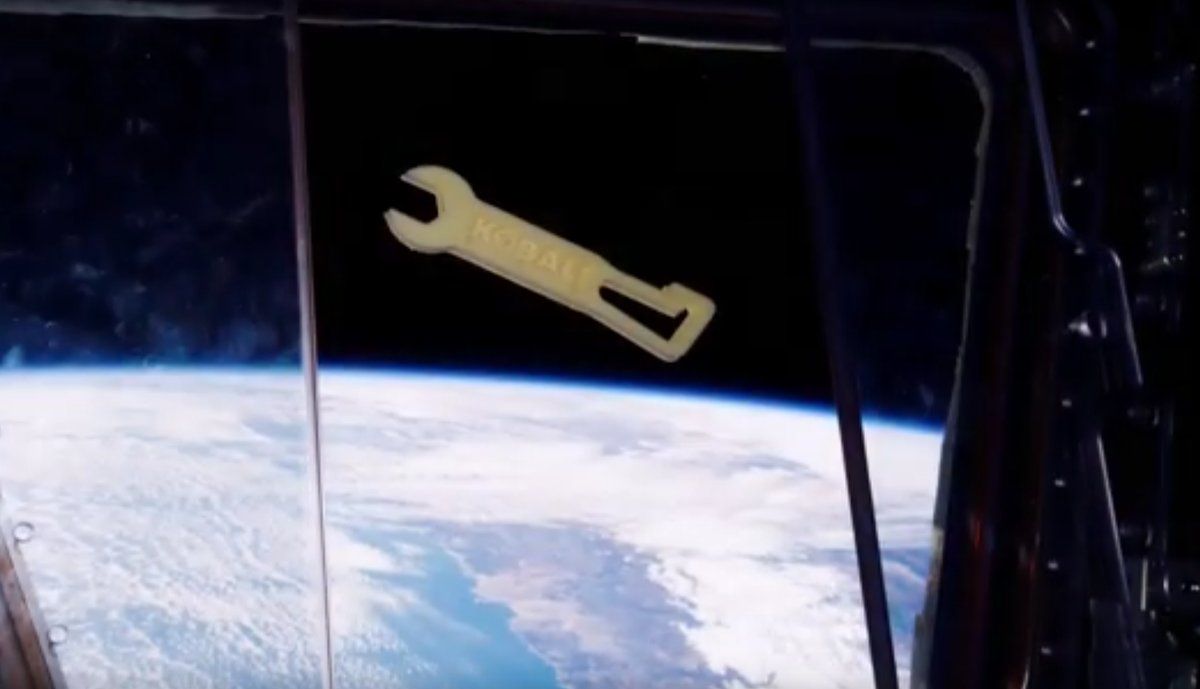
Researchers at MIT’s Computer Science and Artificial Intelligence Laboratory (CSAIL) have developed a new 3D printing process that creates fully functional robots from the moment they come out of the printer.

MIT process of robot making is quite streamlined, as the robot’s solid and hydraulic parts are created in one step. CSAIL Director Daniela Rus, who oversaw the project, said that their approach of printable hydraulics is a step ahead in the rapid fabrication of functional machines.

The single-step process involves printing a small six-legged robot that crawls with the help of 12-hydraulic pumps embedded in its body. Working of the printer includes inkjet printer deposits drops of material quite small in size. The object is printed layer wise from bottom to the top. High-intensity UV light solidifies the materials that were used to create the object.

BMW opts to incorporate HTC Vive VR headsets and mixed reality into the development of new vehicle models. Computer images instead of laboriously constructed draft models: greater flexibility, faster results and lower costs

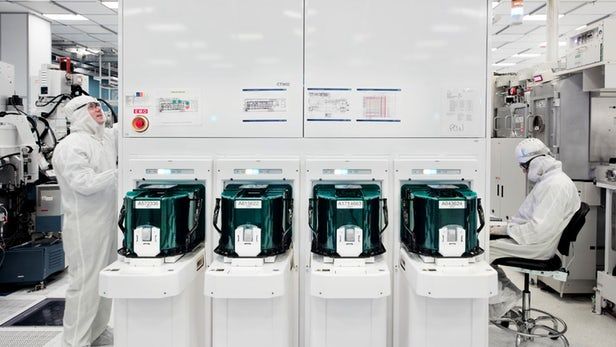
Munich. BMW has become the first car manufacturer to introduce a mixed reality system into vehicle development that has been devised entirely using components from the computer games industry. This offers some significant advantages over the VR systems that have existed to date, and is the first step towards making virtual reality a very real part of many developer workstations in the not-too-distant future.

The adoption of this computer system makes it possible to save a great deal of time and effort, especially during the early stages of development. VR investigations could previously only be conducted at costly specialised facilities. By incorporating consumer electronics, the developers gain an unprecedented degree of flexibility, because any modifications can be implemented and tested very quickly. In addition to this, developers around the globe will be able to take part in the decision-making process from their own office without having to travel too far. Only once the draft designs have been approved with the help of the 3D headsets will they actually be built for further testing.

BMW has been employing VR systems in the development process since the 1990s. It is now reaffirming its pioneering status by systematically implementing technology from a sector which has not previously been the focal point of industrial applications. Since this spring, components from the computer games industry have been allowing engineers and designers to immerse themselves more and more often in virtual worlds that are increasingly realistic. The shorter innovation cycles of consumer electronics result in a far wider scope of functions together with lower costs. This thereby enables more vehicle functions to be translated to a VR model in ever more realistic fashion. It is furthermore possible to scale the system to many different developer workstations with little effort.

Digital Marketing CCO: How Quantum Computing Will Change Work As We Know It

Imagine robotics and other AI on QC; because it is coming and on a very large scale.


The computer chip has now reached middle age. Like most of us in middle age, it is not as sprightly as it once was, and is set to be superseded by younger forms of computing. Enter the quantum computer. It’s set to transform our lives, the way we work and play.

What exactly is quantum computing?

In a nutshell, conventional microprocessors are limited to binaries of ones and zeros, which limits their processing capability. But quantum computers hinge on the principles of quantum physics, which allows for something called ‘superimposition.’ This means an electron can exist as a zero and one at the same time, as opposed to either one or zero. This allows for levels of processing power that are millions of times greater than we currently have.

Human Brain Project’s Research Platforms Released

30.03.16 — Public Release of Platforms Will Help Advance Collaborative Research in Neuroscience, Medicine, and Computing

The Human Brain Project (HBP) is pleased to announce the release of initial versions of its six Information and Communications Technology (ICT) Platforms to users outside the Project. These Platforms are designed to help the scientific community to accelerate progress in neuroscience, medicine, and computing.

The Platforms released today consist of prototype hardware, software tools, databases and programming interfaces, which will be refined and expanded in a collaborative approach with users, and integrated within the framework of a European Research Infrastructure. The public release of the Platforms represents the end of the Ramp-Up Phase of the HBP and the beginning of the Operational Phase.

/* */