Nice.
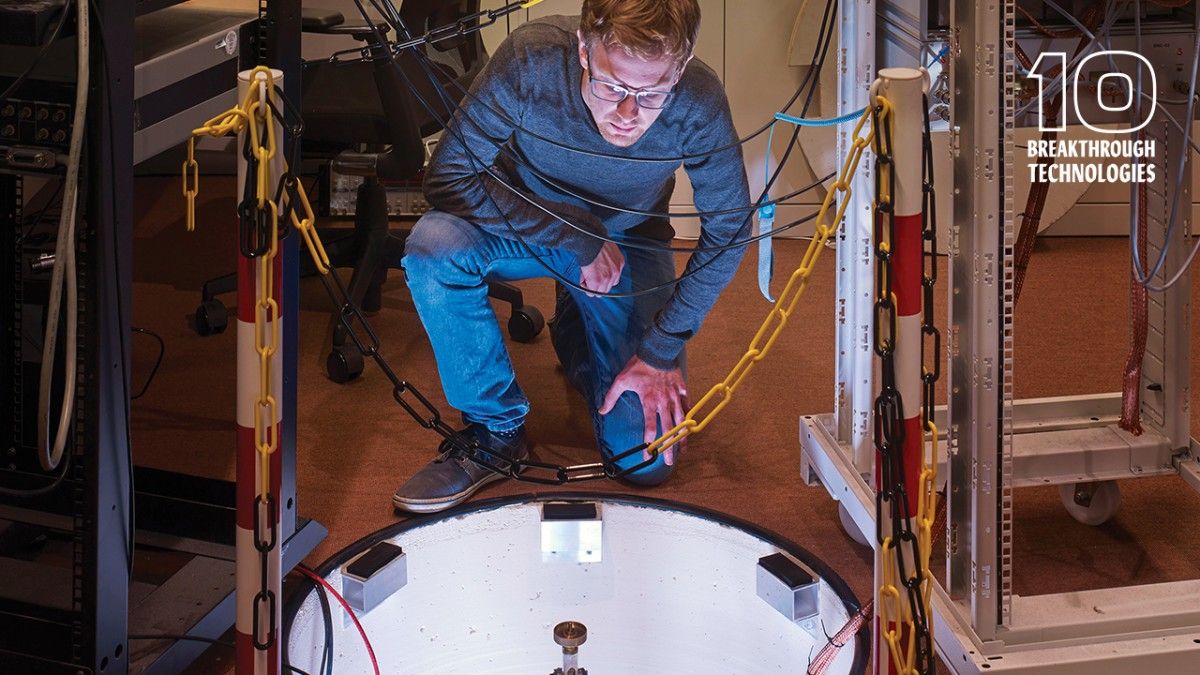
Current can literally blow copper interconnects away, but graphene could keep them intact.

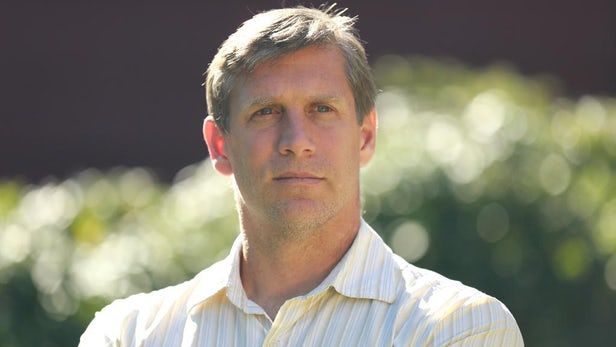
A new and extensive interview I did at New Atlas, including ideas about my #libertarian California Governor run. Libertarianism has many good ideas, but two core concepts are the non-aggression principle (NAP) and protection of private property rights—both of which I believe can be philosophically applied to the human body (and the body’s inevitable transhuman destiny of overcoming disease and decay with science and technology):
Zoltan Istvan is a transhumanist, journalist, politician, writer and libertarian. He is also running for Governor of California for the Libertarian Party on a platform pushing science and technology to the forefront of political discourse. In recent years, the movement of transhumanism has moved from a niche collection of philosophical ideals and anarcho-punk gestures into a mainstream political movement. Istvan has become the popular face of this movement after running for president in 2016 on a dedicated transhumanist platform.
We caught up with Istvan to chat about how transhumanist ideals can translate into politics, how technology is going to change us as humans and the dangers in not keeping up with new innovations, such as genetic editing.
New Atlas: How does transhumanism intersect with politics?
Istvan: For me you can never make any headway in the universe, or on planet Earth, if you don’t involve politics because so much money for innovation or research and development comes from the government and so many laws about what you can do. Genetic editing, chip implants, can you get a brain implant that makes you smarter than other people? These things are often directed by the government determining whether it’s illegal or not. You can either be thrown in jail or not thrown in jail – so you must have a political footprint, you must have attorneys on the ground, you must have that kind of legal position that can explain things in terms that a government will understand.
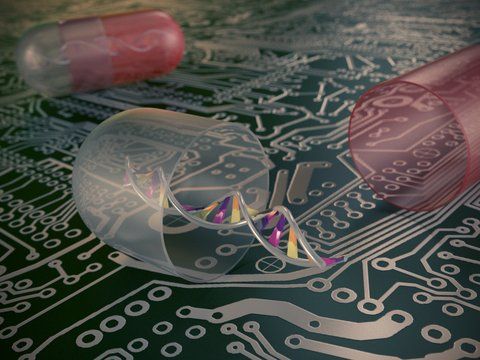
Researchers at the University of Eindhoven in the Netherlands have developed a DNA computer that can respond to the presence of specific antibodies and make calculations, with the potential for intelligent drug delivery in the future. DNA computing involves using DNA molecules and other molecular biological components as molecular circuitry, instead of traditional silicon-based circuitry in computer devices. The DNA sequence dictates which other DNA molecules a DNA strand can interact with, allowing researchers to program DNA circuitry.
Scientists have been trying to use DNA computing as a method to detect biomarkers of disease in the body. Using this technique, a DNA computer could make calculations and perform a specific function, such as release a drug or activate an enzyme, in response to biological stimuli such as disease biomarkers.
So far, the inputs of DNA computers have been other DNA or RNA molecules, which has limited their usefulness as diagnostic or therapeutic systems. However, in this study, published in Nature Communications, scientists have developed a DNA computer that can respond to multiple antibody inputs and perform calculations to formulate an appropriate response. Antibodies are biomarkers in a variety of diseases, meaning that the new system has significant potential as an intelligent drug delivery system. The system translates the presence of an antibody into a DNA strand, that can then interact with other DNA strands in the molecular circuitry in calculating the appropriate response.

Published: 2012/11/01 | ISBN: 311027325X | PDF | 349 pages | 12.06 MB
The subject of this book is theory of quantum system presented from information science perspective. The central role is played by the concept of quantum channel and its entropic and information characteristics. Quantum information theory gives a key to understanding elusive phenomena of quantum world and provides a background for development of experimental techniques that enable measuring and manipulation of individual quantum systems. This is important for the new efficient applications such as quantum computing, communication and cryptography. Research in the field of quantum informatics, including quantum information theory, is in progress in leading scientific centers throughout the world. This book gives an accessible, albeit mathematically rigorous and self-contained introduction to quantum information theory, starting from primary structures and leading to fundamental results and to exiting open problems.
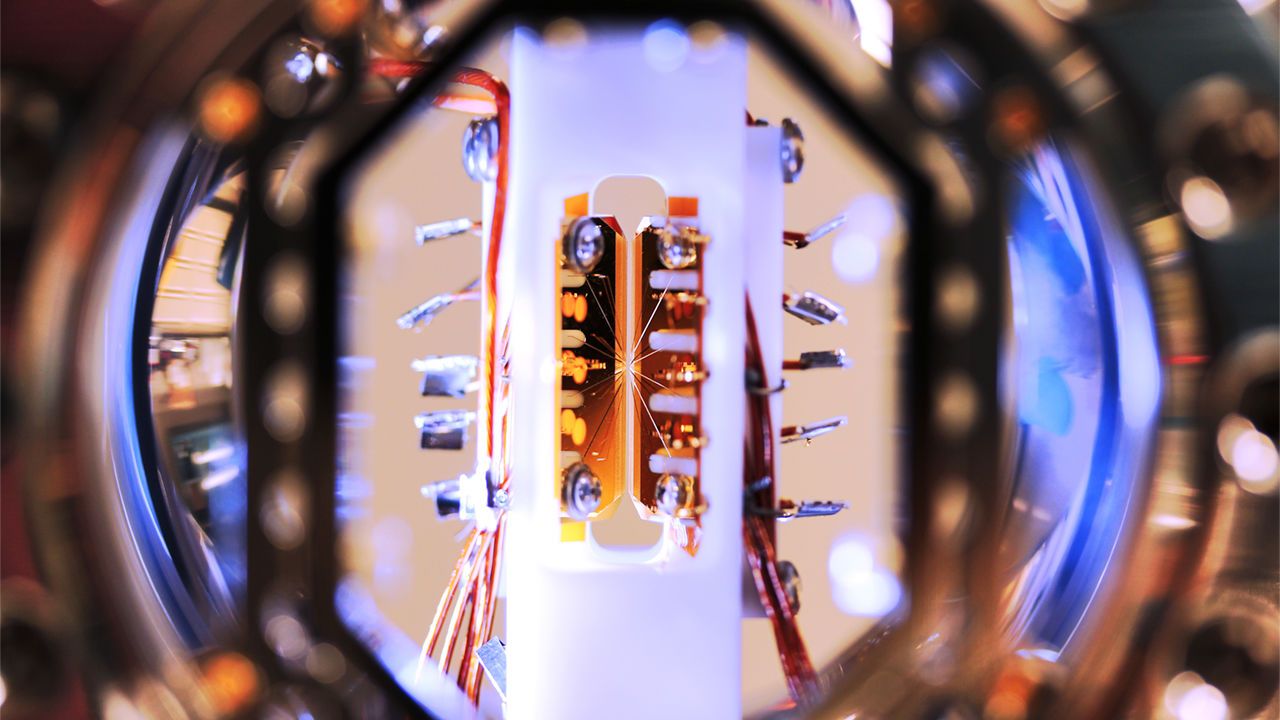

More on the QC Blueprint which enables others to use as a reference when building a QC.
According to Prof Winfried Hensinger of the University of Sussex in the United Kingdom, he and his team have the first practical design for a quantum computer. Like millions of others, I have struggled to come to an understanding of quantum mechanics and how a quantum computer might work.
It would use qubits rather than standard on/off or 1 and 0 bits used in traditional computers. A qubit can have a state of anywhere between zero and one, including all the “states” in between. Theoretically, a quantum computer can perform a very large number of calculations simultaneously using the ideas of super positioning and quantum entanglement. The theory is that all the necessary calculations are carried out at virtually the same time, e.g. working out all the factors of a very large number. This kind of problem can take a regular computer quite a while.
Prof Hensinger claims he has produced a “how to build it” template, published in Science Advances journal, with a scalable construction plan which you can read here: www.advances.sciencemag.org/content/3/2/e1601540.full. It involves ions, long wave radiation, overlapping fields, vacuum chambers and other pieces of exacting technology. To be honest, I have never quite understood how you program in the questions and read the answers from quantum computers.
For those interested in life extension and bionic / cyborg type enhancements, this CMU Robotics Institute Seminar gives an overview of the background and current developments in artificial vision. José Alain Sahel MD is a world leading ophthalmologist with a lengthy bio and numerous honors and appointments.
In the future, if you’re going blind, these sight restoration technologies may be used to remediate your vision loss.
Three major ideas are covered. 1) Implanting arrays of tiny 3-color LEDs under a failed retina to stimulate still-okay cells, and 2) using gene therapy to express a novel photoreceptor, borrowed from algae, to restore a form of sight to failed cells. These can be done together. Lots of studies in mice, primates, and humans. Some coverage is also given to 3) directly implanting electronics in the brain to send complete images to vision centers, but this is still at an early stage.
None of this is anywhere near total restoration. The patients can make out a few words for the first time. And unlike normal vision, the range of light intensity levels remains very narrow. But obviously it’s much better than nothing and will get better over time.
As a point of humor, he tells the story of one of his blind patients who totally redesigned one of his experiments for him.
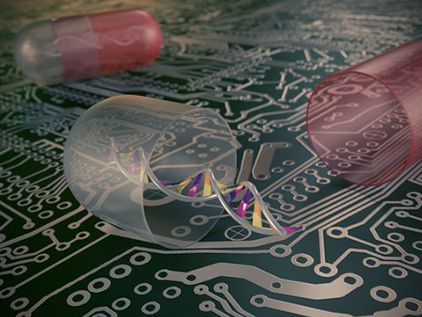 Researchers at the University of Eindhoven in the Netherlands have developed a DNA computer that can respond to the presence of specific antibodies and make calculations, with the potential for intelligent drug delivery in the future. DNA computing involves using DNA molecules and other molecular biological components as molecular circuitry, instead of traditional silicon-based circuitry in computer devices. The DNA sequence dictates which other DNA molecules a DNA strand can interact with, allowing researchers to program DNA circuitry.