Toggle light / dark theme

Stronger, lighter, cheaper: Enhancing carbon fiber production with low-cost oil residues

Advanced carbon fiber materials could be used in applications from wind turbine blades to biomedical implants following the development of a low-cost carbon fiber feedstock.

The carbon fibers were spun from synergistic blends of the low-value heavy oils left over from refining by members of KAUST’s Clean Energy Research Platform. The work could not only facilitate broader carbon fiber uptake but also create sustainable new uses for residual oils as the world transitions to alternative energy systems.

“Crude oil is a resource with immense potential beyond fuels,” says Edwin Guevara Romero, a researcher in the labs of Mani Sarathy, who led the work. “Using oil residues as feedstocks for is an innovative, high-value application of oil-derived resources, paving the way for economic diversification,” he says.

The E3 ligase HRD1 enhances plant antiviral immunity by targeting viral movement proteins

(K) A proposed model illustrating how the E3 ligase NbHRD1 negatively regulates viral infection in plants. Plant viruses with a TGB, BNYVV and PVX, as models, infect N. benthamiana plants, inducing the expression of NbHRD1 interacts with TGB movement proteins of BNYVV and PVX in the ER membrane. NbHRD1 triggers the ubiquitination and 26S proteasome-mediated degradation of TGB proteins, thereby suppressing viral movement to inhibit virus infection.

In (D), (G), and (J), EF1α served as an internal reference. The GFP gene was used as the indicator of viral RNA accumulation. Values are means ± SDs of three independent repeats. ∗∗p < 0.01; ∗∗∗p < 0.001; ∗∗∗∗p < 0.0001; ns, not significant (Student’s t test).

Serotonin functions as ‘prospective code for value’ in brain’s reward processing system

In our day-to-day lives, we’re constantly making a slew of decisions, from immediate matters to prospects on the far horizon. But the evolutionary nuts-and-bolts of how our brains weigh these numerous daily decisions and what role is played by the neurotransmitter serotonin has been shrouded in mystery.

Now, a new study led by an interdisciplinary University of Faculty of Medicine team delivers fascinating findings that potentially unravel a hidden aspect of what our nervous system’s extraordinarily complex serotonin system is really doing inside our skulls.

Published in the journal Nature, this study from a highly impactful international collaboration offers “broad implications across neuroscience, psychology, and psychiatry, enhancing our understanding of serotonin’s role in mood regulation, learning, and motivated behavior.”

The local microenvironment suppresses the synergy between irradiation and anti-PD1 therapy in breast-to-brain metastasis

Wischnewski et al. demonstrate suppressed CD8+ T cell cytotoxicity in breast cancer brain metastases, contrasting with genetically identical extracranial tumors. Neutrophils and Trem2+ macrophages drive this suppression, limiting the efficacy of combined irradiation and anti-PD1 therapy, highlighting potential therapeutic targets for brain metastases.

Scientists cast new light on how fasting impacts the immune system

New research from The University of Manchester may reshape our understanding of what happens to the immune system when we fast. The study on mice shows that the brain’s hypothalamus controls how the immune system adapts during fasting, through a handful of highly specialized neurons responsible for making animals hungry.

Published in Science Immunology, the study shows the brain’s perception of hunger or fullness, rather than actual eating or , is enough to drive changes in the body’s immune cells.

The findings cast doubt on the current view that a lack of nutrients alone controls how the immune system responds to fasting, indicating the brain has a critical role, beyond the simple absence of food.

Designer bacteria for cancer therapy

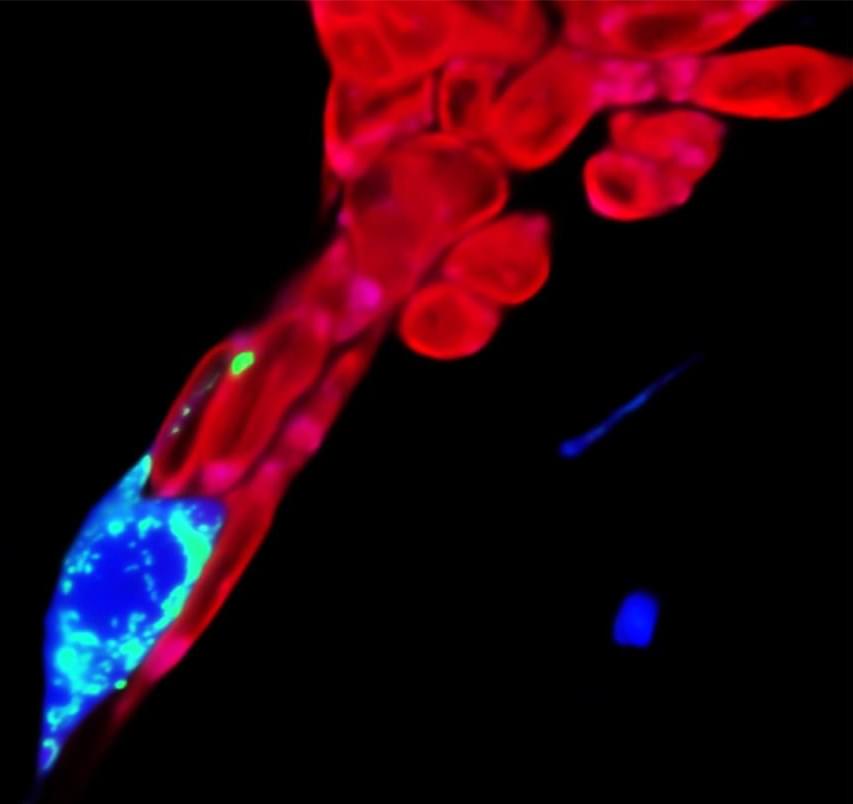
In this study, researchers engineered an attenuated strain, Designer Bacteria 1 (DB1), which efficiently survives and proliferates in tumor tissues while being cleared in normal tissues, achieving a remarkable “tumor-targeting” effect as well as “tumor-clearing” effect.

To understand how DB1 simultaneously achieves these effects, researchers investigated the interactions between the bacteria and tumors. They discovered that DB1’s antitumor efficacy is closely linked to tissue-resident memory (TRM) CD8+ T cells within the tumor, which are reinvigorated and expanded following DB1 therapy. Interleukin-10 (IL-10) plays a crucial role in mediating this effect, with efficacy depending on the high expression of interleukin-10 receptor (IL-10R) on CD8+ TRM cells.

To investigate the molecular mechanisms underlying the high expression of IL-10R on CD8+ TRM cells, researchers conducted a series of computational and quantitative experiments. They found that IL-10 binds to IL-10R on CD8+ TRM cells, activating the STAT3 protein and further promoting IL-10R expression. This established a positive feedback loop, enabling cells to bind more IL-10 and creating a nonlinear hysteretic effect, whereby CD8+ TRM cells “memorize” previous IL-10 stimulation during tumorigenesis. The high expression of IL-10R on CD8+ TRM cells was exploited by a bacteria-induced IL-10 surge, which activated and expanded CD8+ TRM cells to clear tumor cells.

To examine the source of IL-10 within the tumor microenvironment (TME) after bacterial therapy, researchers found that tumor-associated macrophages (TAMs) upregulate IL-10 expression following DB1 stimulation via the Toll-like Receptor 4 (TLR4) signaling pathway. Interestingly, IL-10 reduced the migration speed of tumor-associated neutrophils (TANs), aiding DB1 in evading rapid clearance. These processes depended on high IL-10R expression in tumor-associated immune cells, highlighting the critical role of IL-10R hysteresis.


A research team elucidated the mechanism behind bacterial cancer therapy using a genetically engineered bacterial strain. Their findings were published in Cell.

Exploring the use of antitumor bacteria in cancer therapy dates back to the 1860s. Despite this long history, however, clinical application of bacterial-based cancer therapy has faced significant challenges in terms of safety and efficacy.

/* */