This implant turns heartbeat into electricity.
Category: biotech/medical – Page 3,707
AI ‘doctors’ will diagnose your X-rays
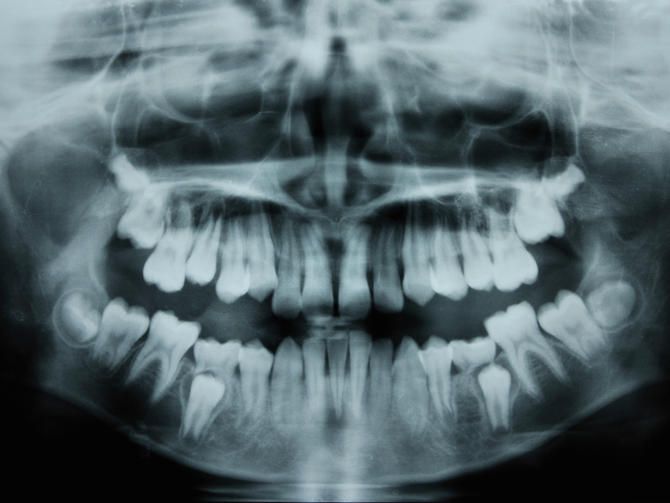
An Israeli medical imaging company has signed a deal with a Utah-based healthcare provider that could change the way we diagnose certain conditions. Zebra Medical Imaging is teaming up with Intermountain to work on a neural network that will compare fresh X-rays with the “millions” stored in its own database. The eventual aim of the project is to offer up suggestions to radiographers and other medical professionals and eliminate costly misdiagnoses.
For instance, let’s imagine that you’ve gone to hospital for some unknown condition and you get an X-ray. Rather than handing the slide to a doctor, who could miss a small shadow or other minor clue, the image would be handed to the computer. It would use deep learning to trawl an anonymized patient database looking for any anomalies that you might be suffering from. The current system will work on bone health, cardiovascular analysis and lung conditions, although who knows where the possibilities will end.
As deep learning technology gets more powerful, smaller and significantly cheaper, the potential for AI to assist doctors becomes more realistic. IBM has spent the last few years pushing Watson, its homegrown supercomputer, as a system to aid decision making for patients. At the same time, companies like LG are trying to shrink medical imaging technology to end the days of bulky hospital equipment being available for a chosen few. All in all, the idea of a medical tricorder is going from fantastical to plausible in less time than you’d expect.
Triggering the protein that programs cancer cells to kill themselves
WEHI | Apoptosis
Researchers at the Walter and Eliza Hall Institute in Australia have discovered a new way to trigger cell death that could lead to drugs to treat cancer and autoimmune disease.
Programmed cell death (a.k.a. apoptosis) is a natural process that removes unwanted cells from the body. Failure of apoptosis can allow cancer cells to grow unchecked or immune cells to inappropriately attack the body.
Bollywood dancing in Harefield Hospital
Indian dance is being used to help patients with heart and respiratory problems at Harefield Hospital in West London. Here’s what it looks like!
MMTP — Major Mouse Testing Program — Interview with Daria Khaltourina — ILA
MMTP Campaign update “Aging is a disease”.
Crowdfunding Campaign: https://www.lifespan.io/campaigns/the-major-mouse-testing-program/
We are testing a combination of compounds which clear out dysfunctional cells in the body, called Senolytics, to see if we can extend maximum lifespan and healthspan in mice. Please subscribe, share, and fund our Lifespan.io campaign today!
MMTP — Major Mouse Testing Program.
http://majormouse.org
Is a project by the International Longevity Alliance.
http://longevityalliance.org
Subscribe: https://www.youtube.com/user/LifespanIO
Investigating how ‘chemo brain’ develops in cancer patients
Interesting read on Chemo’s impact on the brain and brain functioning known as Chemo Brain.
During and after chemotherapy, many cancer patients describe feeling a mental fog, a condition that has been dubbed “chemo brain.” Why this happens is unclear, but researchers have found a new clue to understanding this syndrome. A study in the journal ACS Chemical Neuroscience reports that chemotherapy in rats affects their chemical messengers dopamine and serotonin, which are associated with cognition.
Bangladesh baby’s skull is the size of a football because of excess fluid
Purely tragic. Hopefully, doctors without borders or experts can assist this child.
A baby boy’s head has swollen to more than three times its normal size due to a medical condition.
Two-year-old Emon, from southern Bangladesh, has a head that weighs 20 lbs (9kg) — the same weight as an average one-year-old boy.
CRISPR Crossing New Barriers
Nice.
Emma Yasinski is a scientific writer at Max Planck Florida Institute for Neuroscience. Correspondence should be directed to Ryohei Yasuda, Ph.D. ([email protected]), scientific director, Max Planck Florida Institute for Neuroscience.
To enjoy more articles like this from GEN, click here to subscribe now!
Israeli firms develop high-speed 3D printer for stem cells
3D Stem Cells — definitely makes sense given the organ, skin graffe, etc. produce on 3D printers in today’s labs.
JERUSALEM – Israeli 3D printer firm Nano Dimension has successfully lab-tested a 3D bioprinter for stem cells, paving the way for the potential printing of large tissues and organs, the company said on Wednesday.
While 3D printers are used already to create stem cells for research, Nano Dimension said the trial, conducted with Israeli biotech firm Accellta Ltd, showed its adapted printer could make large volumes of high resolution cells quickly.
“3D bioprinting enabled by the two companies’ technologies, means that Nano Dimension and Accellta have the potential to accelerate high fidelity and high viability manufacturing of living cellular products,” the companies said.