Category: biotech/medical – Page 3,424
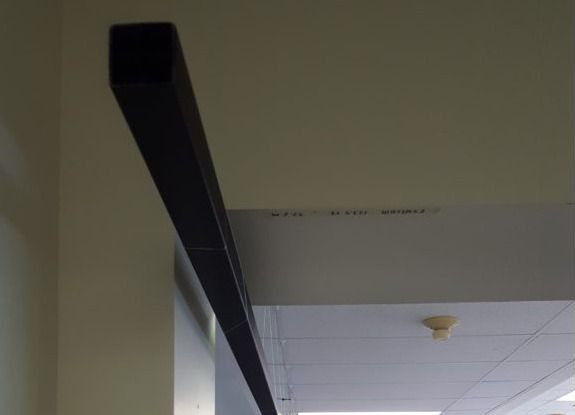
Made In Space Takes New Guinness World Record for Longest 3D Printed Part

In 2016, a new Guinness World Record was set for the largest object to be 3D printed in one piece. The ABS/carbon fiber composite tool was 3D printed in 30 hours, and measured 17.5 feet long, 5.5 feet wide, and 1.5 feet tall. It was about as long as an average sport utility vehicle. The part was inarguably an impressive accomplishment – but that long length cannot compare to what Made In Space just 3D printed.
Made In Space is known for some pretty impressive accomplishments already. The company was responsible for the first 3D printer to be launched into space, and has since created a full Additive Manufacturing Facility (AMF) on the International Space station. Plenty of “firsts” have been set by the AMF as 3D printed tools, medical supplies, art and more have been 3D printed in space, the first of their kind. Now Made In Space has claimed the Guinness World Record for longest non-assembled 3D printed object, and it’s a lot longer than an SUV – it’s 37.7 meters, or 123 feet, 8.5 inches long.
That also happens to be the length of Made In Space’s Moffett Field facility at NASA’s Ames Research Center. The beam is now hanging from the ceiling of the facility. It was 3D printed with the company’s Extended Structure Additive Manufacturing Machine (ESAMM), which is the internal 3D printer of the Archinaut system. Archinaut uses robotic arms to assemble pre-fabricated and 3D printed components into larger, more complex structures, and will eventually be installed in space where it can autonomously repair things like satellites.


Programming a DNA Clock
Engineers have created a DNA-based chemical oscillator, opening the door to molecular computing.
- By Rachel Nuwer on February 21, 2018

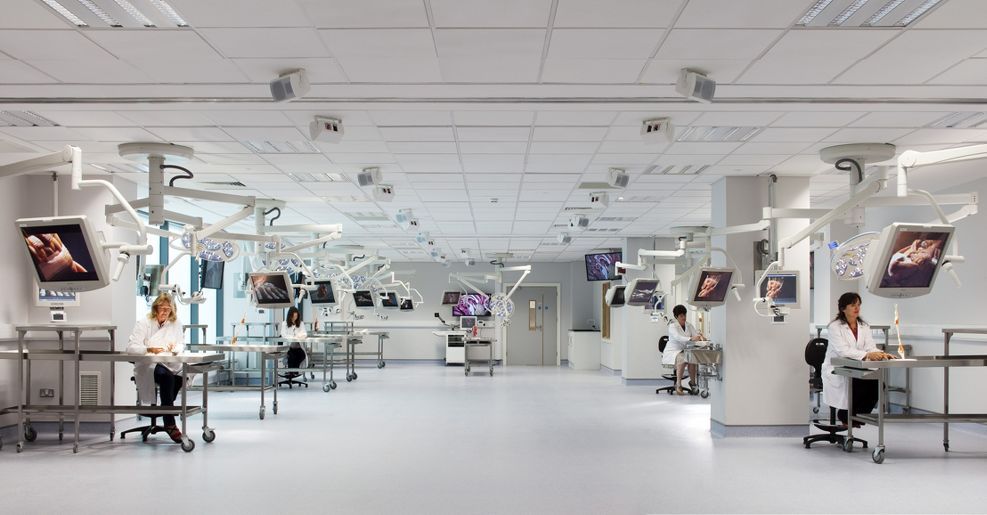
3D bioprinting center of excellence launched by AMBER and Johnson & Johnson
Trinity College Dublin (TCD), in Ireland, is to be the recipient of a new specialist 3D bioprinting facility supported by a collaboration between multinational medical device and pharmaceutical company Johnson & Johnson, and the AMBER research center.
With preparations beginning in the first quarter of this year, the new 3D bioprinting laboratory is due to be opened by the close of 2018.
Professor Michael Morris, AMBER director, comments.

These People Believe Death Is Only Temporary
Waiting on research advances is the rationale behind cryopreservation, and more broadly, a worldview known as transhumanism. A person killed by cancer or heart disease could reasonably be revived in a future when such ailments no longer exist. “They believe in the advance of technology,” says Giuseppe Nucci, an Italian photographer who visited with transhumanists and toured the facilities of Russia-based cryonics company KrioRus. “They hope that someone will wake them up.”
This hope, that the future will vanquish the ills of the present, is as old as the first civilisations that realized that with each passing year life got a little better. The Russian philosopher Nikolai Fedorovich Fedorov helped create an early 20th-century movement known as cosmism that was rooted in the idea that, given enough time, humans could defeat evil and death. If the human life span was too short, then the simple solution was to extend it, even after death, and suspend its decomposition until the world caught up.

Employees of a liquid nitrogen and dry ice factory on the outskirts of Moscow are shrouded in fog while refilling their liquid nitrogen tanks. Founded by former KrioRus employees, the company now supplies them. PHOTOGRAPH BY GIUSEPPE NUCCI
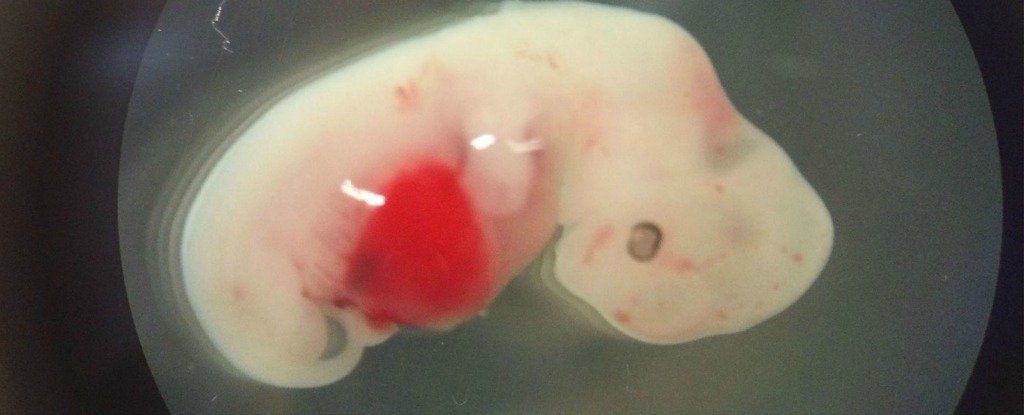
Scientists Just Made Sheep-Human Hybrids. Here’s What You Need to Know
Researchers have achieved a new kind of chimeric first, producing sheep-human hybrid embryos that could one day represent the future of organ donation – by using body parts grown inside unnatural, engineered animals.
With that end goal in mind, scientists have created the first interspecies sheep-human chimera, introducing human stem cells into sheep embryos, resulting in a hybrid creature that’s more than 99 percent sheep – but also a tiny, little bit like you and me.
Admittedly, the human portion of the embryos created in the experiment – before they were destroyed after 28 days – is exceedingly small, but the fact it exists at all is what generates considerable controversy in this field of research.