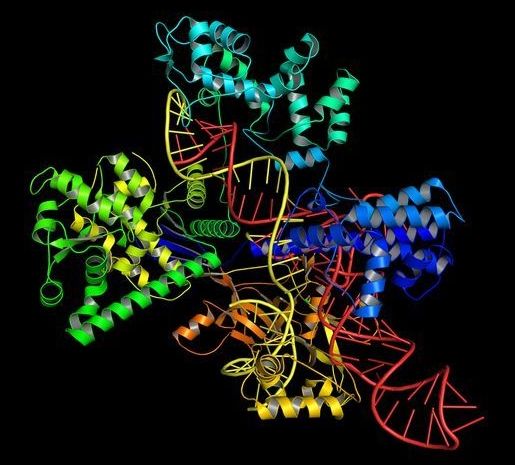
They’re so toxic they can rip your skin apart on contact. But that virulence is what makes them perfect candidates for a new wave of antibiotics.

Researchers have created the fastest man-made rotor in the world, which they believe will help them study quantum mechanics.
At more than 60 billion revolutions per minute, this machine is more than 100,000 times faster than a high-speed dental drill.
“This study has many applications, including material science,” said Tongcang Li, an assistant professor of physics and astronomy, and electrical and computer engineering, at Purdue University. “We can study the extreme conditions different materials can survive in.”

http://undoing-aging.org/videos/doug-ethell-presenting-at-undoing-aging-2018
Btw: the facebook event page for Undoing Aging 2019 is already up fb.com/events/2044104465916196/
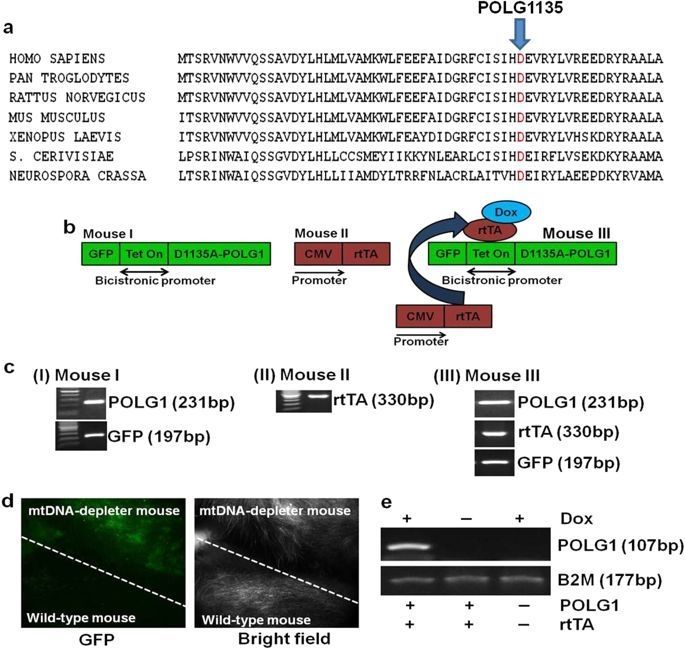
Mitochondrial dysfunction is associated with many mitochondrial diseases, most of which are the result of dysfunctional mitochondrial oxidative phosphorylation (OXPHOS). Mitochondrial OXPHOS accounts for the generation of most of the cellular adenosine triphosphate (ATP) in a cell. The OXPHOS function largely depends on the coordinated expression of the proteins encoded by both nuclear and mitochondrial genomes. The human mitochondrial genome encodes for 13 polypeptides of the OXPHOS, and the nuclear genome encodes the remaining more than 85 polypeptides required for the assembly of OXPHOS system. Mitochondrial DNA (mtDNA) depletion impairs OXPHOS that leads to mtDNA depletion syndromes (MDSs)1, 2. The MDSs are a heterogeneous group of disorders, characterized by low mtDNA levels in specific tissues. In different target organs, mtDNA depletion leads to specific pathological changes. MDS results from the genetic defects in the nuclear-encoded genes that participate in mtDNA replication, and mitochondrial nucleotide metabolism and nucleotide salvage pathway1, 4,5,6,7,8,9,10. mtDNA depletion is also implicated in other human diseases such as mitochondrial diseases, cardiovascular11, 12, diabetes13,14,15, age-associated neurological disorders16,17,18, and cancer19,20,21,22,23,24,25.
A general decline in mitochondrial function has been extensively reported during aging26,27,28,29,30,31,32,33. Furthermore, mitochondrial dysfunction is known to be a driving force underlying age-related human diseases16,17,18, 34,35,36. A mouse that carries elevated mtDNA mutation is also shown to present signs of premature aging37, 38. In addition to mutations in mtDNA, studies also suggest a decrease in mtDNA content and mitochondrial number with age27, 29, 32, 33, 39. Notably, there is an age-related mtDNA depletion in a number of tissues40,41,42. mtDNA depletion is also frequently observed among women with premature ovarian aging43. Low mtDNA copy number is linked to frailty and, for a multiethnic population, is a predictor of all-cause mortality44. A recent study revealed that humans on an average lose about four copies of mtDNA every ten years. This study also identified an association of decrease in mtDNA copy number with age-related physiological parameters39.
To help define the role of mtDNA depletion in aging and various diseases, we created an inducible mouse expressing, in the polymerase domain of POLG1, a dominant-negative (DN) mutation that induces depletion of mtDNA in the whole animal. Interestingly, skin wrinkles and visual hair loss were among the earliest and most predominant phenotypic changes observed in these mice. In the present study, we demonstrate that mtDNA depletion-induced phenotypic changes can be reversed by restoration of mitochondrial function upon repletion of mtDNA.

Not long ago, getting a virus was about the worst thing computer users could expect in terms of system vulnerability. But in our current age of hyper-connectedness and the emerging Internet of Things, that’s no longer the case. With connectivity, a new principle has emerged, one of universal concern to those who work in the area of systems control, like João Hespanha, a professor in the departments of Electrical and Computer Engineering, and Mechanical Engineering at UC Santa Barbara. That law says, essentially, that the more complex and connected a system is, the more susceptible it is to disruptive cyber-attacks.
“It is about something much different than your regular computer virus,” Hespanha said. “It is more about cyber physical systems—systems in which computers are connected to physical elements. That could be robots, drones, smart appliances, or infrastructure systems such as those used to distribute energy and water.”
In a paper titled “Distributed Estimation of Power System Oscillation Modes under Attacks on GPS Clocks,” published this month in the journal IEEE Transactions on Instrumentation and Measurement, Hespanha and co-author Yongqiang Wang (a former UCSB postdoctoral research and now a faculty member at Clemson University) suggest a new method for protecting the increasingly complex and connected power grid from attack.

Life extension would allow everyone to enjoy a higher degree of freedom.
Freedom is a rather big deal in this age. We want freedom of speech, political freedom, press freedom, religious freedom, and freedom of choice over anything that may concern us directly. Different kinds of freedom are available in different amounts in different areas of the world, and while many people tend to see the glass half empty and complain that freedom is not equally distributed everywhere, it’s undeniable that we enjoy far greater liberty than previous generations. It’s not always easy to act upon your choices, and sometimes you’re free to choose in theory but not in practice, but overall, we enjoy options that who came before us couldn’t even dream of.
Take health, for example. Two hundred years back, if you didn’t want to get the flu, or any other infectious disease, you didn’t have the option not to do so. The mechanism through which infectious diseases manifest and spread wasn’t even remotely understood, so you didn’t have any idea what you should or shouldn’t do to minimize your risk of falling ill; basic hygiene wasn’t exactly a standard, and drugs and vaccines were nowhere in sight. If you actively wanted to do something to prevent getting the flu—which, at the time, might have killed you—you simply didn’t have this option.
Today, however, if you want to avoid infectious diseases, you have plenty of options to do so. Hygiene is common in most of the world, and there are vaccines available. You may well choose to not care, live in filth, and never get even a flu shot, but you do have the option. It’s a choice that, two hundred years back, could simply not be made. Depending on where you live and your access to medical care, acting upon your choice can be difficult, but this is a different matter. The option of preventing disease exists, and in principle, you may avail yourself of it, unlike in the past, when the option wasn’t there to begin with.
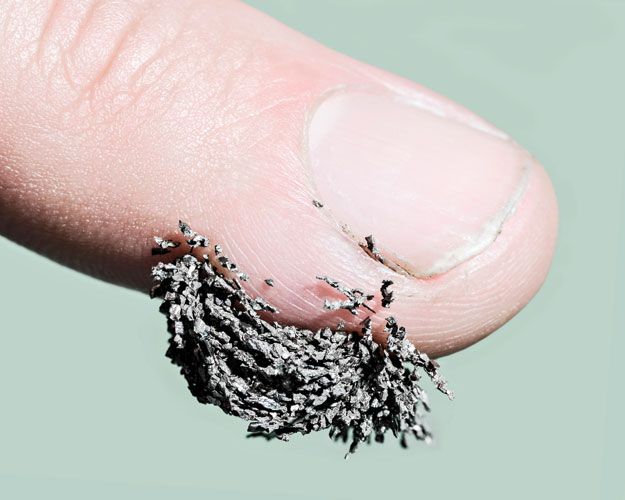
Transhumanists aim to do just that: to transcend the limits of the human body through the use of technology. Swiss photographer Matthieu Gafsou’s new book, H+ (Kehrer Verlag), documents Transhumanism through portraiture, still lifes and documentary photographs of Tranhumanist people, facilities, tools and technology. In photographing surgical procedures, laboratories, conferences and the like, Gafsou employed a hard flash to add a “clinical aspect” to his pictures. “This was important to me because I think [Transhumanism] is quite cold and [it] is about, not necessarily killing death but working on living longer,” he tells PDN. “But we are forgetting the body, we are forgetting the flesh, we are forgetting desire.”
In “H+,” Gafsou uses the visual language of science and technology to explore Transhumanism, the belief that the human body needs to be enhanced, perhaps even overcome.

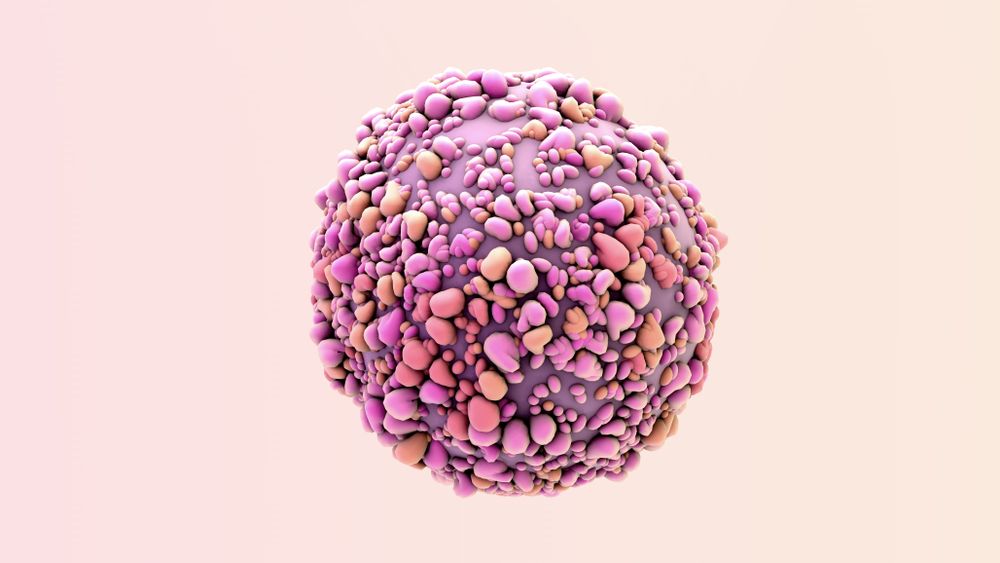
Researchers have figured out details about how some specific type of cancers become drug-resistant.
Researchers at the Rockefeller University have clarified the mechanism by which certain types of breast cancer become immune to specific drugs designed to eliminate them. More specifically, they figured out how the loss of the protein 53BP1 due to BRCA1 mutation allows cancers to become insensitive to PARP inhibitors [1].
Study summary