Toggle light / dark theme

AI Scientists Gather to Plot Doomsday Scenarios (and Solutions)

Artificial intelligence boosters predict a brave new world of flying cars and cancer cures. Detractors worry about a future where humans are enslaved to an evil race of robot overlords. Veteran AI scientist Eric Horvitz and Doomsday Clock guru Lawrence Krauss, seeking a middle ground, gathered a group of experts in the Arizona desert to discuss the worst that could possibly happen — and how to stop it.

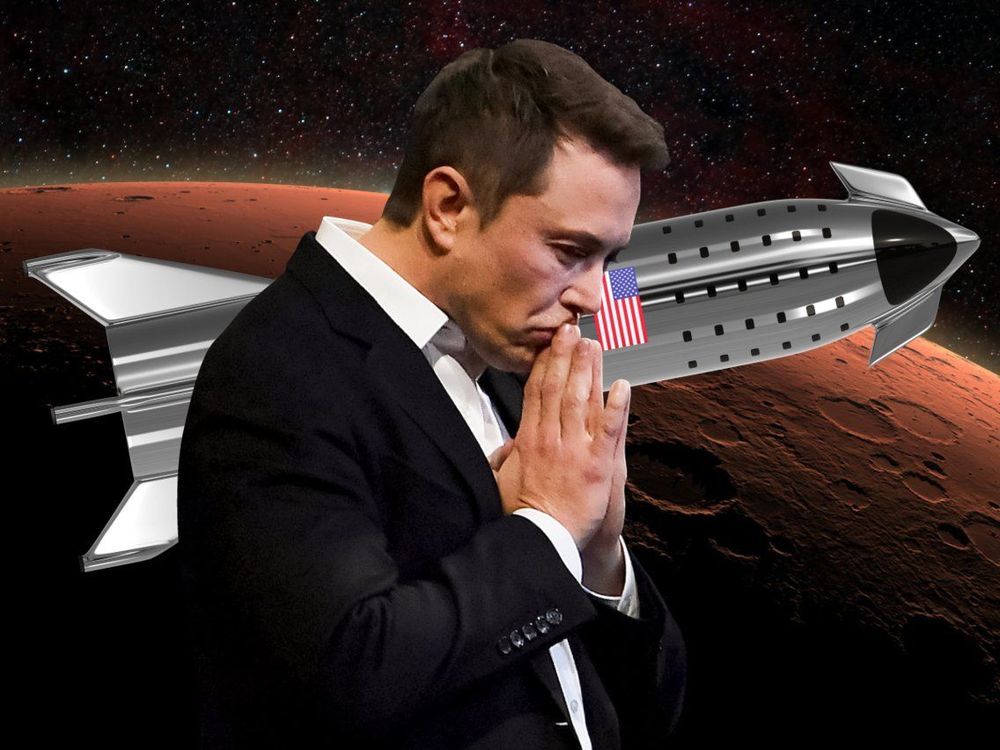
Their workshop took place last weekend at Arizona State University with funding from Tesla Inc. co-founder Elon Musk and Skype co-founder Jaan Tallinn. Officially dubbed “Envisioning and Addressing Adverse AI Outcomes,” it was a kind of AI doomsday games that organized some 40 scientists, cyber-security experts and policy wonks into groups of attackers — the red team — and defenders — blue team — playing out AI-gone-very-wrong scenarios, ranging from stock-market manipulation to global warfare.

Horvitz is optimistic — a good thing because machine intelligence is his life’s work — but some other, more dystopian-minded backers of the project seemed to find his outlook too positive when plans for this event started about two years ago, said Krauss, a theoretical physicist who directs ASU’s Origins Project, the program running the workshop. Yet Horvitz said that for these technologies to move forward successfully and to earn broad public confidence, all concerns must be fully aired and addressed.

Mars astronaut radiation shield set for moon mission trial: Developer

HAIFA, Israel A vest designed to shield astronauts from deadly solar particles in deep space is set for trials on a lunar mission ready for deployment on any manned mission to Mars, its Israeli developers said.

The AstroRad Radiation Shield has been devised by Tel Aviv-based StemRad, which has already produced and marketed a belt to protect rescue workers from harmful gamma ray radiation emitted in nuclear disasters, such as Chernobyl and Fukushima.

The vest will protect vital human tissue, particularly stem cells, which could be devastated by solar radiation in deep space or on Mars, whose sparse atmosphere offers no protection, StemRad’s CEO Oren Milstein said.

Read more

Transhumanist Wants to Run for California Governor Under Libertarian Banner

The Libertarian Republic covering my libertarian run for California Governor:


By Kody Fairfield

After realizing his chances to be President were over, Zoltan Istvan of the Transhumanist Party, has decided to take his platform and run for another elected office, and under a different political party.

Istvan didn’t have much of a chance at being president, but that didn’t stop him from campaigning as the Transhumanist Party’s candidate to promote his pro-technology and science positions. Now, he’s setting his sights a bit lower, and with a different party. Istvan announced this morning that he plans to run for governor of California in 2018 under the Libertarian Party, explains Engadet.com.

In a Newsweek article Istvan wrote, “We need leadership that is willing to use radical science, technology, and innovation—what California is famous for–to benefit us all. We need someone with the nerve to risk the tremendous possibilities to save the environment through bioengineering, to end cancer by seeking a vaccine or a gene-editing solution for it, to embrace startups that will take California from the world’s 7th largest economy to maybe even the largest economy–bigger than the rest of America altogether.”

Groundbreaking technology rewarms large-scale animal tissues preserved at low temperatures

Great news and a very promising vector for near future innovation!


Inductive radio-frequency heating of magnetic nanoparticles embedded in tissue (red material in container) preserved at very low temperatures restored the tissue without damage (credit: Navid Manuchehrabadi et al./Science Translational Medicine)

A research team led by the University of Minnesota has discovered a way to rewarm large-scale animal heart valves and blood vessels preserved at very low (cryogenic) temperatures without damaging the tissue. The discovery could one day lead to saving millions of human lives by creating cryogenic tissue and organ banks of organs and tissues for transplantation.

The research was published March 1 in an open-access paper in Science Translational Medicine.

Google Deep Learning system diagnoses cancer better than a pathologist with unlimited time

Google has been working on advanced image-recognition systems for several years through its GoogLeNet projects. The project was, in part, aimed at the company’s autonomous car project, teaching self-driving cars to recognize everything from road layouts to stop signs.

The company has now applied GoogLeNet tech to cancer diagnosis, and reports that the system was already delivering good results straight out of the box, but says that tweaking the system has delivered stunning performance.

Pathologists have always faced a huge data problem in order to obtain an accurate diagnosis. A massive amount of information — slides containing cells from tissue biopsies, thinly sliced and stained — must be scanned in search of any abnormal cells. And time is of the essence.

New Evidence Links the Collapse of Aztec Society to a Deadly Salmonella Outbreak

A new pathogen can have devastating consequences in genetically homogenous populations.


When Spanish forces arrived in Mexico in 1519, the native population was estimated to be around 25 million. A century later, there were only around 1 million left, following several devastating outbreaks of disease brought in from overseas.

Despite plenty of speculation, the diseases that contributed to the collapse of Aztec society remain unconfirmed. But now scientists have presented the first DNA evidence of a bacterial species from one of the worst epidemics — and it suggests that a deadly outbreak of salmonella might have been involved.

The downfall of Aztec society has been the source of plenty of fascination, and it’s generally believed that a variety of factors were involved — mainly the arrival of Spanish forces, followed by several outbreaks of European diseases among the native population.

Californian researchers 3D print functioning blood vessels

Researchers from the University of California, San Diego have successfully 3D printed a framework of functional blood vessels. Blood vessel networks are important in transporting blood, nutrients and waste around the human body.

The research team employed a 3D bioprinting process involving hydrogel and endothelial cells. Endothelial are the form of cells that make up the inner lining of blood vessels.

Leading the research was Shaochen Chen, who explains the motivation of the project.

/* */