Toggle light / dark theme

A Non-Toxic Thermoelectric Generator for Wearable Tech

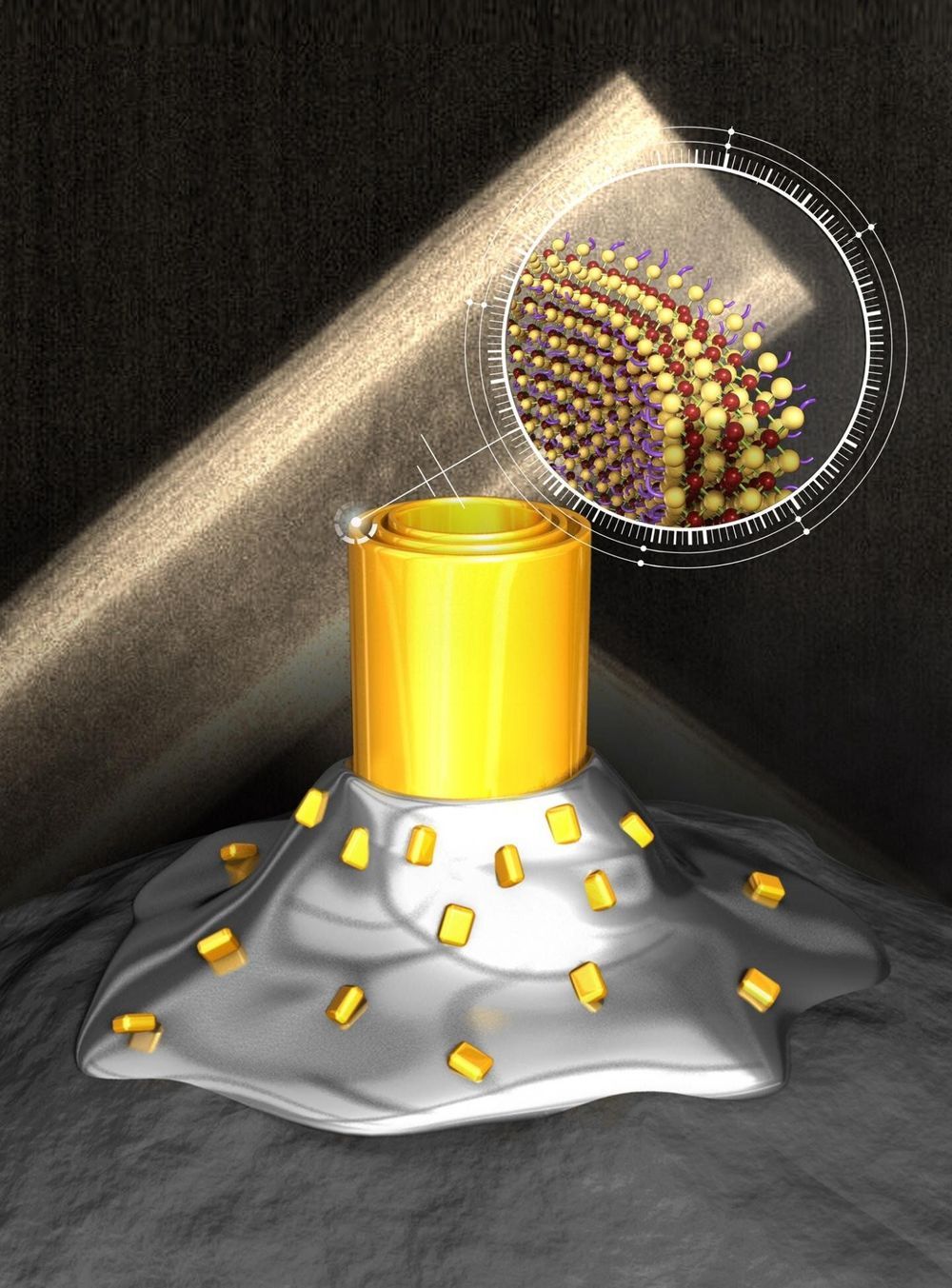
A new way to harvest electricity from body heat could inspire new wearable devices that never need to be plugged in. The millivolts of electricity this thermoelectric technology produces mandates slim power usage from any electronics plugged in to its feed. However, the developers say there already are fitness trackers and medical monitors today that could work within their device’s power envelope. The new, wearable thermoelectric generator is also sourced from non-toxic and non-allergenic substances, making it a viable candidate for wearable technology.


Made with cotton, this generator harvests body heat to power wearable electronics.

Mega docking library poised to speed drug discovery

Researchers have launched an ultra-large virtual docking library expected to grow to more than 1 billion molecules by next year. It will expand by 1000-fold the number of such “make-on-demand” compounds readily available to scientists for chemical biology and drug discovery. The larger the library, the better its odds of weeding out inactive “decoy” molecules that could otherwise lead researchers down blind alleys. The project is funded by the National Institutes of Health.

“To improve medications for mental illnesses, we need to screen huge numbers of potentially therapeutic molecules,” explained Joshua A. Gordon, M.D., Ph.D., director of NIH’s National Institute of Mental Health (NIMH), which co-funded the research. “Unbiased computational modeling allows us to do this in a computer, vastly expediting the process of discovering new treatments. It enables researchers to virtually “see” a molecule with its receptor protein—like a ship in its harbor berth or a key in its lock—and predict its pharmacological properties, based on how the are predicted to interact. Only those relatively few candidate molecules that best match the target profile on the computer need to be physically made and tested in a wet lab.”

Bryan Roth, M.D., Ph.D., of the University of North Carolina (UNC) Chapel Hill, Brian Shoichet, Ph.D., and John Irwin, Ph.D., of the University of California San Francisco, and colleagues, report on their findings Feb. 6, 2019 in the journal Nature. The study was supported, in part, by grants from NIMH, National Institute of General Medical Sciences (NIGMS), the NIH Common Fund, and National Institute of Neurological Disorders and Stroke (NINDS).

Breakthrough device llures aggressive brain tumor cells out of the patient

A biomedical tool that tricks aggressive brain tumors such as glioblastoma into migrating into an external container rather than throughout the brain has been designated a “Breakthrough Device” by the U.S. Food and Drug Administration (FDA).

Dubbed the Tumor Monorail, the mimics the physical properties of the brain’s to entice to migrate toward the exterior of the brain, where the migrating cells can be collected and removed. The purpose of the device is not to destroy the tumor, but to halt its lethal spread, making the disease more of a condition to manage than a death sentence.

Breakthrough designations from the FDA aim to expedite the development and review of drugs, diagnostics and devices aimed at life-threatening or irreversibly debilitating conditions. While the designation does not mean that the device has been approved for clinical use, it does provide a partnership with the FDA that can speed development, assessment and review.

Ancient Druid Healing ‘Treatment’ Shows Potential For Killing Today’s Superbugs

Faced with the rising threat of drug resistant pathogens, researchers are all but giving up hope that new treatments can be easily cooked up in the lab.

One recent discovery gives us hope that novel antibiotics are easier to find than we think, perhaps in plain sight right under our very feet. And it’s possible their curative properties could have already been recognised centuries in the past.

An international team of researchers based at Swansea University Medical School in South West Wales recently identified a new strain of bacterium in ‘healing soil’ taken from a site associated with ancient druidic rituals in Northern Ireland.

Ebola Vaccinations Expanding in Central Africa

The African country of South Sudan has started vaccinating front-line response staff with the Ebola Zaire vaccine candidate v920.

The vaccine’s producer, Merck, has given 2,160 doses of the vaccine candidate V920 (rVSV-ZEBOV) as part of preparedness measures to fight the spread of the Ebola disease, said the World Health Organization (WHO) in a press release on January 28, 2019.

This preventive effort is in reaction to South Sudan’s neighboring country the Democratic Republic of the Congo (DRC), which is now experiencing its 10th Ebola outbreak.

Superhuman Skin Senses Sound Waves and Magnetic Fields

Researchers have developed a new kind of sensor designed to let artificial skin sense pressure, vibrations, and even magnetic fields. Developed by engineers, chemists, and biologists at the University of Connecticut and University of Toronto, the technology could help burn victims and amputees “feel” again through their prosthetic skin.

“The type of artificial skin we developed can be called an electronic skin or e-skin,” Islam Mosa, a postdoctoral fellow at UConn, told Digital Trends. “It is a new group of smart wearable electronics that are flexible, stretchable, shapable, and possess unique sensing capabilities that mimic human skin.”

To create the sensor for the artificial skin, Mosa and his team wrapped a silicone tube with a copper wire and filled the tube with an iron oxide nanoparticle fluid. As the nanoparticles move around the tube, they create an electrical current, which is picked up by the copper wire. When the tube experiences pressure, the current changes.

Patient Tested for Ebola in Pennsylvania

A patient in Pennsylvania is being tested for a possible Ebola virus infection, according to news reports.

On Wednesday (Feb. 6), the Hospital of the University of Pennsylvania (HUP) said that it was testing the patient for the deadly virus out of “an abundance of caution,” according to local news outlet NBC 10 Philadelphia. Early test results suggest the patient has another condition that is the cause of their illness, but the hospital is taking precautions until the definitive results are in.

“A patient who met screening criteria for Ebola testing is currently being evaluated at HUP while tests to assess the patient’s condition are completed,” Dr. Patrick J. Brennan, chief medical officer at Penn Medicine, told told NBC 10.

/* */