Hundreds of CRISPR patents have been granted around the world, and the number of applications continues to grow at a rapid pace.
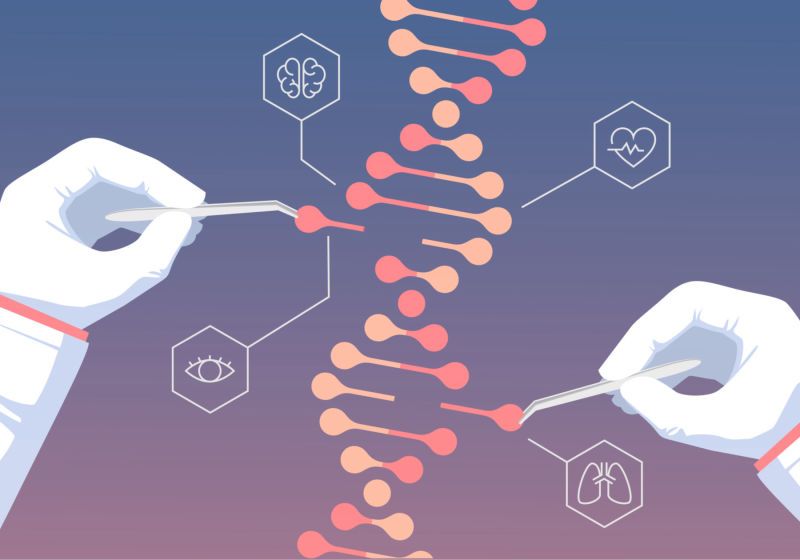
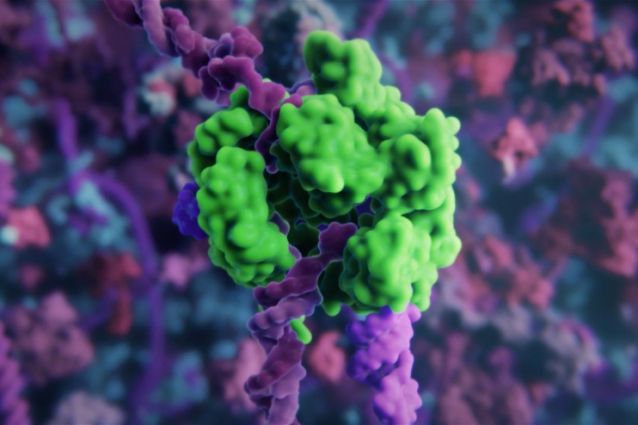
Researchers at Tufts University and the Chinese Academy of Sciences have developed a new lipid nanoparticle which can deliver CRISPR/Cas9 gene editing tools into organs with high efficiency, suggesting that the system is promising for clinical applications.
The CRISPR/Cas9 system is currently being investigated as a way to treat a variety of diseases with a genetic basis, including Duchenne muscular dystrophy, Huntington’s, and sickle cell disease. While the system has significant promise, there are some issues that need to be resolved before it can be used clinically. CRISPR/Cas9 is a large complex, and it is difficult to get it inside cell nuclei where it is needed for gene editing.
Scientists have tried a variety of delivery vehicles for CRISPR/Cas, which are intended to carry the gene editing tools to their location and help them enter the cell and nucleus. These have included viruses and various types of nanoparticle. However, to date, these have suffered from low efficiency, whereby very little of the delivered agent reaches the cells or organs where it is needed.
U.S. Army game-theory research using artificial intelligence may help treat cancer and other diseases, improve cybersecurity, deploy Soldiers and assets more efficiently and even win a poker game.
New research, published in Science, and conducted by scientists at Carnegie Mellon University, developed an artificial intelligence program called Pluribus that defeated leading professionals in six-player no-limit Texas hold’em poker.
The Army and National Science Foundation funded the mathematics modeling portion of the research, while funding from Facebook was specific to the poker.
Leading telomere researcher Maria Blasco press conference at the Ending Age-Related Diseases conference, New York, NY, July 12, 2019.

Ferrofluids, with their mesmeric display of shape-shifting spikes, are a favorite exhibit in science shows. These eye-catching examples of magnetic fields in action could become even more dramatic through computational work that captures their motion.
A KAUST research team has now developed a computer model of ferrofluid motion that could be used to design even grander ferrofluid displays. The work is a stepping stone to using simulation to inform the use of ferrofluids in broad range of practical applications, such as medicine, acoustics, radar-absorbing materials and nanoelectronics.
Ferrofluids were developed by NASA in the 1960s as a way to pump fuels in low gravity. They comprise nanoscale magnetic particles of iron-laden compounds suspended in a liquid. In the absence of a magnetic field, ferrofluids possess a perfectly smooth surface. But when a magnet is brought close to the ferrofluid, the particles rapidly align with the magnetic field, forming the characteristic spiky appearance. If a magnetic object is placed in the ferrofluid, the spikes will even climb the object before cascading back down.

The Democratic Republic of Congo has confirmed the first case of Ebola in the eastern city of Goma, a major transport hub.
The World Health Organization (WHO) said the case could be a “game-changer” given the city’s population of more than two million.
But the WHO expressed confidence in plans to deal with the diagnosis.
Our Ending Age-Related Diseases conference in New York is over for this year and has been a huge success. We had the opportunity to interview one of the speakers, Dr. Mar í a Blasco, during the conference, and we asked her more about her work with telomeres, telomerase therapy, and aging.
Telomere loss is a proposed reason we age
Telomere attrition—the wearing out of your chromosomes’ protective caps with age—is widely thought to be one of the major drivers of aging. With each division, telomeres shorten a little bit, and after 50–70 divisions, they become critically short. Once this threshold (the Hayflick limit) is hit, cells undergo replicative senescence, and their division comes to a grinding halt.
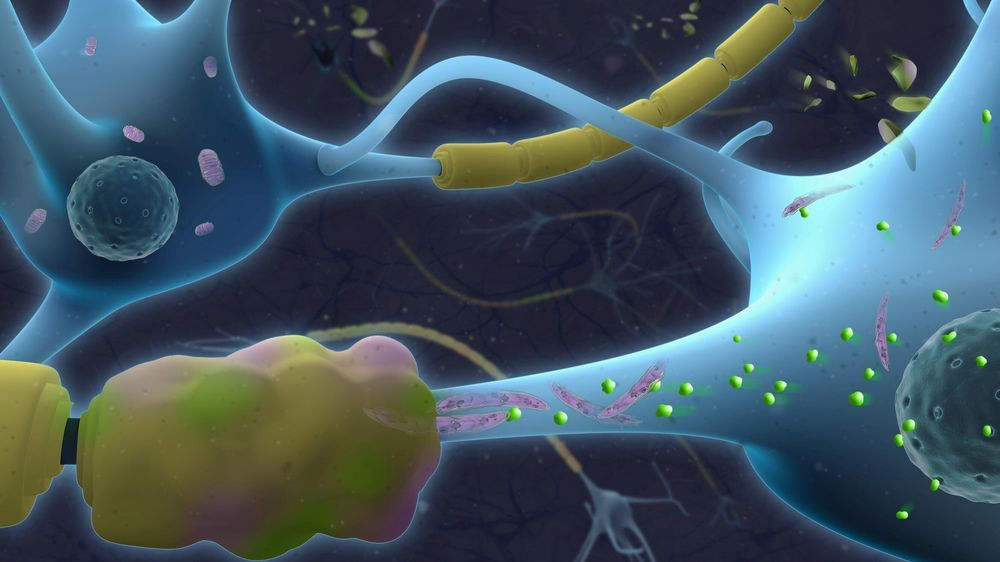
The disability burden for people with multiple sclerosis (MS) can vary significantly depending on whether they have a relapsing/remitting form of the disease, where they experience periods of clinical remission, or a progressive form, where they have continued neurological deterioration without clinical remission. Effective therapies exist for managing relapsing/remitting MS, but treatment for progressive MS has proved more challenging. Now, a new paper published in the journal Brain from researchers at the Advanced Science Research Center (ASRC) at The Graduate Center, CUNY and Friedman Brain Institute at the Icahn School of Medicine at Mount Sinai has identified potential mechanisms that may inform the development of therapies that effectively manage progressive MS.
Previous research had suggested that dysfunction of neuronal mitochondria—the energy-producing subcellular organelles—occurs in the brains of MS patients with progressive clinical disability. However, the molecular mechanisms underlying this process remained elusive.
“Because the brain is bathed by the cerebrospinal fluid (CSF), we asked whether treating cultured neurons with the CSF from MS patients with a relapsing/remitting or a progressive disease course would possibly elicit different effects on neuronal mitochondrial function,” said the study’s primary investigator Patrizia Casaccia, Einstein Professor of Biology at The Graduate Center and founding director of the Neuroscience Initiative at the ASRC. “We detected dramatic differences in the shape of the neuronal mitochondria and their ability to produce energy. Only exposure to the CSF from progressive MS patients caused neuronal mitochondria to fuse and elongate while rendering them unable to produce energy. We therefore searched for potential mechanisms of CSF-induced neurodegeneration with the intent to define therapeutic strategies.”
Your support will help us in our mission to research, develop and promote comprehensive regenerative medicine solutions for the diseases and disabilities of aging. SRF is a 501©(3) non-profit. Please consult your tax advisor – your donation may be tax deductible as no goods or services were received in exchange for the gift.

This atlas of human CoRSIVs,” they write, “provides a resource for future population-based investigations into how interindividual epigenetic variation modulates risk of disease,” and may well transform understanding of the causes of illness in the human body.
A project 370 times larger than the Human Genome Project bears first fruit. Stephen Fleischfresser reports.