Toggle light / dark theme

The application of nanotechnology to cardiovascular nanomedicine

Nanostructured systems have the potential to revolutionize both preventive and therapeutic approaches for treating cardiovascular disease. Given the unique physical and chemical properties of nanostructured systems, nanoscience and nanotechnology have recently demonstrated the potential to overcome many of the limitations of cardiovascular medicine through the development of new pharmaceuticals, imaging reagents and modalities, and biomedical devices. A recent review offers an outline of critical issues and emerging developments in cardiac nanotechnology.

Study Investigates Vaccine and Oral Medication to Stop Alzheimer’s Years Before it Begins

Summary: Researchers are testing a new vaccine and oral medication that could delay or prevent Alzheimer’s disease from developing in those with a genetic predisposition.

Source: Keck Medicine USC.

The Keck School of Medicine of USC launches a study exploring whether two different therapies can prevent a leading cause of death.

Scientists Grafted Eyes Onto a Blind Organism’s Back, and It Could See

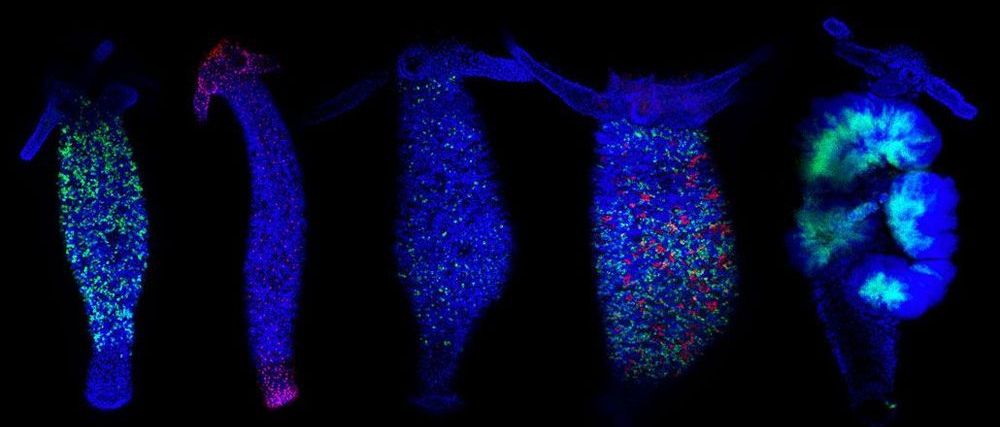
Scientists at Tufts University were able to graft eyes to the tails of blind Xenopus, giving the tadpoles the ability to detect colors, focus on objects, and consistently follow patterns.

In a breakthrough for regenerative medicine, researchers have developed working eyes attached to the tails of blind Xenopus tadpoles. The tadpoles were able to process visual information from their environment upon the augmentation, helping scientist understand the process of promoting innervation (a part of the body’s nerve supply) in regenerative medicine.

We May Finally Have A Way To Stop Scars From Ever Forming

Scientists in Australia are developing new compounds that they claimed could stop scars from forming in the first place. The compounds job is to stop an enzyme called lysyl oxidase, which enables the collagen in wound healing to crosslink, resulting in scar formation.

If you sustained an injury, whether it’s large or small, you’ll likely end up with a scar. Scars, after all, are the natural outcome of wound healing, and there’s typically few ways to avoid it. Until now, that is.

Immune and Nerve Cells Work Together to Fight Gut Infections

Nerve cells in the gut play a crucial role in the body’s ability to marshal an immune response to infection, according to a new study from Weill Cornell Medicine scientists.

The study, published in Nature, shows that the immune system and nervous system have co-evolved to respond to infectious threats. This means that scientists looking for ways to treat diseases like inflammatory bowel disease or asthma that involve an excessive immune system response may also have to address the nervous system’s role.

“The immune system and neuronal system don’t act independently,” said senior author Dr. David Artis, director of the Jill Roberts Institute for Research in Inflammatory Bowel Disease and the Michael Kors Professor of Immunology at Weill Cornell Medicine. “They are working together.”

Researchers Have Linked a Human Brain to the Internet for the First Time Ever

Researchers from Wits University have linked a brain directly to the internet. Data gathered from this project could help fuel the next steps in machine learning and brain-computer interfaces.

A team of researchers at Wits University in Johannesburg, South Africa have made a major breakthrough in the field of biomedical engineering. According to a release published on Medical Express, for the first time ever, researchers have devised a way of connecting the human brain to the internet in real time. It’s been dubbed the “Brainternet” project, and it essentially turns the brain “…into an Internet of Things (IoT) node on the World Wide Web.”

A DNA nanorobot is programmed to pick up and sort molecules into predefined regions

Imagine a robot that could help you tidy your home: roving about, sorting stray socks into the laundry and dirty dishes into the dishwasher. While such a practical helper may still be the stuff of science fiction, Caltech scientists have developed an autonomous molecular machine that can perform similar tasks—at the nanoscale. This “robot,” made of a single strand of DNA, can autonomously “walk” around a surface, pick up certain molecules and drop them off in designated locations.

The work was done in the laboratory of Lulu Qian, assistant professor of bioengineering. It appears in a paper in the September 15 issue of Science.

Why Nanobots?

Strathspey Crown LLC : Announces Issuance of US Patent of the First Implantable Intraocular Lens (IOL) with a Video Camera and Wireless Transmission Capability

NEWPORT BEACH, Calif., July 12, 2017 /PRNewswire/ — Strathspey Crown LLC, a lifestyle healthcare company focused in ophthalmology, medical aesthetic and elective technologies and procedures, today announced that the United States Patent and Trademark Office has issued U.S. Patent No. 9,662,199 covering an implantable intraocular lens with an optic (including accommodating, multifocal and phakic configurations), a camera and an LED display, and a communications module that wirelessly transmit and receive information from an external device (e.g. PDA).

Robert Edward Grant, Founder and Chairman of Strathspey Crown LLC commented, “Video cameras are now a standard feature of smart phone technology and wearable cameras have become popularized by companies like Google and Snap in recent years. This patent represents a significant step forward in the rapidly growing sector of human cyborg technology. The eye, as a transparent medium for light, is ideal for advanced and rechargeable implantables that enable video capture of all of life’s experiences. Our broader vision is to develop ground-breaking medical-grade ocular smart implantables that integrate cellular, WIFI and 802.11 transmissions in an elegant cognitive interface that we believe will enhance human intelligence, augment perceived reality, and digitally capture experiences and individual memories. We look forward to several continuations and expansions on this important intellectual property portfolio.”

Grant further commented, “Although Samsung, Sony and Google have all recently filed patent applications related to the same field, Strathspey Crown is thus far the only company to hold an issued patent in this promising ocular smart implant category. Our first camera-integrated acrylic IOLs will be completed in 2018, upon which we plan to pursue an FDA Investigational Device Exemption (IDE) and subsequent Pre-Market Approval (PMA) and related clinical trial.”

/* */