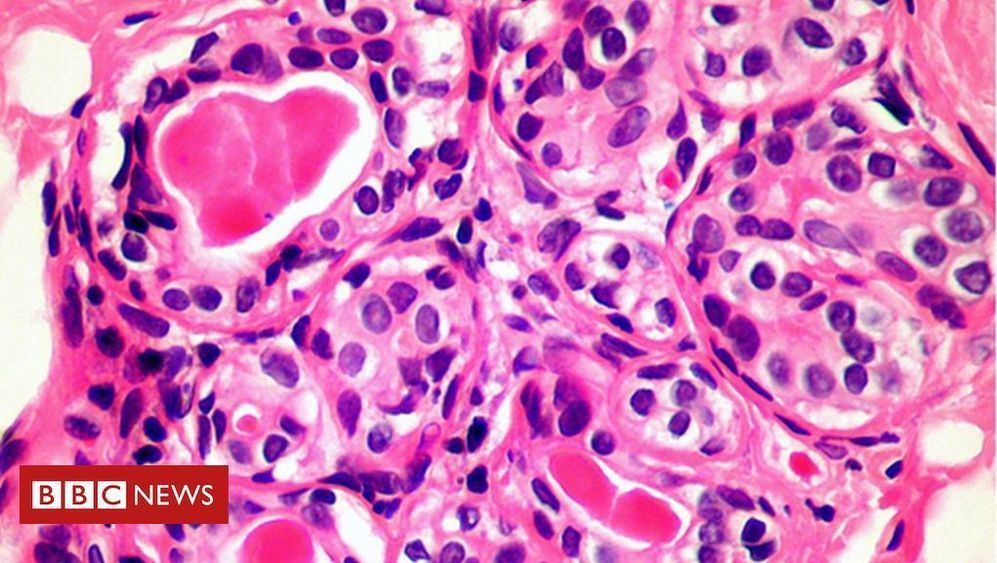
This extraordinary case shows that organ transplants can not only pass on infectious diseases, but also cancer, at least in some rare cases.
New research published in PLOS One has found that virtual reality use impairs physical and cognitive performance while trying to balance.
“I became interested in this topic because virtual reality headsets have recently become widely available, with great potential to make rehabilitation more enjoyable and varied for patients,” said study author Steven M. Peterson of the University of Michigan, Ann Arbor.
“While many studies have explored upper-limb activities, I wanted to understand how immersive and mentally challenging a virtual reality headset is when the user is walking around and not seated. We decided to test the realism of virtual reality by looking for stress at high heights because just the perception of heights can affect how people walk and how cautious they are.”
Promising approach to deliver personalized and non-invasive brain stimulation in clinical settings.
BrainsWay’s Brain Stimulation Device Receives FDA Approval to Treat Obsessive-Compulsive Disorder (IEEE Spectrum):
In 2013, Jerusalem-based BrainsWay began marketing a new type of brain stimulation device that uses magnetic pulses to treat major depressive disorder.
Now, thanks to positive results in a study of 100 patients, the company has received approval from the U.S. Food and Drug Administration (FDA) to market the device for a second psychiatric condition—obsessive-compulsive disorder (OCD) …
He says this has been done successfully with mice. They have mice live twice as long. They are testing aging reversal in dogs in 2018–2019. Human treatments could be available on a general basis by 2025.
George Church is developing better and better organs using pigs. They are working to slow or reverse the aging in the organs to be used for transplant.
He says this has been done successfully with mice. They have mice live twice as long. I mean that that humans could live 160 years if that were linear.
The longest-lived vertebrate. One of the longest-lived vertebrates is this koi fish that lived 226 years.
Earlier this year, we heard how scientists from the University of California San Diego had developed a flexible ultrasound patch that allows users to see the inner structure of irregular-shaped objects. Well, now they’ve made one that measures a patient’s blood pressure from deep within the body.
Patients want to see their medical information. Researchers want to share their data.
Now, scientists at Scripps Research have released a new technology designed to make these measurements easier to perform and more accessible to practitioners, scientists and the general public.
“This is really about data sharing and accelerating the process of discovery,” says Gary Siuzdak, Ph.D., professor at Scripps Research and co-corresponding author of the new XCMS/METLIN open data analysis platform, published recently in Nature Methods.
Your body’s internal clock, or the circadian rhythm, regular when you sleep and wake, when you’re hungry, and when you’re most productive. Because of its effect on so much of our lives, it also has an enormous impact on our health, so sleep experts have designed a blood test to signal when your body is out of sync.
Research has shed new light on genetic processes that may one day lead to the development of therapies that can slow, or even reverse, how our cells age.
A study led by the University of Exeter Medical School has found that certain genes and pathways that regulate splicing factors – a group of proteins in our body that tell our genes how to behave—play a key role in the ageing process. Significantly, the team found that disrupting these genetic processes could reverse signs of ageing in cells.
The study, published in the FASEB Journal, was conducted in human cells in laboratories. Aged, or senescent, cells are thought to represent a driver of the ageing process and other groups have shown that if such cells are removed in animal models, many features of ageing can be corrected. This new work from the Exeter team found that stopping the activity of the pathways ERK and AKT, which communicate signals from outside the cell to the genes, reduced the number of senescent cells in in cultures grown in the laboratory. Furthermore, they found the same effects from knocking out the activity of just two genes controlled by these pathways—FOX01 and ETV6.