Toggle light / dark theme

A Case for Neural Augmentation

Hopefully in the future, when somebody tells you they will be making an appointment with a surgeon for an augment, they will come back smarter. The world will be a better place for it.

Reprinted with permission from the author.

Eric C. Leuthardt, M.D., is a neurosurgeon who is currently a professor with the Department of Neurological Surgery and the Department of Biomedical Engineering at Washington University in St. Louis. He is Director of the Center for Innovation in Neuroscience and Technology and the Brain Laser Center. His work has yielded him numerous accolades as a scientist, a neurosurgeon, and an inventor. He was named one of the Top Young Innovators by MIT’s magazine Technology Review. The magazine names individuals under the age of 35 each year whose work in technology has global impact. In addition to numerous peer reviewed publications, Leuthardt has numerous patents on file with the U.S. Patent and Trademark Office for medical devices and brain computer interface technologies.

An Interview With Dr. João Pedro de Magalhães

A new interview on LEAF with biogerontologist Dr. João Pedro de Magalhães.


Today, we have an interview with Dr. João Pedro de Magalhães, the biogerontologist who created and runs senescence.info. In the unlikely event that his name is new to you, we had another interview with him last year, which you can check out here.

How do you think we age; are we programmed to die, do we wear out, or is the truth a mixture of both?

I don’t think we wear out. Humans and complex animals are made of cells and molecules that, by and large, have some turnover; we can replace most of our components, so I don’t think it’s correct to see aging as wearing out, at least not in complex animals like humans. (Please see here.) That said, I do think that some forms of cumulative damage contribute to the aging process, such as DNA damage. I also think that there are programmatic aspects to aging. That is, I think that genetic programs coordinating some aspects of growth and development persist into adulthood and become detrimental as forms of antagonistic pleiotropy. It is probably a combination of molecular damage and the inadvertent actions of genetic programs that causes aging.

Study finds evidence that leopard geckos can make new brain cells

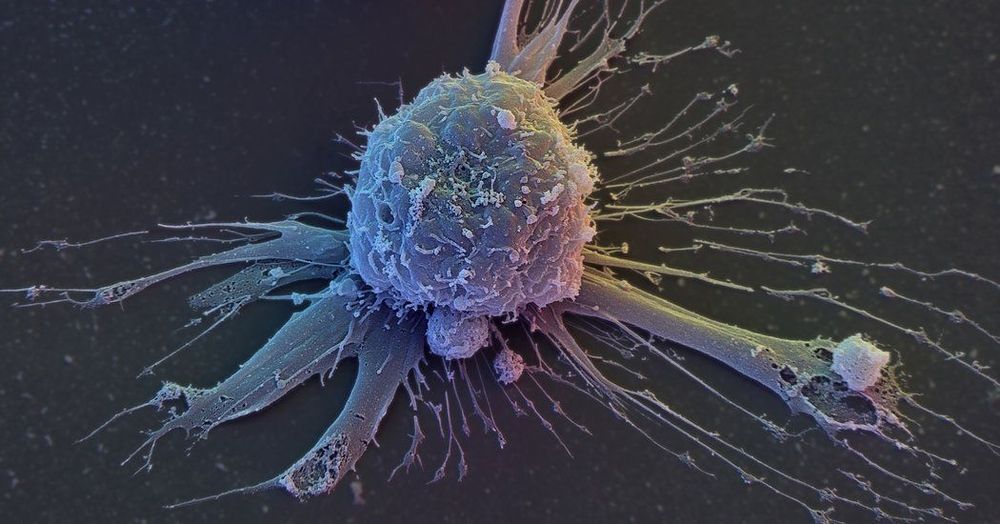
Published in Scientific Reports, this study is the first to provide evidence of new neuron formation—and the presence of stem cells—in the leopard gecko brain.


University of Guelph researchers have discovered the type of stem cell allowing geckos to create new brain cells, providing evidence that the lizards may also be able to regenerate parts of the brain after injury.

This finding could help in replacing human brain cells lost or damaged due to injury, aging or disease.

“The brain is a complex organ and there are so few good treatments for brain injury, so this is a very exciting area of research,” said Prof. Matthew Vickaryous in the Department of Biomedical Sciences at the Ontario Veterinary College (OVC).

Why China’s premier used hit movie ‘Dying to Survive’ to push for cheaper cancer drugs

Billed as the Chinese answer to Dallas Buyers Club, the tear-jerking film Dying to Survive last week became Premier Li Keqiang’s new rallying cry for speeding up price cuts for cancer medications. It is an issue of such complexity that he has held two cabinet meetings about it in the past three months.


Li Keqiang has been trying to speed up price cuts for life-saving medication for months, and it’s a boon that the box-office hit has generated widespread awareness.

XTPL ultra-precise Nanometric Printer receives Honorable Mention at Display Week 2018 I-Zone

Closing in on molecular manufacturing…


http://xt-pl.com received an honorable mention from I-Zone judges for its innovative product that prints extremely fine film structures using nanomaterials. XTPL’s interdisciplinary team is developing and commercializing an innovative technology that enables ultra-precise printing of electrodes up to several hundred times thinner than a human hair – conducive lines as thin as 100 nm. XTPL is facilitating the production of a new generation of transparent conductive films (TCFs) that are widely used in manufacturing. XTPL’s solution has a potentially disruptive technology in the production of displays, monitors, touchscreens, printed electronics, wearable electronics, smart packaging, automotive, medical devices, photovoltaic cells, biosensors, and anti-counterfeiting. The technology is also applicable to the open-defect repair industry (the repair of broken metallic connections in thin film electronic circuits) and offers cost-effective, non-toxic, flexible industry-adapted solutions.

XTPL’s technology might be the only one in the world offering cost-effective, non-toxic, flexible, industry adapted solution for the market of displays TFT/LCD/OLED, integrated circuits (IC), printed circuit boards (PCB), multichip modules (MCM); photolithographic masks & solar cells market.

XTPL delivers also solutions for research & prototyping including printing head, electronics, software algorithms which are the core of the system driving the electric field and the assembly process of nanoparticles implemented in XTPL’s Nanometric Lab Printer. It is a device that offers necessary functionalities to test, evaluate and use XTPL line-forming technology with nanometric precision and enables positioning of the printing head with micrometric resolution precisely.

Official video explaining XTPL’s technology: https://youtu.be/WMerzxzCXuw

Filmed at the I-Zone demo and prototype area at SID Display Week, the world’s largest and best exhibition for electronic information display technology.

/* */