Toggle light / dark theme

David Sinclair — Aging Can Be Cured

Original Video ► https://www.youtube.com/watch?v=W_23474cHLg&ab_channel=RT

This channel will never be monetized.
Paypal ► https://goo.gl/ciSpg1

They say age breeds wisdom. But can we grow personally and mature, while staying young and healthy? Can ageing be cured just like any other disease? We asked David Sinclair, professor of genetics at Harvard Medical School.

David Andrew Sinclair is an Australian biologist and Professor of Genetics best known for his research on the biology of lifespan extension and driving research towards treating diseases of aging.

Sinclair is Co-Director of the Paul F. Glenn Laboratories for the Biological Mechanisms of Aging at Harvard Medical School. Sinclair obtained a Bachelors of Science (Honours Class I) at the University of New South Wales, Sydney, and received the Australian Commonwealth Prize. In 1995, he received a Ph.D. in Molecular Genetics then worked as a postdoctoral researcher at the Massachusetts Institute of Technology with Leonard Guarente. Since 1999 he has been a tenured professor in the Genetics Department of Harvard Medical School.

Sinclair has received over 25 awards including The Australian Commonwealth Prize, A Helen Hay Whitney Fellowship, the Nathan Shock Award, a Leukemia and Lymphoma Fellow, a MERIT Awards from the National Institutes of Health, the Merck Prize, the Arminese Fellowship, the Genzyme Outstanding Achievement in Biomedical Science Award, an Ellison Medical Senior Fellow, the Bio-Innovator award, the Bright Sparks Award for Top Scientists under 40, The Denham Harman Award in Biogerontology, a medal from the Australian Society for Medical Research, and a TIME 100 honoree, TIME magazine’s list of the 100 “most influential people in the world” (2014).

Robots on the rise as Americans experience record job losses amid pandemic

They can check you in and deliver orange juice to your hotel room, answer your questions about a missing package, whip up sushi and pack up thousands of subscription boxes. And, perhaps most importantly, they are completely immune to Covid-19. While people have had a hard time in the coronavirus pandemic, robots are having a moment.

The Covid-19 pandemic has left millions of Americans unemployed – disproportionately those in the service industries where women and people of color make up the largest share of the labor force. In October, 11 million people were unemployed in the US, compared with about 6 million people who were without a job during the same time last year.

Exploring the use of artificial intelligence in architecture

Over the past few decades, artificial intelligence (AI) tools have been used to analyze data or complete basic tasks in an increasing number of fields, ranging from computer science to manufacturing, medicine, physics, biology and even artistic disciplines. Researchers at University of Michigan have recently been investigating the use of artificial intelligence (AI) in architecture. Their most recent paper, published in the International Journal of Architectural Computing, specifically explores the potential of AI as a tool to create new architectural designs.

“My partner, Sandra Manninger, and myself, have a long-standing obsession with the idea to cross pollinate the fields of and AI,” Matias del Campo, one of the researchers who carried out the study, told Tech Xplore. “We first got in touch with AI research in 1998, when we were introduced to the OFAI (The Austrian Institute of Artificial Intelligence) through a mutual friend, Dr. Arthur Flexer and we held the first course in Machine Learning for Architecture at the University of Applied Arts in Vienna, in 2006.”

Several years after they first became interested in the potential uses of AI in architecture, del Campo and Manninger started collaborating with the Robotics Department at University of Michigan. Working with Jessy Grizzle, the department’s director, and Alexandra Carlson, one of her Ph.D. students, they were able to significantly expand their research. Their study featured in the International Journal of Architectural Computing is the latest of a series of research efforts in which they investigated the use of AI techniques for designing architectural solutions.

Underlying Features of Epigenetic Aging Clocks | Morgan Levine, Yale University

Methylation definition at 5:05, 27:20 a lil about reprogramming, 32:00 q&a, 47:44 Aubrey chimes in, 57:00 Keith Comito(and other throughout)


Zoom transcription: https://otter.ai/u/AIIhn4i_p4DIXHAJx0ZaG0HUnAU

We will be joined by Morgan Levine, Yale University, to discuss the recent article “Underlying Features of Epigenetic Aging Clocks” she co-authored.

The talk will compare and contrast existing epigenetic clocks and describe how they can be deconstructed to facilitate our understanding of causes and consequences of epigenetic aging.

Article Abstract:

Mars Personalised Petcare: High Tech, Genetics and Wearables

AI, Genetics, and Health-Tech / Wearables — 21st Century Technologies For Healthy Companion Animals.


Ira Pastor ideaXme life sciences ambassador interviews Dr. Angela Hughes, the Global Scientific Advocacy Relations Senior Manager and Veterinary Geneticist at Mars Petcare.

The global petcare industry is significantly expanding, with North America sales alone expected to hit US $300 billion by 2025. And while we may associate the Mars Corporation, the world’s largest candy company, with leading confectionary brands like Milky Way, M&M’s, Skittles, Snickers, Twix, etc. They also happen to be one of the world’s largest companies in pet care as well.

Dr. Angela Hughes, is the Global Scientific Advocacy Relations Senior Manager & Veterinary Geneticist at Mars Petcare. Dr. Hughes is both Doctor of Veterinary Medicine, and a PhD with a focus in Canine Genetics, both from the University of California, Davis. Dr. Hughes also serves as Veterinary Genetics Research Manager of Wisdom Health, a business unit of Mars Petcare, which has developed state-of-the-art genetic tests for companion animals, leading to revolutionary personalized petcare. She also serves as a Veterinary Geneticist of Hughes Veterinary Consulting, focused on small animal and equine genetics and with a special interest in small animal reproduction and pediatrics.

Dr Hughes is published in multiple academic journals, including the Journal of the American Veterinary Medical Association and has contributed chapters for publication in Veterinary Clinics of North America Small Animal Practice: Pediatrics and Large Animal Internal Medicine.

New blood study finds that only about 10% of Americans are immune to COVID-19, researchers say

A recent study published Tuesday in the journal JAMA Internal Medicine found that most Americans are still susceptible to COVID-19.

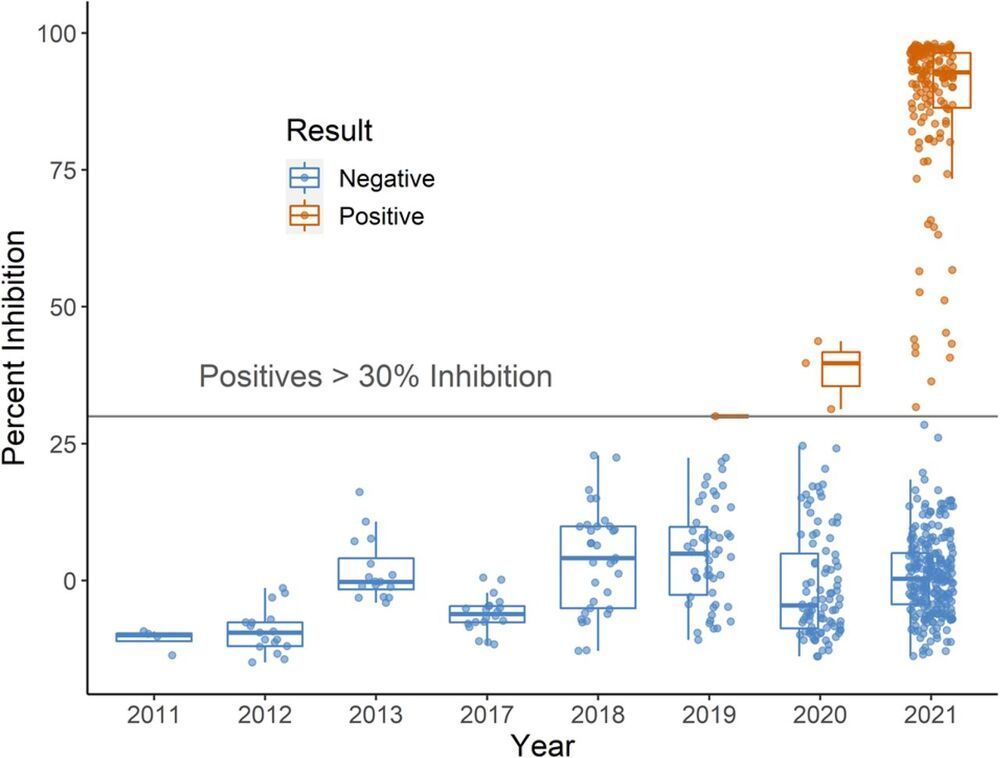
According to the study, researchers studied the blood samples of 177,919 Americans across the nation, D.C., and Puerto Rico between July 27 and Sept. 24. They found that fewer than 10% of the people had detectable COVID antibodies.

“In this U.S. nationwide seroprevalence cross-sectional study, we found that as of September 2020, most persons in the US did not have detectable SARS-CoV-2 antibodies, and seroprevalence estimates varied widely by jurisdiction,” the authors concluded. “Continued biweekly testing of sera collected by commercial laboratories will allow for assessment of the changing epidemiology of SARS-CoV-2 in the U.S. in the coming months. Our results reinforce the need for continued public health preventive measures, including the use of face masks and social distancing, to limit the spread of SARS-CoV-2 in the U.S.”

The last covid-free places on earth have something in common: Travel shutdowns

Now those islands are some of the only remaining corners of the globe where the coronavirus doesn’t exist, thanks to their total suspension of inbound tourism and other nonessential travel.

These 8 countries are accepting American travelers for remote-work trips

The islands of Samoa, which include the U.S. territory of American Samoa, closed to nonessential travel in March and have not recorded any confirmed coronavirus cases. To enter, U.S. citizens must hold permanent residency and request permission from the Samoan Health Ministry to travel on a commercial flight to Samoa through Auckland, New Zealand, before quarantining for 14 days.

/* */