Toggle light / dark theme

How Adobe is using an AI chatbot to support its 22,000 remote workers

When the COVID-19 shutdown began in March throughout the United States, my team at Adobe had to face a stark reality: Business as usual was no longer an option. Suddenly, over just a single weekend, we had to shift our global workforce of over 22,000 people to working remotely. Not surprisingly, our existing processes and workflows weren’t equipped for this abrupt change. Customers, employees, and partners — many also working at home — couldn’t wait days to receive answers to urgent questions.

We realized pretty quickly that the only way to meet their needs was to completely rethink our support infrastructure.

Our first step was to launch an organization-wide open Slack channel that would tie together the IT organization and the entire Adobe employee community. Our 24×7 global IT help desk would front the support on that channel, while the rest of IT was made available for rapid event escalation.

High Tech Innovation, Support and Individualised Care For Leading Edge Rehabilitation

Ira Pastor, ideaXme life sciences ambassador, interviews Dr. Rachel Ramoni, Chief Research and Development Officer at the U.S. Department of Veteran Affairs.

Ira Pastor Comments:

The United States Department of Veterans Affairs (VA) @U.S. Dept. of Veterans Affairs is a federal Cabinet-level agency that provides comprehensive healthcare services to military veterans at over 1,000 VA medical centers and outpatient clinics located throughout the US. It also provides several non-healthcare benefits including disability compensation, vocational rehabilitation, education assistance, home loans, and life insurance; and provides burial and memorial benefits to eligible veterans and family members.

The VA serves over 9 million enrolled Veterans each year, employs over 377,000 people and has an annual budget of $200 billion.

Within the VA structure, the Office of Research & Development is focused on improving the lives of Veterans, and all Americans, through health care discovery and innovation including: basic, translational, clinical, health services, and rehabilitative research, and applies scientific knowledge to develop effective individualized care solutions.

Dr. Rachel Ramoni

The World’s First Living Machines

Teeny-tiny living robots made their world debut earlier this year. These microscopic organisms are composed entirely of frog stem cells, and, thanks to a special computer algorithm, they can take on different shapes and perform simple functions: crawling, traveling in circles, moving small objects — or even joining with other organic bots to collectively perform tasks.


The world’s first living robots may one day clean up our oceans.

2021 Breakthrough Prize Winners Announced: Researcher Who Developed Protein Design Technology Awarded $3 Million

Baker won one of the six $3 million Breakthrough Prizes this year, which were awarded to eight different scientists in Mathematics, Fundamental Physics and Life Sciences.


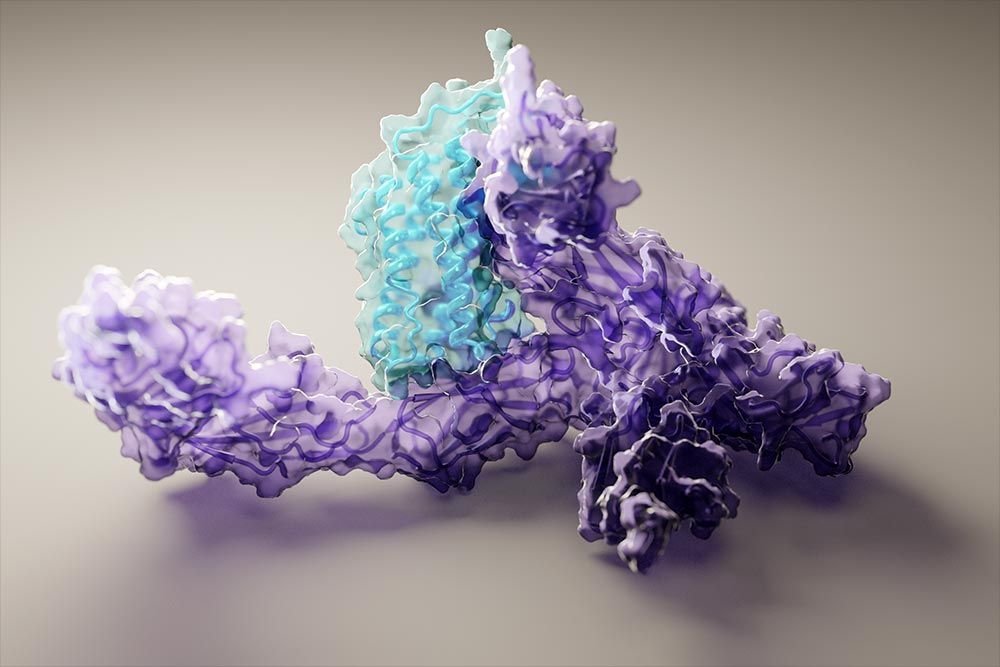
David Baker, whose protein design technology is being used to develop therapies for Covid-19 and cancer, received one of several awards to scientists from the Breakthrough Prize Foundation that add up to a combined total of $21.75 million.

Researchers fabricate high-quality transparent ceramic

Mid-infrared lasers have been widely used in imaging, detection, diagnostics, environmental monitoring, medicine, industry, defense and others. For mid-infrared laser systems, low phonon energy gain materials are key factors.

Among these mid-infrared materials, Er3+-doped CaF2 transparent ceramics are promising candidate materials because of their ultra-low phonon energy as well as excellent physical, chemical, and , which quickly attract the attention of researchers. However, traditional preparation methods can’t obtain high-quality Er3+-doped CaF2 transparent ceramics.

Recently, a research team led by Prof. Zhang Long from the Shanghai Institute of Optics and Fine Mechanics of the Chinese Academy of Sciences has developed a high quality Er3+-doped CaF2 transparent ceramics by single crystal ceramization. Their study was published in Journal of the European Ceramic Society.

An Alzheimer’s Drug Has Been Shown to Help Teeth Repair Cavities Naturally

Circa 2018 o,.o!


Dental fillings may soon be left in the ash heap of history, thanks to a recent discovery about a drug called Tideglusib.

Developed for and trialled to treat Alzheimer’s disease, last year scientists found the drug also happens to promote the natural tooth regrowth mechanism in mice, allowing the tooth to repair cavities.

Tideglusib works by stimulating stem cells in the pulp of teeth, the source of new dentine. Dentine is the mineralised substance beneath tooth enamel that gets eaten away by tooth decay.

The Most Common Pain Relief Drug in The World Induces Risky Behaviour, Study Suggests

One of the most consumed drugs in the US – and the most commonly taken analgesic worldwide – could be doing a lot more than simply taking the edge off your headache, new evidence suggests.

Acetaminophen, also known as paracetamol and sold widely under the brand names Tylenol and Panadol, also increases risk-taking, according to a new study that measured changes in people’s behaviour when under the influence of the common over-the-counter medication.

“Acetaminophen seems to make people feel less negative emotion when they consider risky activities – they just don’t feel as scared,” says neuroscientist Baldwin Way from The Ohio State University.

Researchers reveal a much richer picture of the past with new DNA recovery technique

Researchers at McMaster University have developed a new technique to tease ancient DNA from soil, pulling the genomes of hundreds of animals and thousands of plants—many of them long extinct—from less than a gram of sediment.

The DNA extraction method, outlined in the journal Quarternary Research, allows scientists to reconstruct the most advanced picture ever of environments that existed thousands of years ago.

The researchers analyzed permafrost samples from four sites in the Yukon, each representing different points in the Pleistocene-Halocene transition, which occurred approximately 11,000 years ago.

/* */