Toggle light / dark theme

Expert Disaster Preppers Explain How to Ride Out the Coronavirus Pandemic

For guidance in this time of uncertainty, we spoke with five expert preppers about what they’re doing to ride out the pandemic, how they’ll be ready for whatever comes next—and how you can be too.


Long lines outside grocery stores. Aisles stripped of canned food, toilet paper, and hand sanitizer. A fast-moving pandemic disease that, as of last week, was infecting more than 30,000 people every day.

Just a month ago, such a situation was unimaginable for most of us. But for disaster preppers, it’s precisely the scenario they’re determined to be ready for.

“I’m from a very old Appalachian family. Even before the word ‘prepper’ was a term, we were always putting back stuff and being ready in case we couldn’t go to the store,” says Samantha Biggers, who hardly fits the stereotype seen in TV shows like Doomsday Preppers. Biggers is a tattooed, 36-year-old farmer in North Carolina who brews her own beer and shears her own sheep. That’s a far cry from a wild-eyed paramilitary man living off-grid in a bunker designed to weather an EMP blast.

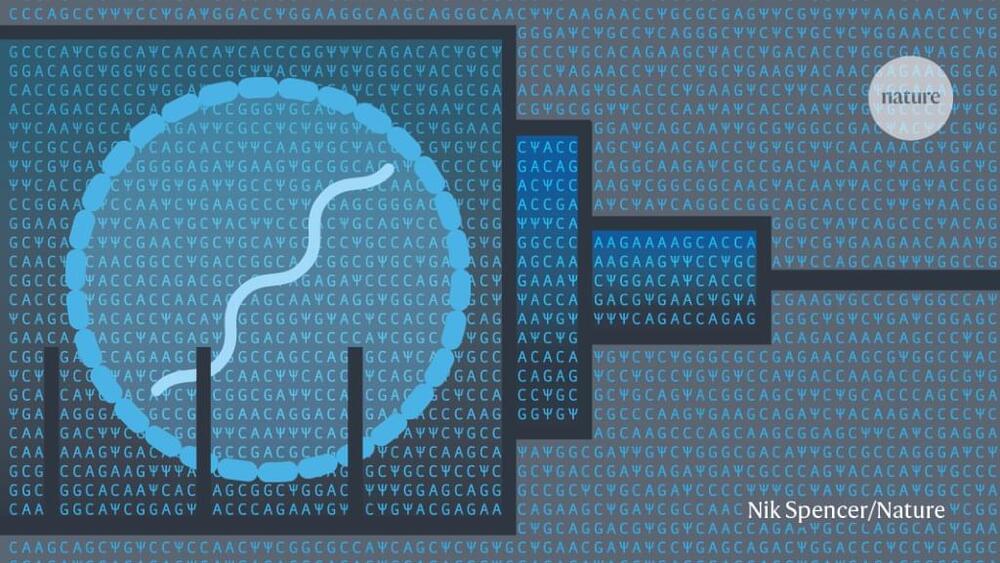
Gene editing rids mice of DNA segment linked to autism

Researchers have used the gene-editing technique CRISPR to delete a segment of DNA associated with autism and schizophrenia from mouse brain cells.

The technique has only proven effective in mice so far but may eventually be suitable for treating brain conditions in people, says Xiao-hong Lu, assistant professor of pharmacology and neuroscience at Louisiana State University Health in Shreveport.

Unlike techniques used to manipulate DNA in the mouse brain, CRISPR can be applied to people. He says, “We need a tool to help us to carry the genetic elements into the [human] brain.”

Study points to evidence of stray dogs as possible origin of SARS-CoV-2 pandemic

Ever since the outbreak of the SARS-CoV-2, scientists have been scrambling to identify the species of origin to understand how the new coronavirus first leapt from its animal hosts to humans, causing the current pandemic infecting more than a million people worldwide.

Scientists have been looking for an intermediate animal host between bats, which are known to harbor many coronaviruses, and the first introduction of SARS-CoV-2 into humans.

Many animals, beginning with snakes and most recently, pangolins, have all been put forth as the likely intermediate, but the viruses isolated from them are too divergent from SARS-CoV-2, suggesting a common ancestor too far back in time—-living in the 1960s.

Downloading the Human Brain to a Computer: Elon Musk’s Neuralink

https://www.youtube.com/watch?v=r-vbh3t7WVI

Your Neuralink device would be implanted using traditional neurosurgery methods safely and seamlessly with a robot surgeon. As mentioned in the Neuralink published paper, “We have also built a neurosurgical robot capable of inserting six threads (192 electrodes) per minute. Each thread can be individually inserted into the brain with micron precision for the avoidance of surface vasculature and targeting specific brain regions.”

The Neuralink team has already started experimenting with various versions of the devices on both rats and monkeys. The results have been impressive. During the presentation in San Francisco, Musk and his team described one instance of a monkey being able to control a computer with simply its brain. Unfortunately, (or fortunately) there have not been any tests on humans. Yet, the team hopes to obtain FDA approval and begin human trials as early as this year.

During his presentation Elon Musk reiterated the idea that Neuralink will be an important part of our future, eventually allowing us to reach symbiosis with artificial intelligence. “With a high bandwidth brain-machine interface, we can go along for the ride and effectively have the option of merging with AI”, said Musk. And as for the risks to reach this end goal? Musk reassured his audience that the device will be safe.

Bill Gates and Intellectual Ventures Funds Microchip Implant Vaccine Technology

You really can not make this up The Bill and Melinda Gates Foundation has donated more than $21 million towards developing a vaccine technology that uses a tattoo-like mechanism which injects invisible nanoparticles under the skin that is now being tested in a vaccine against the virus that causes COVID-19.


Another study funded by the Bill and Melinda Gates Foundation and published in December, 2019 by researchers from the Massachusetts Institute of Technology, the Institute of Chemistry of the Chinese Academy of Sciences in Beijing and the Global Good, Intellectual Ventures Laboratory in Bellevue, WA, describes how “near-infrared quantum dots” can be implanted under the skin along with a vaccine to encode information for “decentralized data storage and bio-sensing.”

“To maximize the utility of this technology for vaccination campaigns, we aimed to create a platform compatible with microneedle-delivered vaccines that could reliably encode data on an individual for at least five years after administration,” said the MIT paper, titled Biocompatible near-infrared quantum dots delivered to the skin by microneedle patches record vaccination. “In addition, this system also needed to be highly biocompatible, deliver a sufficient amount of dye after an application time of 2 min or less, and be detectable using a minimally adapted smartphone.”

Fridrik Laurusson, an author of the microchip study, is from The Global Good, Intellectual Ventures Labarotory . Its website features Microsoft founder Bill Gates on its front page and describes itself as a “collaboration between Bill Gates and Intellectual Ventures” a company founded by Nathan Myhrvold and Edward Jung of Microsoft. Wikipedia describes Intellectual Ventures in Gates’ home state as a private American company that “centers on the development and licensing of intellectual property” and “one of the top-five owners of U.S. patents, as of 2011.

Exercise restores youthful properties to muscle stem cells of old mice

A nightly jaunt on the exercise wheel enhances muscle-repair capabilities in old mice, according to a new study by researchers at Stanford School of Medicine.

Only older saw this benefit, which the researchers found is due to the rejuvenation of the .

“The effect in old animals is very significant,” said Thomas Rando, MD, Ph.D., professor of neurology and neurological sciences and director of Stanford’s Glenn Center for the Biology of Aging. “We found that restores youthfulness to tissue repair. Their muscle stem start to look and behave like those of much younger animals.”

/* */