A new study has found red light therapy helps reduce blood sugar levels. Researchers say red light therapy could help people with type 2 diabetes manage their condition.


Here’s my latest Opinion piece just out for Newsweek. Check it out! Lifeboat Foundation mentioned.
We need to remember that universal distress we all had when the world started to shut down in March 2020: when not enough ventilators and hospital beds could be found; when food shelves and supplies were scarce; when no COVID-19 vaccines existed. We need to remember because COVID is just one of many different existential risks that can appear out of nowhere, and halt our lives as we know it.
Naturally, I’m glad that the world has carried on with its head high after the pandemic, but I’m also worried that more people didn’t take to heart a longer-term philosophical view that human and earthly life is highly tentative. The best, most practical way to protect ourselves from more existential risks is to try to protect ourselves ahead of time.
That means creating vaccines for diseases even when no dire need is imminent. That means trying to continue to denuclearize the military regardless of social conflicts. That means granting astronomers billions of dollars to scan the skies for planet-killer asteroids. That means spending time to build safeguards into AI, and keeping it far from military munitions.
If we don’t take these steps now, either via government or private action, it could be far too late when a global threat emerges. We must treat existential risk as the threat it is: a human species and planet killer—the potential end of everything we know.

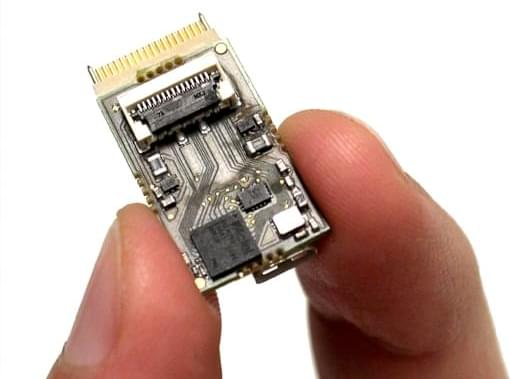
The era of bioelectronic healthcare is dawning upon us. As electronic systems shrink in size and improve in functionality, we see more and more emerging devices that can track vital signs, such as heart rate and blood pressure, realising the grand vision of highly connected sensor nodes monitoring patients’ health beyond the hospital doors. The real revolution in digital healthcare, however, lies in bringing not only the diagnostics but also the therapy to the patient which requires interfacing the world of electronics with biology.
Interfacing the nervous system provides an immense opportunity to observe (through recording) and modify (through stimulation) the functional state of the biological system to fundamentally understand various diseases and health conditions, and to ultimately develop suitable therapies through closed-loop systems [1]. Consequently, a host of neural interface modalities, with varying levels of invasiveness, have been developed over the past decades. Among all, interfacing at the individual neuron level allows the highest level of information transfer from the brain.
Despite the success of devices such as Cochlear Implants, interfacing at the individual neuron level is still severely limited due to challenges such as selectivity (for stimulation) and thermal-limitations imposed on data transmission to prevent neural tissue damage. The latter is a major bottleneck in improving information transfer rate of neural recording systems as they scale up. Hence, there is currently a tremendous drive to develop new enabling technologies for neuroscience to provide insightful views on how motor or sensory information is represented and transformed by the brain, as well as revealing how this complex system is affected by neurological injuries and disease.
Briahna Joy Gray and Robby Soave discuss a new report on credibility in academic papers. #science #research.
About Rising:
Rising is a weekday morning show with bipartisan hosts that breaks the mold of morning TV by taking viewers inside the halls of Washington power like never before. The show leans into the day’s political cycle with cutting edge analysis from DC insiders who can predict what is going to happen. It also sets the day’s political agenda by breaking exclusive news with a team of scoop-driven reporters and demanding answers during interviews with the country’s most important political newsmakers.
Follow Rising on social media:
Website: Hill. TV
Facebook: facebook.com/HillTVLive/
Instagram: @HillTVLive.
Relying on sub-wavelength nanostructures, metasurfaces have been shown as promising candidates for replacing conventional free-space optical components by arbitrarily manipulating the amplitude, phase, and polarization of optical wavefronts in certain applications1,2,3. In recent years, the scope of their applications has been expanded towards complete spatio-temporal control through the introduction of active metasurfaces. These developments open up exciting new possibilities for dynamic holography4, faster spatial light modulators5, and fast optical beam steering for LiDAR6. Large efforts have been channeled into various modulation mechanisms7. Microelectromechanical and nanoelectromechanical systems (MEMS and NEMS)8,9,10,11 have the advantages of low-cost and CMOS-compatibility, but the speed is limited up to MHz. Phase-change materials12,13,14 have fast, drastic, and non-volatile refractive index change, but lack continuous refractive index tuning and have a limited number of cycles constraining applicability to reconfigurable devices. Through molecule reorientation, liquid crystal can have index modulation over 10%, while under relatively low applied voltages Tunable liquid crystal metasurfaces, U.S. patent number 10,665,953 [Application Number 16/505,687]15. Techniques of liquid crystal integration have also advanced after decades of development. However, the tuning speeds are limited to kHz range16. Thermal-optic effects can induce relatively large refractive index changes17,18, but the speed is inherently limited and the on-chip thermal management can be challenging. The co-integration of transparent conductive oxide and metallic plasmonic structures5,6 has been demonstrated in epsilon-near-zero (ENZ) regime to control the wavefront of reflected light, but the low reflection amplitude induced by the optical loss of the materials and the ENZ regime is unavoidable.
In modern photonics, a multitude of technologies for tunable optics and frequency conversion19,20 are realized with nonlinear materials that have low loss and a strong χ effect, such as lithium niobate21,22, aluminum nitride23, and organic electro-optic (OEO) materials24. Their ultrafast responses make it possible to use RF or millimeter-wave control25. Developments in computational chemistry have also led to artificially engineered organic molecules that have record-high nonlinear coefficients with long-term and high-temperature stability26,27. However, their potential in modifying free-space light has been relatively unexplored until recently. Several OEO material-hybrid designs have demonstrated improved tunability of metasurfaces28,29,30. Utilizing dielectric resonant structures and RF-compatible coplanar waveguides, a free-space silicon-organic modulator has recently accomplished GHz modulation speed31. However, all demonstrations to date require high operating voltages ± 60V, due to low resonance tuning capability (frequency shift / voltage), which hinders their integration with electronic chips.
In this work, we propose combining high-Q metasurfaces based on slot-mode resonances with the unique nano-fabrication techniques enabled by OEO materials, which drastically reduces the operating voltage. The low voltage is mainly achieved from the ability to place the electrodes in close proximity to each other while hosting high-Q modes in between and the large overlap of the optical and RF fields in OEO materials. In the following sections, we first provide the design concepts and considerations for achieving a reduced operating voltage. Next, we numerically demonstrate the advantage of a particular selected mode compared to other supported modes in the structure. Finally, we experimentally realize our concepts and characterize the performance of the electro-optic metasurface.

Researchers at Trinity College Dublin, working together with the Royal College of Surgeons in Ireland (RCSI), have developed special fluorescent, color-changing dyes that, for the first time, can be used to simultaneously visualize multiple distinct biological environments using only one singular dye.
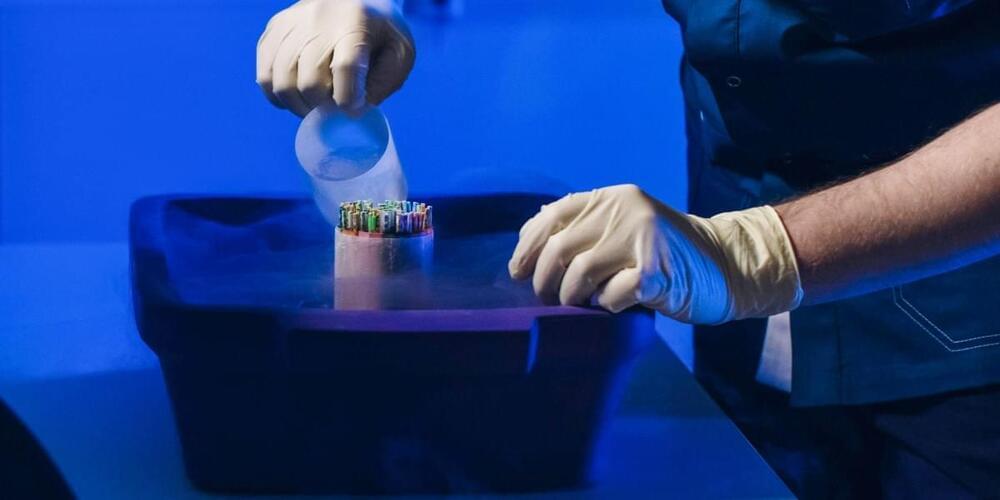
When these dyes are encapsulated in delivery vessels, like those used in technologies like the COVID-19 vaccines, they “switch on” and give out light via a process called “aggregation-induced emission” (AIE). Soon after delivery into the cells their light “switches off” before “switching on” again once the cells shuttle the dyes into cellular lipid droplets.
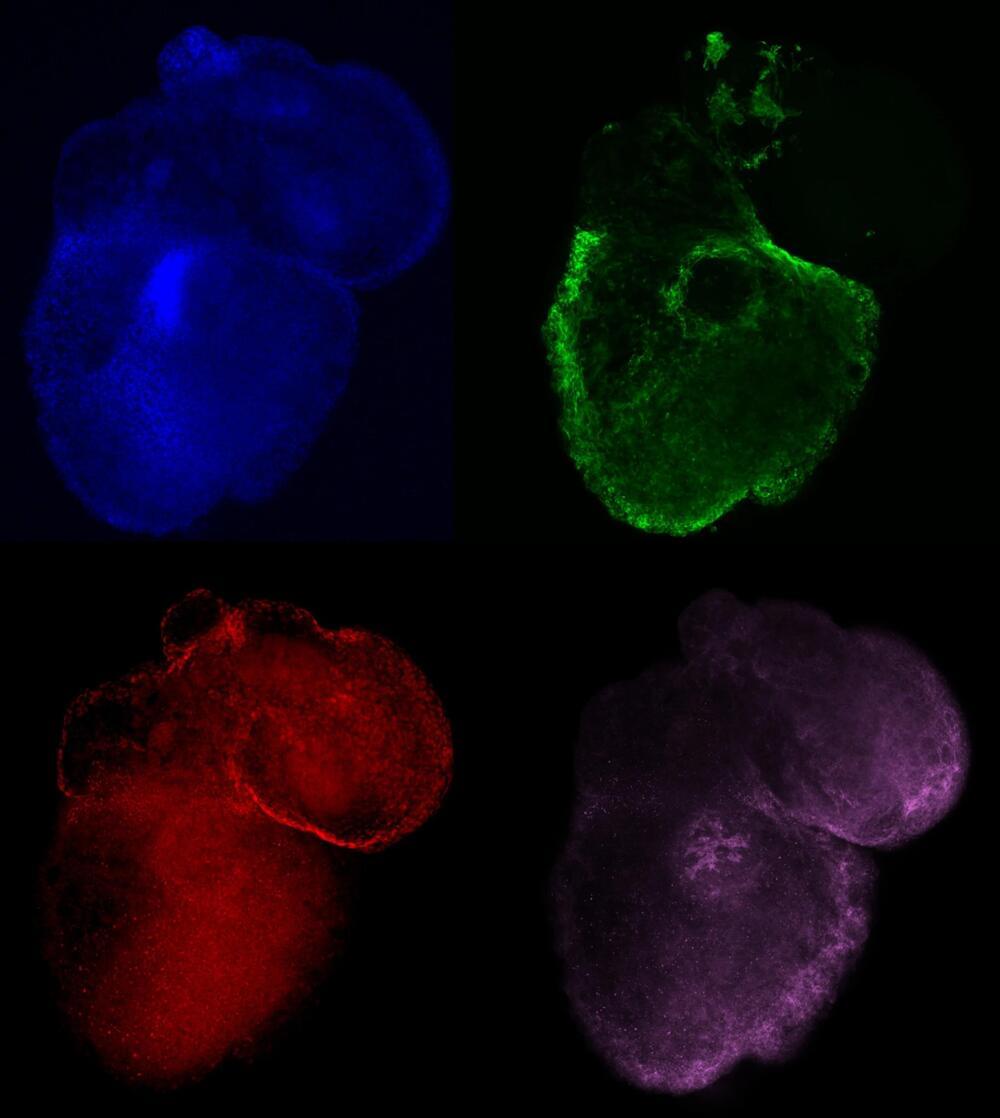
Thanks to advancements in the development of patented synthetic human-like hearts first created at Michigan State, researchers can study human heart development and congenital heart disease on highly accurate models. This is facilitating the development of new therapies and pharmaceutical drugs to treat a variety of heart-related diseases just in time for the observance of American Heart Month in February.
Similar in size and development to fetal human hearts, these mini heart organoids are becoming increasingly complex and realistic. The MSU research team that created the mini hearts first published their findings in 2020. They have quickly become a world leader in this field and their latest advancements have been published in Nature Communications and Stem Cell Reports.
Aitor Aguirre, associate professor of biomedical engineering and chief of the division of developmental and stem cell biology in MSU’s Institute for Quantitative Health Science and Engineering, explained that the introduction of realistic models is essential to the discovery of effective and clinically translatable solutions to cardiovascular disease. An estimated 21 million annual deaths are related to this condition, including disorders of the heart and blood vessels. And that number is growing.

USA: A cross-sectional study comprising 2,822 US adults revealed that worse examination-based and self-reported vision impairment is associated with anxiety and depressive symptoms, and worse examination-based vision impairment is linked with severe social isolation.
These findings, published in JAMA Ophthalmology, provide evidence to support prioritizing research aimed at enhancing the health and inclusion of people with vision impairment.
Vision impairment and psychosocial function, including symptoms of anxiety, depression and social isolation, are a major cause of morbidity in the US. However, there is a lack of nationally representative studies evaluating associations between subjective and objective vision impairment with psychosocial function following the COVID-19 pandemic.