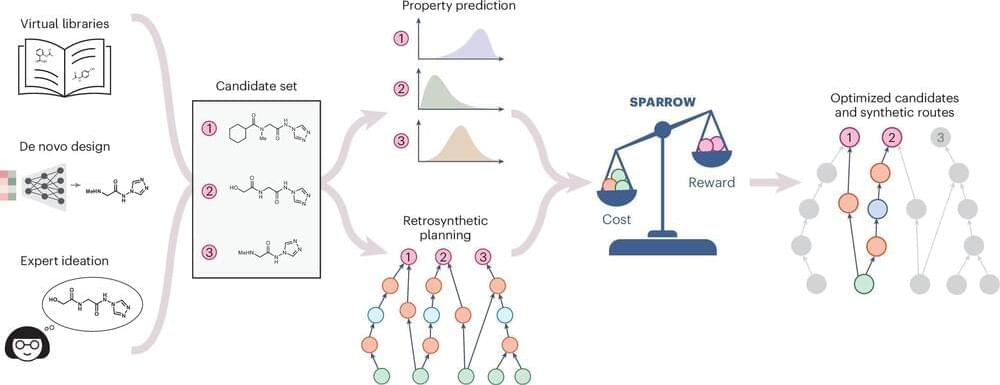
The use of AI to streamline drug discovery is exploding. Researchers are deploying machine-learning models to help them identify molecules, among billions of options, that might have the properties they are seeking to develop new medicines.
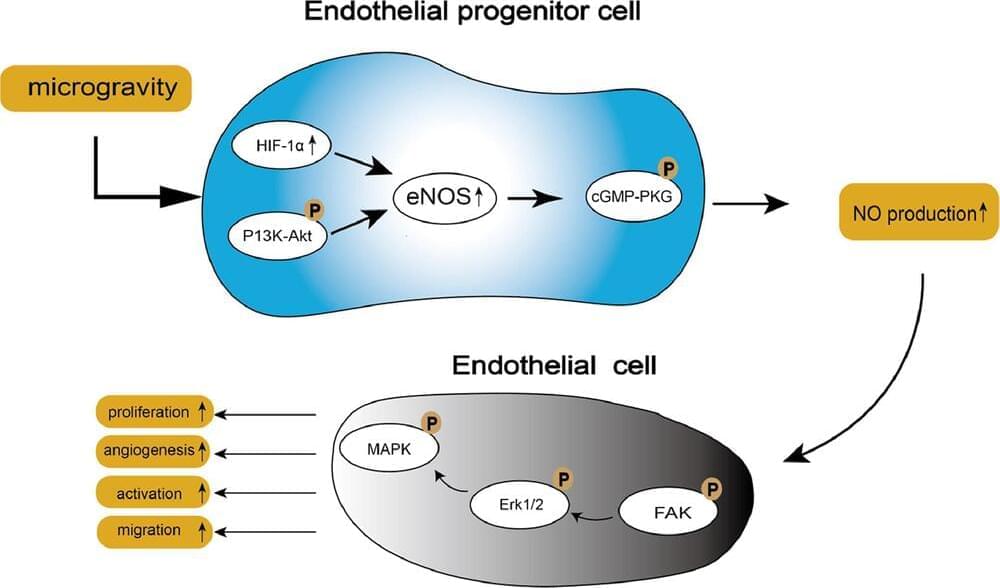
Humanity is on the verge of entering a new era of space exploration, with the Artemis III mission planning to return humans to the moon in 2026, for the first time in 50 years. Not only will Artemis see a woman and a person of color walk on the lunar surface for the first time, but the week-long mission to the south pole of the moon will begin a period of longer and longer stays in space.
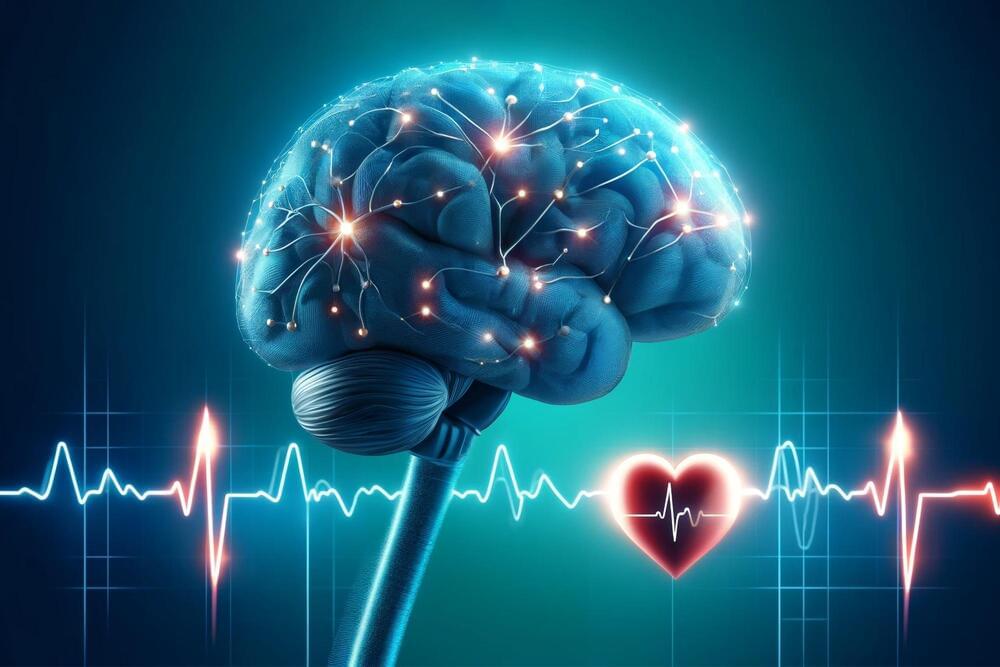
Study suggests heart rate may be a useful tool to determine where to stimulate the brains of individuals with depressive disorders when brain scans aren’t available.
New research suggests a common brain network exists between heart rate deceleration and depression. By evaluating data from 14 people with no depression symptoms, the team of researchers at Brigham and Women’s Hospital, a founding member of the Mass General Brigham healthcare system, found stimulating some parts of the brain linked to depression with transcranial magnetic stimulation (TMS), also affected heart rate, suggesting clinicians may be able to target those areas without the use of brain scans that aren’t widely available. The findings were published recently in the journal Nature Mental Health.
Heart-Brain Coupling and TMS.
Researchers in the Netherlands are developing ‘virtually painless’ injections without needles in what they hope is a breakthrough that will ease fear and encourage vaccinations.
#News #Reuters #BubbleGun #NeedleFree #Vaccine.
Subscribe: http://smarturl.it/reuterssubscribe.
Reuters brings you the latest business, finance and breaking news video from around the globe. Our reputation for accuracy and impartiality is unparalleled.
Get the latest news on: http://reuters.com/
Follow Reuters on Facebook: / reuters.
Follow Reuters on Twitter: / reuters.
Follow Reuters on Instagram: https://www.instagram.com/reuters/?hl=en
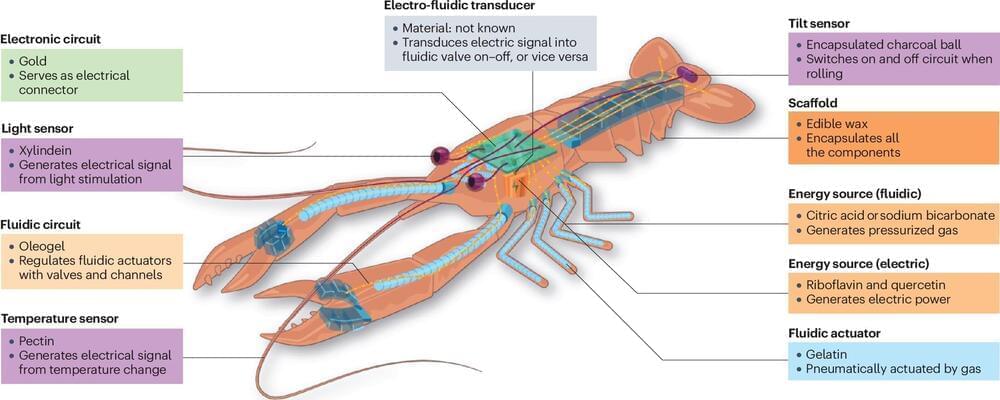
Science and Technology: Some robots could be “eaten” so they could walk around inside the body and perform tests or surgeries from the inside out; or administer medications.
Robots made of several nanorobots joined together could assemble and reassemble themselves inside the body even after being…
Robots and food have long been distant worlds: Robots are inorganic, bulky, and non-disposable; food is organic, soft, and biodegradable. Yet, research that develops edible robots has progressed recently and promises positive impacts: Robotic food could reduce electronic waste, help deliver nutrition and medicines to people and animals in need, monitor health, and even pave the way to novel gastronomical experiences.
But how far are we from having a fully edible robot for lunch or dessert? And what are the challenges? Scientists from the RoboFood project, based at EPFL, address these and other questions in a perspective article in the journal Nature Reviews Materials.
“Bringing robots and food together is a fascinating challenge,” says Dario Floreano, director of the Laboratory of Intelligent Systems at EPFL and first author of the article. In 2021, Floreano joined forces with Remko Boom from Wageningen University, The Netherlands, Jonathan Rossiter from the University of Bristol, UK, and Mario Caironi from the Italian Institute of Technology, to launch the project RoboFood.
Using generative AI, this time lapse sequence shows how melanoma skin cancer develops over 10 years. Starting with normal skin, slow progression to stage 4 melanoma is shown.
Obviously, such a time lapse can not be realistically accomplished as there is no way to know if any given area of skin will turn into cancer. Obviously, somebody with such future knowledge would have to start taking such photos now in the same spot over next 10 years to watch it slowly turn into cancer.
Watch time lapse video of basal cell carcinoma: https://youtube.com/shorts/d_O5zHgKnP8
Watch this video to see how these can be surgical removed: https://youtu.be/Op3zYytUDDs.
Video created by Dr. Christopher Chang:
For over five decades, futurist Raymond Kurzweil has shown a propensity for understanding how computers can change our world. Now he’s ready to anoint nanorobots as the key to allowing humans to transcend life’s ~120-year threshold.
As he wrote—both in the upcoming The Singularity is Nearer book (set for release on June 25) and in an essay published in Wired —the merging of biotechnology with artificial intelligence will lead to nanotechnology helping “overcome the limitations of our biological organs altogether.”
As our bodies accumulate errors when cells reproduce over and over, it invites damage. That damage can get repaired quickly by young bodies, but less so when age piles up.
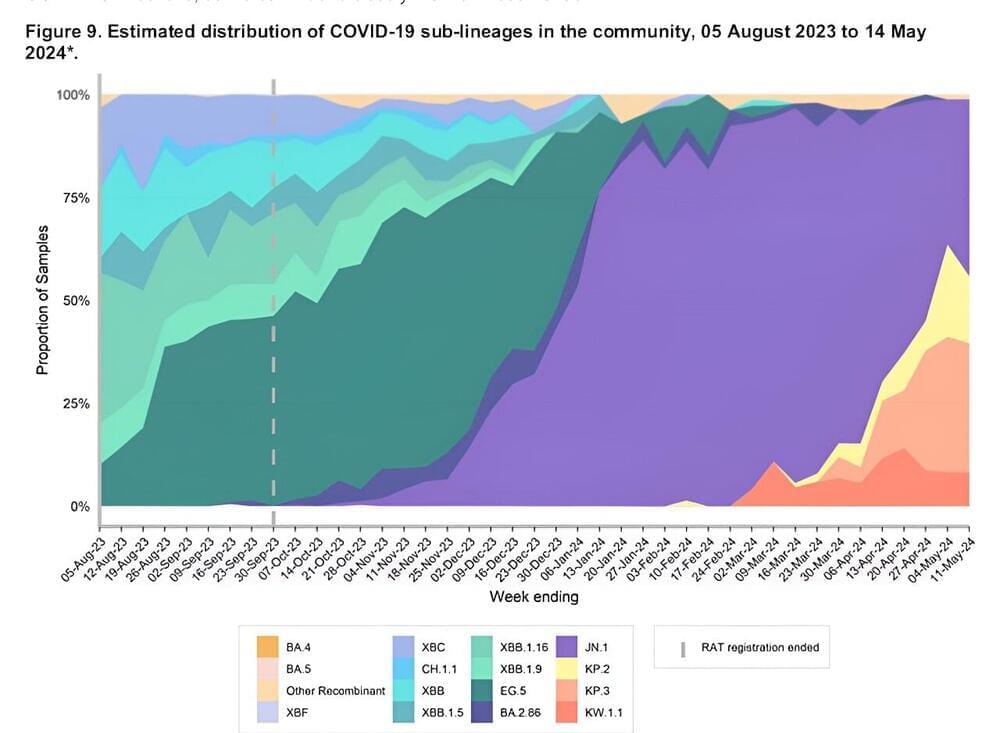
We’ve now been living with COVID for well over four years. Although there’s still much to learn about SARS-CoV-2 (the virus that causes COVID) at least one thing seems clear: it’s here to stay.
From the original Wuhan variant, to delta, to omicron, and several others in between, the virus has continued to evolve.
New variants have driven repeated waves of infection and challenged doctors and scientists seeking to understand this changing virus’ behavior.
Today I’m thrilled to announce BrainBridge, the world’s first concept for a head transplant system, which integrates advanced robotics and artificial intelligence to execute complete head and face transplantation procedures. This state-of-the-art system offers new hope to patients suffering from untreatable conditions such as stage-4 cancer, paralysis, and neurodegenerative diseases like Alzheimer’s and Parkinson’s.
Official website: https://brainbridge.tech/
Follow me everywhere: https://muse.io/hashemalghaili.
#Science #Technology #Research #HeadTransplant #BrainBridge #Neuroscience