A liquid biopsy accurately detected early-stage pancreatic cancer in a large study. More studies are needed before it’s ready for clinical use, experts said.

Fine air particles, less than 2.5 micrometers in diameter (PM2.5), are a major air pollutant linked to various health problems. These particles can travel deep into the lungs and even enter the bloodstream when inhaled. Recent research suggests a major health concern: PM2.5 exposure can also damage the digestive system, including the liver, pancreas, and intestines.
Researchers discovered a trick for dragging an object in a fluid with minimal effort, suggesting an optimal strategy for nanorobots.
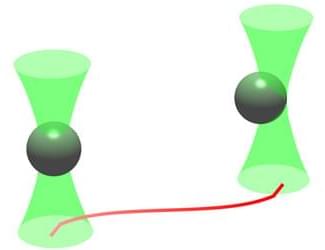
A research team has demonstrated that the most efficient protocol for dragging a microscopic object through a fluid has an unexpected feature: the variation of the velocity with time after the midpoint of the trip is the reverse of its variation up to the midpoint [1]. This time-symmetry property, the researchers say, can help to identify the most efficient control strategy in a wide variety of micromechanical systems and could improve the operation of tiny machines.
Biomedical engineers are exploring micro-and nanoscale devices that swim through the body under their own power to deliver drugs [2]. Machine-like motion at tiny scales is also common in biology, for instance in the transport of compartments called vesicles by motor proteins inside cells [3]. To understand the energetics of such systems, Sarah Loos of the University of Cambridge and colleagues have studied a simple model of microscale transport. They used optical tweezers—a laser beam that can trap a small particle—to drag a 2.7-micrometer-diameter silica sphere through fluids. “This problem is simple enough to be solved analytically and realized experimentally, yet rich enough to show some fundamental characteristics of optimal control in complex systems,” says Loos. In practice, the device inducing the motion “could be a nanorobot carrying a drug molecule or a molecular motor that pulls or pushes against a microscopic object.”

Scientists have made a significant breakthrough in understanding the properties of promethium, a rare earth element with elusive characteristics despite its use in modern technology.
Researchers have uncovered the properties of a rare earth element that was first discovered 80 years ago at the very same laboratory. Their discoveries open a new pathway for the exploration of elements critical in modern technology, from medicine to space travel.
Promethium was discovered in 1945 at Clinton Laboratories, now the Department of Energy’s Oak Ridge National Laboratory, and continues to be produced at ORNL in minute quantities. Some of its properties have remained elusive despite the rare earth element’s use in medical studies and long-lived nuclear batteries. It is named after the mythological Titan who delivered fire to humans and whose name symbolizes human striving.

Researchers at Rensselaer Polytechnic Institute have fabricated a device no wider than a human hair that will help physicists investigate the fundamental nature of matter and light. Their findings, published in the journal Nature Nanotechnology, could also support the development of more efficient lasers, which are used in fields ranging from medicine to manufacturing.
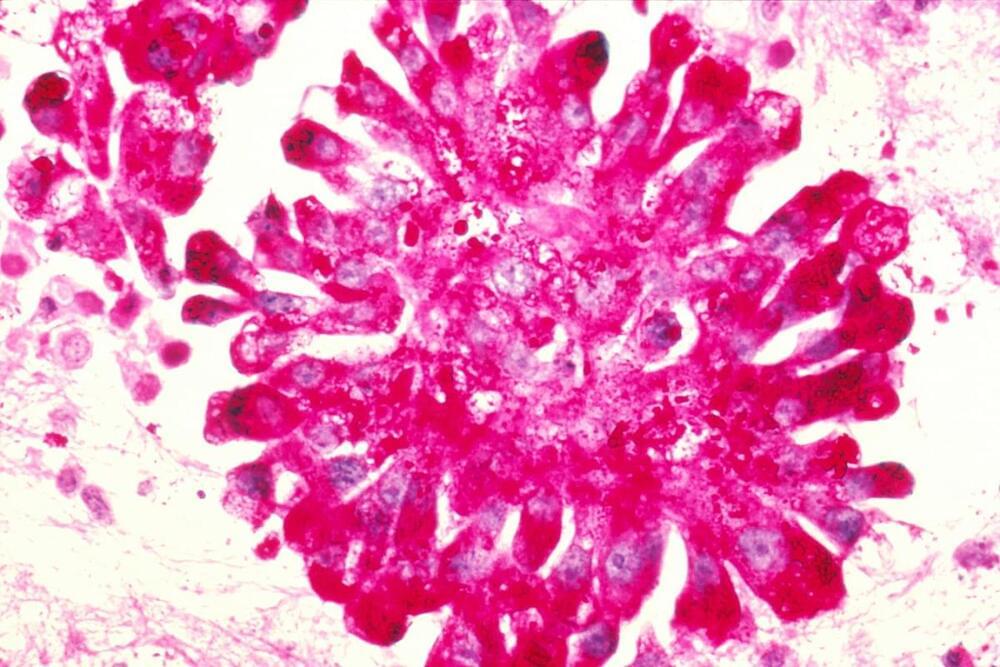
Researchers at Texas Children’s Cancer Center and the Center for Cell and Gene Therapy at Baylor College of Medicine, Texas Children’s Hospital and Houston Methodist published results of a phase I clinical trial of a novel immunotherapy for high-risk sarcomas in the journal Nature Cancer.
The therapy uses chimeric antigen receptor (CAR) T cells engineered to target the HER2 protein, which is overexpressed on the surface of sarcoma cells. Sarcoma is a type of solid cancer that develops in the bones and soft tissues. The HEROS 2.0 trial showed that this therapeutic approach is safe and is associated with clinical benefit.
“CAR T cell therapy has been a highly successful strategy for recurrent or high-risk leukemias or lymphomas, but challenges remain in using this therapy for solid tumors,” said first and corresponding author Dr. Meenakshi Hegde, associate professor of pediatrics – hematology and oncology at Baylor and pediatric oncologist at Texas Children’s Cancer Center. “The results of this trial show that we are moving the dial in harnessing the power of CAR T cells as an effective anticancer therapy for sarcomas.”
Retinitis pigmentosa and macular degeneration lead to photoreceptor death and loss of visual perception. Despite recent progress, restorative technologies for photoreceptor degeneration remain largely unavailable. Here, we describe a novel optogenetic visual prosthesis (FlexLED) based on a combination of a thin-film retinal display and optogenetic activation of retinal ganglion cells (RGCs). The FlexLED implant is a 30 µm thin, flexible, wireless µLED display with 8,192 pixels, each with an emission area of 66 µm2. The display is affixed to the retinal surface, and the electronics package is mounted under the conjunctiva in the form factor of a conventional glaucoma drainage implant. In a rabbit model of photoreceptor degeneration, optical stimulation of the retina using the FlexLED elicits activity in visual cortex. This technology is readily scalable to hundreds of thousands of pixels, providing a route towards an implantable optogenetic visual prosthesis capable of generating vision by stimulating RGCs at near-cellular resolution.
### Competing Interest Statement.
All authors have a financial interest in Science Corporation.