face_with_colon_three circa 2015 this guppy could lead to rapid biological singularity.
Some species are evolving far more quickly than Darwin ever imagined.
Hey all! I’ve recently made a video on how humans can one day become AI and how this can be good for individuals and humanity on its own! If you are interested, please give it a watch!
AI is oftentimes the ultimate bane of science-fiction. Artificial intelligence oftentimes becomes smarter than humanity and turns on us in sci-fi movies and films. However, what if people could become AI one day and use this to their advantage? And if so, would people choose to become AI? Here’s why I believe this may be possible and why people may actually voluntarily choose to become AI themselves- thus blurring the lines between computer science and biology.
Please follow our instagram at: https://www.instagram.com/the_futurist_tom/
For business inquires, please contact [email protected]
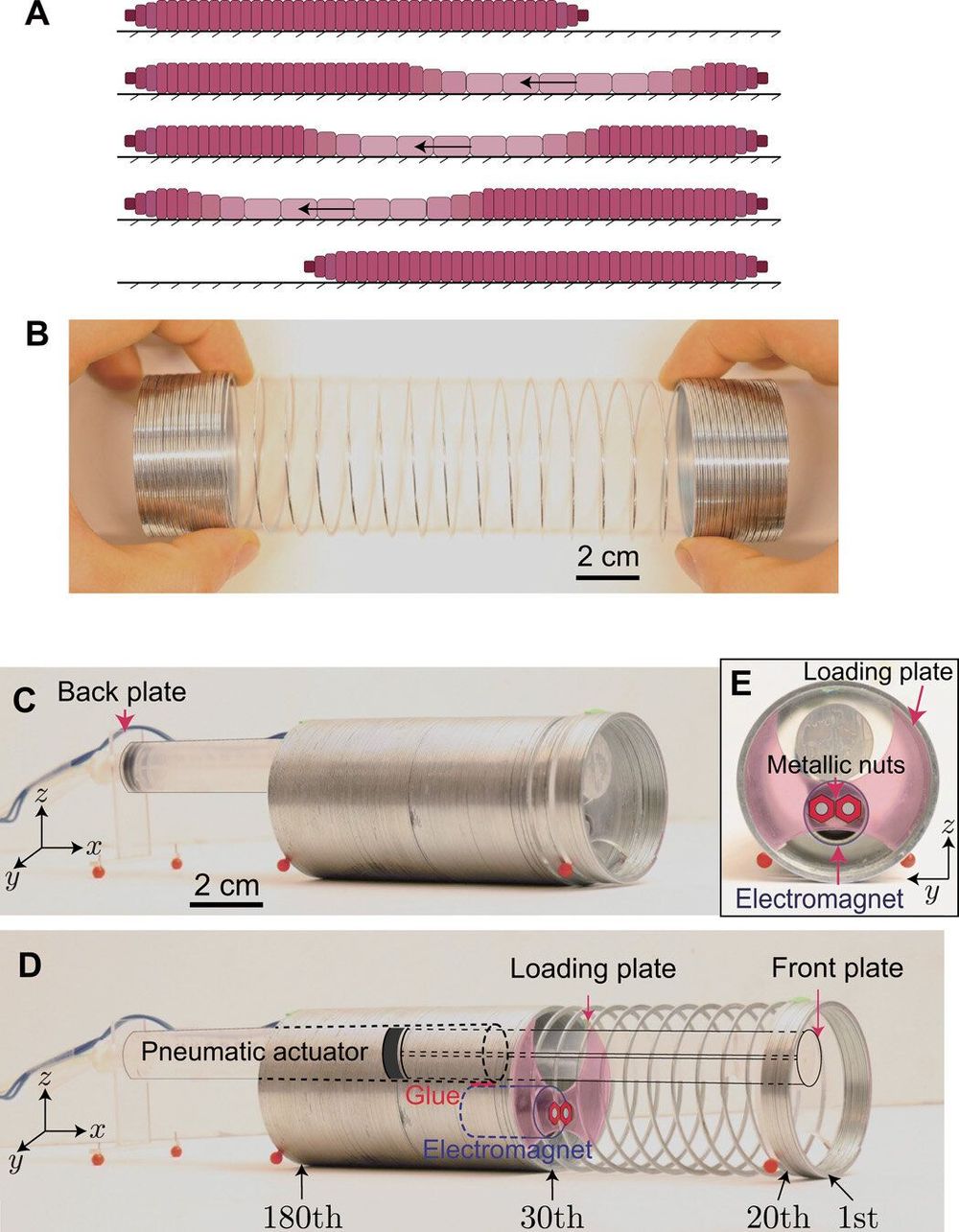
Scientists have recently explored the unique properties of nonlinear waves to facilitate a wide range of applications including impact mitigation, asymmetric transmission, switching and focusing. In a new study now published on Science Advances, Bolei Deng and a team of research scientists at Harvard, CNRS and the Wyss Institute for Biologically Inspired Engineering in the U.S. and France harnessed the propagation of nonlinear waves to make flexible structures crawl. They combined bioinspired experimental and theoretical methods to show how such pulse-driven locomotion could reach a maximum efficiency when the initiated pulses were solitons (solitary wave). The simple machine developed in the work could move across a wide range of surfaces and steer onward. The study expanded the variety of possible applications with nonlinear waves to offer a new platform for flexible machines.
Flexible structures that are capable of large deformation are attracting interest in bioengineering due to their intriguing static response and their ability to support elastic waves of large amplitude. By carefully controlling their geometry, the elastic energy landscape of highly deformable systems can be engineered to propagate a variety of nonlinear waves including vector solitons, transition waves and rarefaction pulses. The dynamic behavior of such structures demonstrate a very rich physics, while offering new opportunities to manipulate the propagation of mechanical signals. Such mechanisms can allow unidirectional propagation, wave guiding, mechanical logic and mitigation, among other applications.
In this work, Deng et al. were inspired by the biological retrograde peristaltic wave motion in earthworms and the ability of linear elastic waves to generate motion in ultrasonic motors. The team showed the propagation of nonlinear elastic waves in flexible structures to provide opportunities for locomotion. As proof of concept, they focused on a Slinky – and used it to create a pulse-driven robot capable of propelling itself. They built the simple machine by connecting the Slinky to a pneumatic actuator. The team used an electromagnet and a plate embedded between the loops to initiate nonlinear pulses to propagate along the device from the front to the back, allowing the pulse directionality to dictate the simple robot to move forward. The results indicated the efficiency of such pulse-driven locomotion to be optimal with solitons – large amplitude nonlinear pulses with a constant velocity and stable shape along propagation.
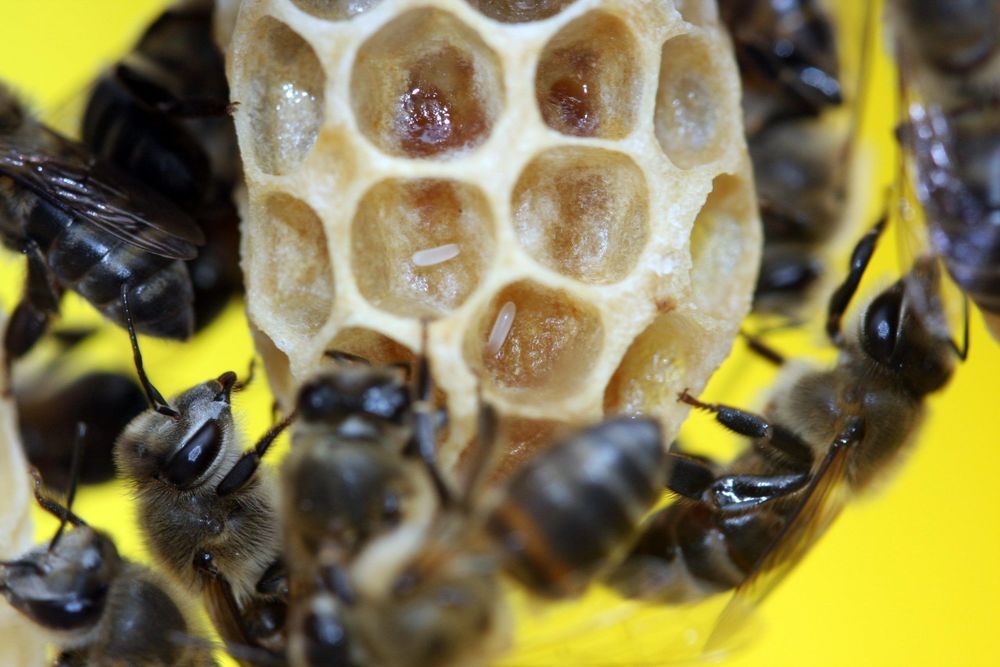
In a study published on May 7, 2020, in Current Biology, researchers from University of Sydney have identified the single gene that determines how Cape honey bees reproduce without ever having sex. One gene, GB45239 on chromosome 11, is responsible for virgin births.
“It is extremely exciting,” said Professor Benjamin Oldroyd in the School of Life and Environmental Sciences. “Scientists have been looking for this gene for the last 30 years. Now that we know it’s on chromosome 11, we have solved a mystery.”
Behavioral geneticist Professor Oldroyd said: “Sex is a weird way to reproduce and yet it is the most common form of reproduction for animals and plants on the planet. It’s a major biological mystery why there is so much sex going on and it doesn’t make evolutionary sense. Asexuality is a much more efficient way to reproduce, and every now and then we see a species revert to it.”

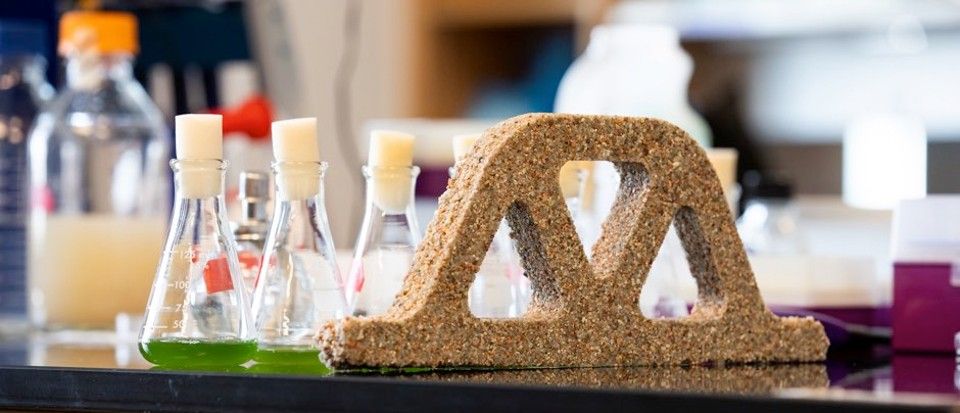
Researchers said this building material has structural load-bearing function, is capable of self-healing and is more environmentally friendly than concrete – which is the second most-consumed material on Earth after water.
The team from the University of Colorado Boulder believe their work paves the way for future building structures that could “heal their own cracks, suck up dangerous toxins from the air or even glow on command”.
Wil Srubar, who heads the Living Materials Laboratory at the University of Colorado Boulder and is one of the study authors, said: “We already use biological materials in our buildings, like wood, but those materials are no longer alive.
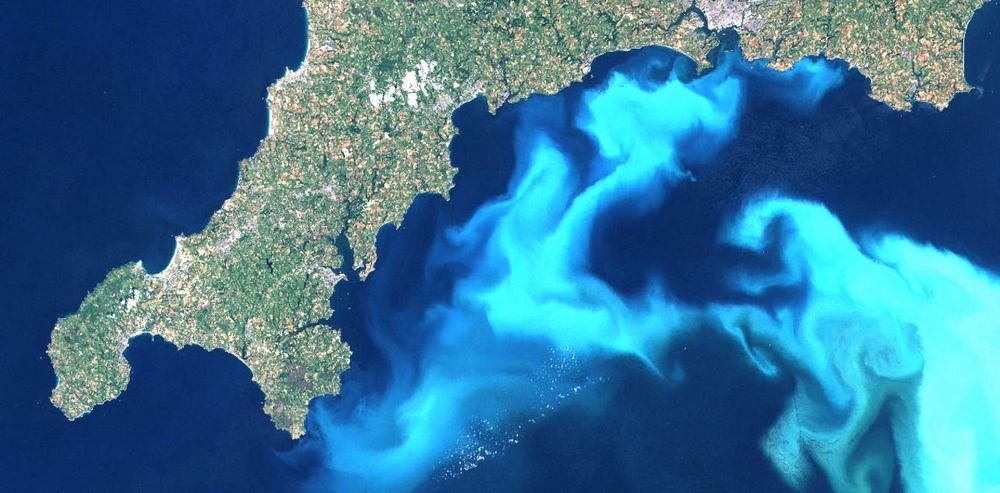
Algae isn’t just found in your garden pond or local river. Sometimes it explodes into vast “blooms” far out to sea, that can be the size of a small country. Such algal blooms can match even a rainforest at taking carbon out of the air. And then, in just a week or two, they are gone – sometimes consumed by viruses.
Given the scale of blooms and their vital role in both marine ecology and climate regulation we must know more about these viruses. Research conducted with our Weizmann Institute colleague Yoav Lehahn and others and published in the journal Current Biology, is the first attempt to quantify the affect of viruses on large scale algal blooms.
Algae in this context refers to tiny sea organisms known as phytoplankton which exist right at the bottom of the marine food web, providing the ultimate source of all organic matter in the sea. They do this by consuming carbon dioxide during photosynthesis, “fixing” this carbon into organic matter (themselves) in the same way trees take carbon out of the air.
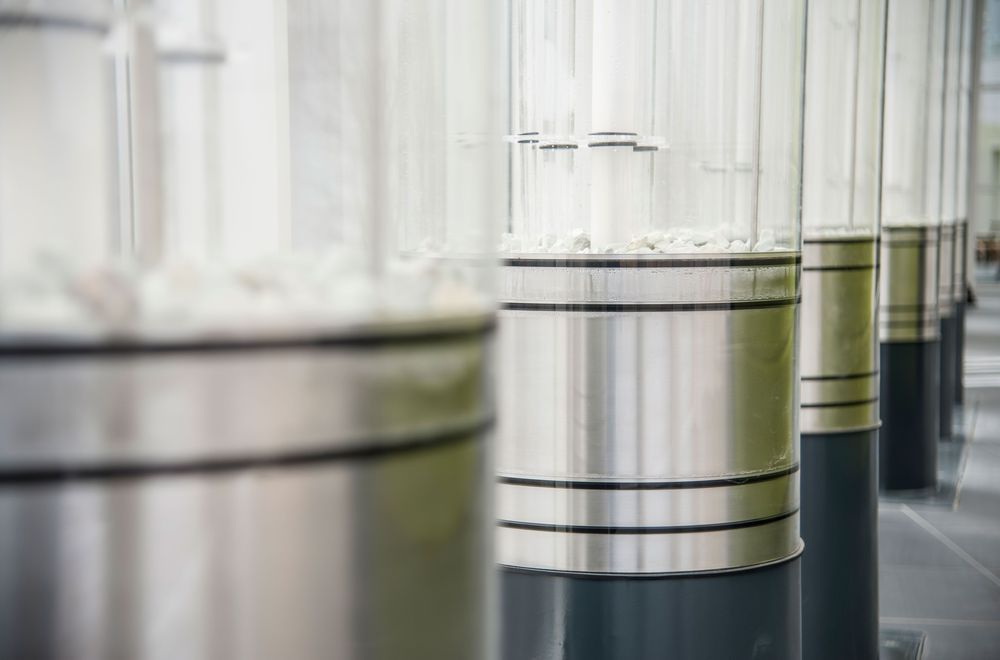
This can be good to purify the oceans and lakes.
Grow algae to reclaim water! Algae feed on the nutrients in wastewater, effectively purifying the water and producing oxygen during the process. Sunlight and LED lighting help the organisms to feed and grow, therefore our algae generators stand in the daylight filled Third Climate Zone. Water slowly recirculates through the six algae tubes, each of which has a steel base containing zeolite, a mineral that acts as a microbial filter, absorbing microorganisms that are not otherwise digested by the algae. The algae generators at Green Solution House are an important element of our on-site biological water purification system. The entire system can process 500 liters of water a day, which is used for irrigating the green wall and gardens and has the potential to be used for flushing public toilets in the building. The water cleaned by the algae is separated and further purified by UV light to reach drinking water quality.
Who’s behind it: Rambøll.
Where you’ll find it: In the Third Climate Zone.
Can we study AI the same way we study lab rats? Researchers at DeepMind and Harvard University seem to think so. They built an AI-powered virtual rat that can carry out multiple complex tasks. Then, they used neuroscience techniques to understand how its artificial “brain” controls its movements.
Today’s most advanced AI is powered by artificial neural networks —machine learning algorithms made up of layers of interconnected components called “neurons” that are loosely inspired by the structure of the brain. While they operate in very different ways, a growing number of researchers believe drawing parallels between the two could both improve our understanding of neuroscience and make smarter AI.
Now the authors of a new paper due to be presented this week at the International Conference on Learning Representations have created a biologically accurate 3D model of a rat that can be controlled by a neural network in a simulated environment. They also showed that they could use neuroscience techniques for analyzing biological brain activity to understand how the neural net controlled the rat’s movements.
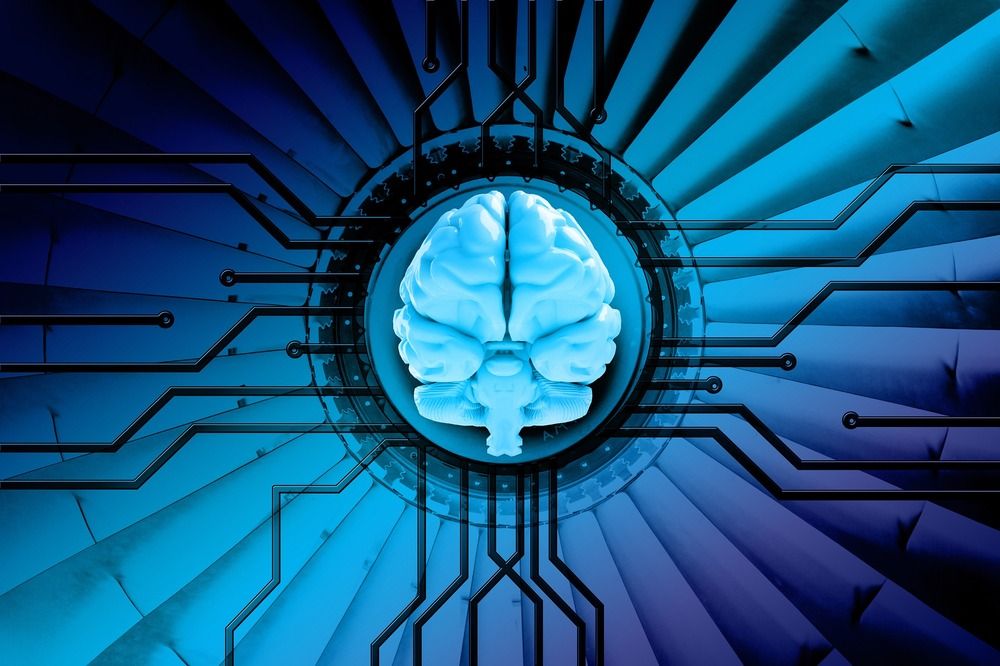
In a paper published on Nature Communications in 20 April 2020 by (read the original paper), Tianda Fu et al. from the University of Massachusetts Amherst proposed a new kind of diffusive memristor based on the protein nanowires sourced from the bacterium named Geobacter sulfurreducens that can potentially resolve the problem. The artificial neurons built on such memristors can function on the level of biological voltages, and they express “temporary integration feature that is similar to real neurons in our brain” according to the authors.