An unprecedented human study aims to induce statistically significant and meaningful biological age reversal using multi-model interventions that include metformin, dasatinib, rapamycin, and NAD+ restoration therapy.
By William Faloon.

An unprecedented human study aims to induce statistically significant and meaningful biological age reversal using multi-model interventions that include metformin, dasatinib, rapamycin, and NAD+ restoration therapy.
By William Faloon.
Elon Musk and the late Stephen Hawking are not alone in their calls for humanity to become a multi-planetary species. But they certainly are the most visible advocates for space colonization. And while the moon might be the most obvious jumping off point to the solar system and beyond, nothing stands out as a potential site for long term settlement more than Mars.
But just how realistic is sending astronauts to the Red Planet anytime soon–let alone colonizing it permanently? The obstacles are many, and aerospace engineering may well be the least of them. The human biological, psychological tolss and survival strategies–radiation, low gravity, isolation and the marshalling air, water, and food resources–all stand in the way. And then there is the economic cost and the political and public will. In this edition of Seeking Delphi,™ I talk to former NASA Mars mission navigator, Moriba Jah, about the many challenges of leaving of our home planet.
Researchers in Europe and the UK have managed to connect biological and artificial neurons together – and allow them to communicate long distances through the internet. The biological neurons were grown in one country, sent signals through an artificial synapse located in another to electronic neurons in a third country.
As advanced as supercomputers get, the human brain still utterly leaves them in the dust. It’s made up of neurons that communicate with each other through pulses of electrical signals, passed across tiny gaps known as synapses. These neurons can both process and store information, unlike computers that require separate types of memory for each task.
Artificial versions of neurons and synapses have shown to be far more powerful than traditional computer chip designs, but they’re still in the experimental stage. And now, a team of researchers has taken the next step and connected the artificial and biological versions between three different countries.
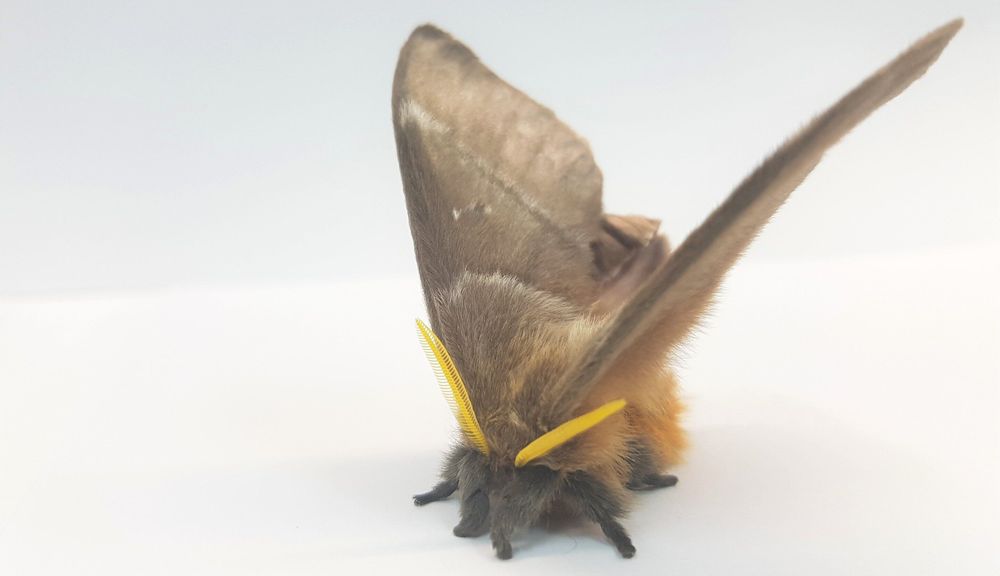
Some species of deaf moths can absorb as much as 85 per cent of the incoming sound energy from predatory bats—who use echolocation to detect them. The findings, published in the Journal of the Royal Society Interface today, reveal the moths, who are unable to hear the ultrasonic calls of bats, have evolved this clever defensive strategy to help it survive.
Bats hunt at night using echolocation. The technique, which is also known as biological sonar, first evolved around 65 million years ago and enables bats to search for and find prey putting huge predation pressure on nocturnal insects. One defence that many nocturnal insects evolved is the ability to hear the ultrasonic calls of bats, which allows them to actively evade approaching bats.
Many moth species, however, cannot hear. The team of researchers from the University of Bristol wanted to investigate the alternative defences against bats that some species of deaf moths might have evolved.
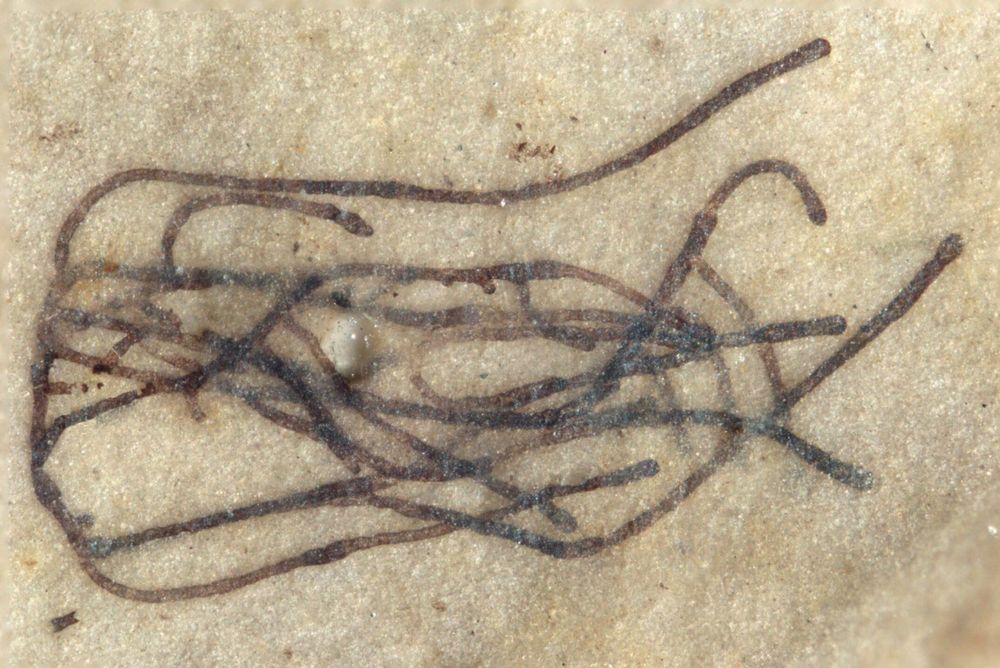
Virginia Tech paleontologists have made a remarkable discovery in China: 1 billion-year-old micro-fossils of green seaweeds that could be related to the ancestor of the earliest land plants and trees that first developed 450 million years ago.
The micro–fossil seaweeds—a form of algae known as Proterocladus antiquus—are barely visible to the naked eyed at 2 millimeters in length, or roughly the size of a typical flea. Professor Shuhai Xiao said the fossils are the oldest green seaweeds ever found. They were imprinted in rock taken from an area of dry land—formerly ocean—near the city of Dalian in the Liaoning Province of northern China. Previously, the earliest convincing fossil record of green seaweeds were found in rock dated at roughly 800 million years old.
The findings—led by Xiao and Qing Tang, a post-doctoral researcher, both in the Department of Geosciences, part of the Virginia Tech College of Science—are featured in the latest issue of Nature Ecology & Evolution (link not active until embargo lifts). “These new fossils suggest that green seaweeds were important players in the ocean long before their land-plant descendants moved and took control of dry land,” Xiao said.
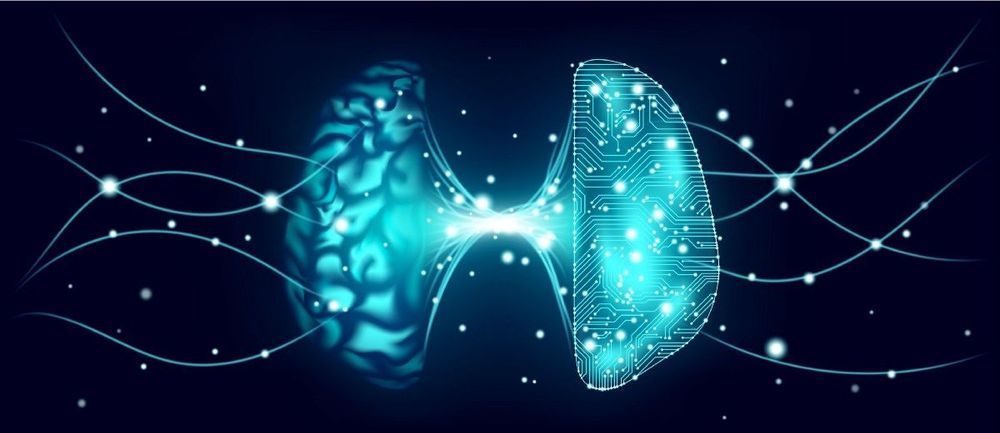
By definition, posthumanism (I choose to call it ‘cyberhumanism’) is to replace transhumanism at the center stage circa 2035. By then, mind uploading could become a reality with gradual neuronal replacement, rapid advancements in Strong AI, massively parallel computing, and nanotechnology allowing us to directly connect our brains to the Cloud-based infrastructure of the Global Brain. Via interaction with our AI assistants, the GB will know us better than we know ourselves in all respects, so mind-transfer, or rather “mind migration,” for billions of enhanced humans would be seamless, sometime by mid-century.
I hear this mantra over and over again — we don’t know what consciousness is. Clearly, there’s no consensus here but in the context of topic discussed, I would summarize my views, as follows: Consciousness is non-local, quantum computational by nature. There’s only one Universal Consciousness. We individualize our conscious awareness through the filter of our nervous system, our “local” mind, our very inner subjectivity, but consciousness itself, the self in a big sense, our “core” self is universal, and knowing it through experience has been called enlightenment, illumination, awakening, or transcendence, through the ages.
Any container with a sufficiently integrated network of information patterns, with a certain optimal complexity, especially complex dynamical systems with biological or artificial brains (say, the coming AGIs) could be filled with consciousness at large in order to host an individual “reality cell,” “unit,” or a “node” of consciousness. This kind of individuated unit of consciousness is always endowed with free will within the constraints of the applicable set of rules (“physical laws”), influenced by the larger consciousness system dynamics. Isn’t too naïve to presume that Universal Consciousness would instantiate phenomenality only in the form of “bio”-logical avatars?
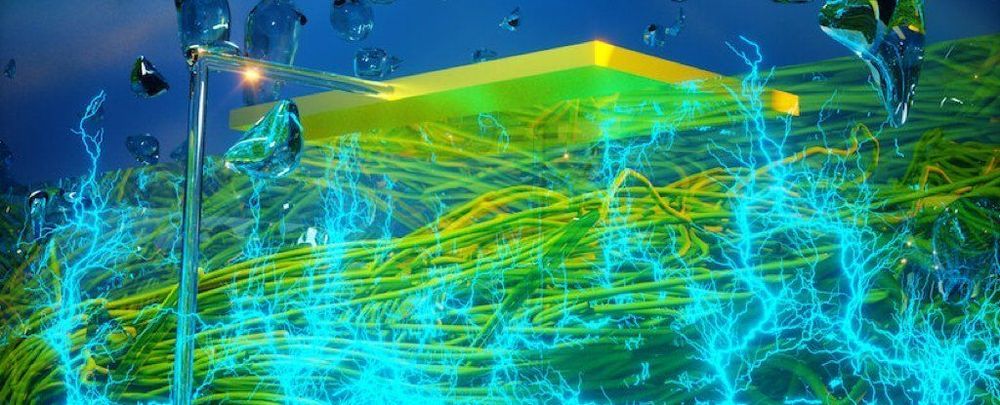
They found it buried in the muddy shores of the Potomac River more than three decades ago: a strange “sediment organism” that could do things nobody had ever seen before in bacteria.
This unusual microbe, belonging to the Geobacter genus, was first noted for its ability to produce magnetite in the absence of oxygen, but with time scientists found it could make other things too, like bacterial nanowires that conduct electricity.
For years, researchers have been trying to figure out ways to usefully exploit that natural gift, and they might have just hit pay-dirt with a device they’re calling the Air-gen. According to the team, their device can create electricity out of… well, almost nothing.
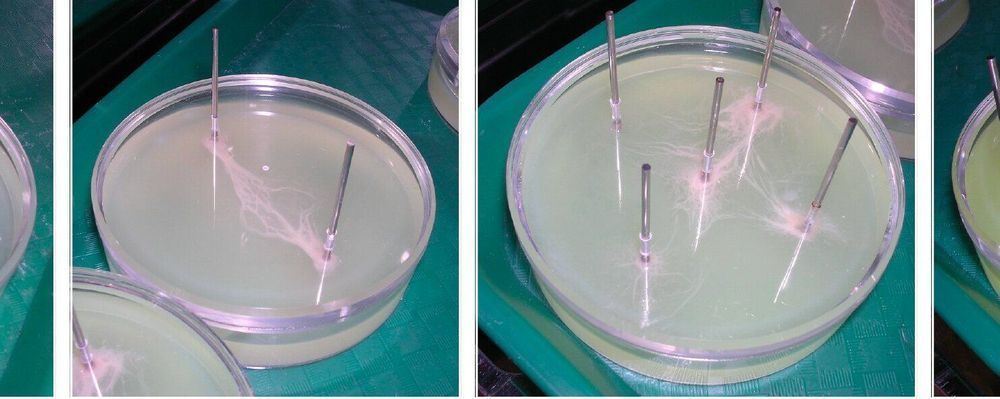
Life is usefully defined on the basis of process: Any set of entities that participates in the process of evolution by natural selection is alive. But how does evolution by natural selection—and thus life—get started? The answer is far from obvious. Lack of insight haunts origins of life research and plagues understanding of the major evolutionary transitions, including the transition from cells to multicellular life.
In a new paper published in Nature Ecology & Evolution, a team led by Paul Rainey at ESPCI Paris and the Max Planck Institute for Evolutionary Biology provides a solution. Adopting a theoretical approach inspired from earlier and on-going experiments, Rainey and his team show how ecological circumstances can kick-start life, both from the get-go, and also at each of the major evolutionary transitions.
For entities to participate in the process of evolution by natural selection, entities need to be discreet and vary one to another, entities must replicate and offspring must resemble parental types. These basic Darwinian properties (variation, reproduction and heredity) are such fundamental features of life that it is easy to take their existence for granted. But as Black et al point out, Darwinian properties are derived and require evolutionary explanation. In the absence of any manifestation of heritable variance in fitness evolution is governed by chance alone and the road out of randomness difficult to conceive.

After being blind for 16 years, scientists have plugged a bionic eye directly into Bernardeta Gomez’s brain, allowing her to see again without using her biological eyes after she had a computer port surgically embedded into her skull.
The vision system is being honed by neuriengineer Eduardo Fernandez in his lab at the University of Miguel Hernandez, and it is comprised of a few different parts according to the publication in MIT Technology Review.
There is a pair of glasses that are fitted with a camera that connects to a computer which translates the live video feed into electronic signals that are then sent via a cable to the port which has been surgically embedded into the back of Gomez’s skull and connects to an implant in the visual cortex of her brain.