NASA has released photos showcasing the best view of 2I/Borisov we’re ever going to get. The comet is the second interstellar visitor to our solar system since ‘Oumuamua shot through in 2017.
Asteroids are coming?
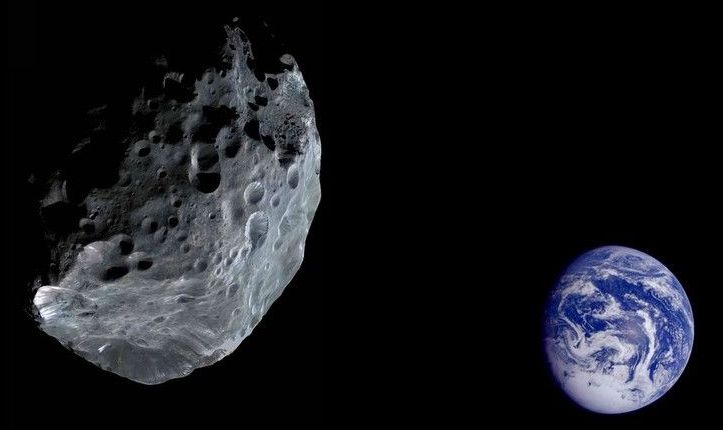
The asteroid, dubbed 2019 WR3, has been directly observed some 74 times by NASA since it was spotted in the skies on November 27, so the space agency could calculate its size, speed and trajectory, and determine the threat level.
NASA now believes the space rock measures between 76 and 170 meters (249 and 557 feet) and is travelling at speeds of 27,036kph (16,799mph).
An asteroid estimated to be around the size of the Great Pyramid of Giza may hit the Earth on May 6, 2022, according to the National Aeronautics and Space Administration (NASA).
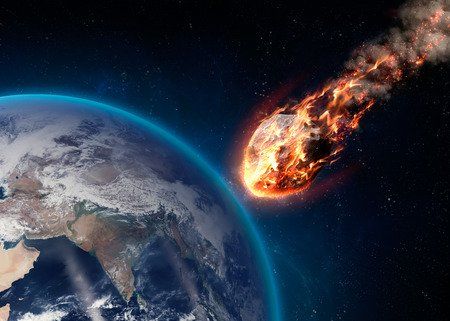
Despite the one in 3,800 odds — a measly 0.026% chance — of the asteroid smashing into the Earth, the worst-case scenario will surely be of a scene akin to the climax of an apocalypse movie, or even worse, as per NASA via The Daily Express on Nov. 16.
If the “city-killer” asteroid, labeled JF1, is to hit Earth, the impact would be equivalent to the detonation of 230 kilotons of TNT. That is 15 times stronger than the atomic bomb that hit Hiroshima in 1945, which destroyed the whole city with 15 kilotons of force.
Apart from the asteroid that wiped out the dinosaurs 65 million years ago, there aren’t many connections between space and dinosaurs outside of the imagination. But that all changed when NASA research scientist Jessie Christiansen brought the two together in an animation on social media this month.
For the past decade, Christiansen has studied planet occurrence rates, or how often and what kinds of planets occur in the galaxy, while studying data from exoplanet hunters such as NASA’s Kepler, K2 and TESS missions.
During a stargazing party at the California Institute of Technology, Christiansen was explaining how young the stars were that they observed. The skywatchers were looking at the Pleiades, a bright young cluster of stars that are some of the youngest in our sky.
On the outskirts of Colorado Springs, researchers have uncovered thousands of fossils showing how life on Earth revived in the aftermath of an asteroid impact 66 million years or so ago that killed most dinosaurs and other life on land and sea.
Taken together, the fossil trove documents an era when evolution, in essence, hit the reset button. While countless species vanished forever, some plants and animals rebounded relatively quickly in the first million years after the devastation, including the mammals ancestral to humankind, the scientists said in research published Thursday in Science.
The asteroid managed to get within just 73,000 kilometers of our planet without anyone noticing. The miss lends a new sense of urgency to preparations for a potential collision one day.
The news: On Thursday July 25 an asteroid dubbed “Asteroid 2019 OK”, measuring 57 to 130 meters wide (187 to 427 feet), got uncomfortably close to Earth, according to NASA’s near-Earth objects database. It was less than one-fifth of the distance to the moon away, making it a very close call in space terms. If it had landed on a populated area it could have caused major damage, although this outcome is statistically quite unlikely.
Should we worry? It’s hard not to feel concerned that a “city-killer” sized asteroid wasn’t detected further ahead of time. It was announced just hours before it passed by Earth, after being detected just a few days beforehand by teams in the US and Brazil. Its relatively small size, unusual orbit, and fast speed all conspired to make it tough to spot, researchers told the Washington Post.