Toggle light / dark theme

“2068” –Massive Asteroid Apophis on Path for Earth Impact

Laser it o.o


Sixty Six million years ago a 14-kilometer long, Mount-Everest sized asteroid blasted a hole in the ground, when at the moment of impact, “the top of it might have still towered more than a mile above the cruising altitude of a 747,” writes Peter Brannen in Ends of the World. “In its nearly instantaneous descent, it compressed the air below it so violently that it briefly became several times hotter than the surface of the sun, hitting Earth with enough force enough to lift a mountain back into space at escape velocity, releasing the equivalent of 100 million megatons of TNT creating a 20-mile deep, 110-mile hole and sterilizing the remaining 170 million square miles of the ancient continent of Pangaea, killing virtually every species on Earth and, oddly, paving the way for the emergence of the human species.”

Magnified Preview of a Coming Attraction?

“It would have felt like the ground beneath your feet had become a ship in the middle of the ocean,” says earth and space science professor Mark Richards at the University of Washington. “Then rocks would have bombarded you from a boiling sky that was beginning to take on a hazy glow. It would have seemed like the end of the world.”

Neil deGrasse Tyson warns asteroid could hit Earth day before election

That’s one way to rock the vote.

An asteroid with a diameter the size of a refrigerator could strike the Earth the day before the November election, according to celebrity scientist Neil deGrasse Tyson — but it’s not large enough to do any serious damage.

The famed astrophysicist said the space rock, known as 2018VP1, is hurtling towards Earth at a speed of 25,000 miles per hour and may clip the planet on Nov. 2.

“It may buzz-cut Earth on Nov. 2, the day before the Presidential Election,” he wrote on Instagram.

ESA awards €129.4 million contract to planetary defence mission Hera

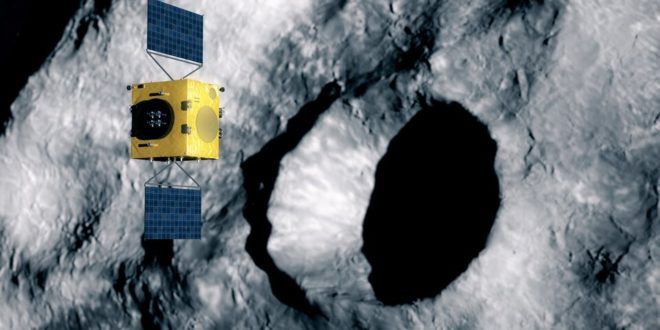
Darmstadt, 15 September 2020. – The European Space Agency (ESA) awarded a €129.4 million contract covering the design, manufacturing and testing of Hera, the space agency’s first mission for planetary defence, ESA announced today.

The contract was signed by Franco Ongaro, ESA Director of Technology, Engineering and Quality, and Marco Fuchs, CEO of Germany space company OHB, prime contractor of the Hera consortium, ESA said today. The signing took place at ESA’s European Space Operations Centre (ESOC) in Darmstadt, Germany, which will serve as mission control for the 2024-launched Hera.

The mission will be Europe’s contribution to an international asteroid deflection effort, set to perform sustained exploration of a double asteroid system, ESA said.

Hera will be, along with NASA’s Double Asteroid Redirect Test (DART) spacecraft, humankind’s first probe to rendezvous with a binary asteroid system, a little understood class making up around 15% of all known asteroids, the agency said.

Hera is the European contribution to an international planetary defence collaboration among European and US scientists called the Asteroid Impact & Deflection Assessment (AIDA).

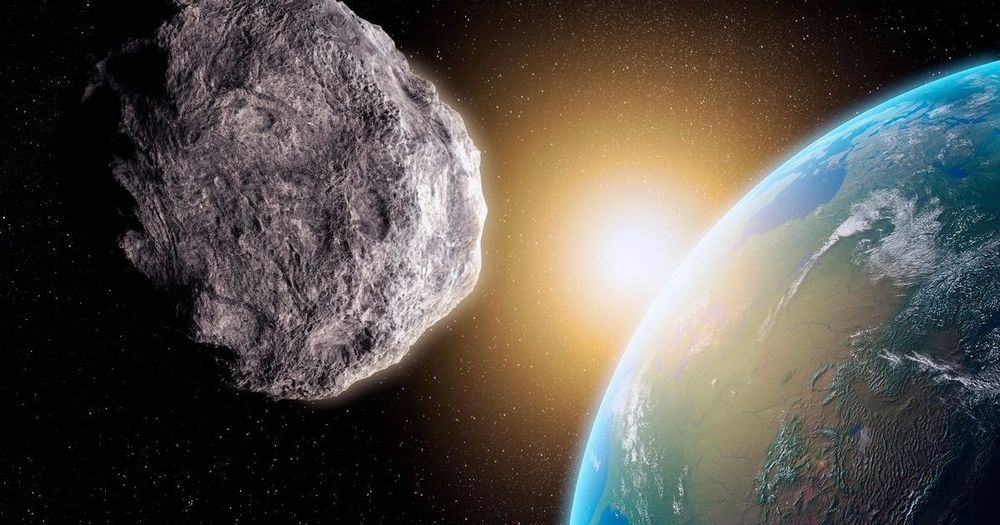
An asteroid the size of a high-rise will fly near Earth on September 1

It is reported that the dimensions of the celestial body are from 22 to 49 meters. According to the space agency, at the minimum distance to the planet – about 120 thousand kilometers – the asteroid will come up at 19.12 Moscow time. The asteroid is moving at 8.16 kilometers per second.

Note that the celestial body was discovered on March 2, 2011. It belongs to the group of “Apollo”, that is, asteroids, whose flight paths cross the Earth’s orbit.

/* */