Join us on Patreon! https://www.patreon.com/MichaelLustgartenPhDDiscount Links/Affiliates: Blood testing (where I get the majority of my labs): https://www.u…
Get the latest international news and world events from around the world.
At 92 He is Testing a Mitochondrial Transplant That Could Rewrite Aging | Dr John Cramer
Dr. John Cramer, 92-year-old nuclear physicist, discusses participating in the first mitochondrial transplant trial for aging and his longevity theory.
Some links are affiliate links so we will earn a commission when they are used to purchase products.
If you would like to support our channel please consider joining our Patreon / modernhealthspan.
~~~~~~~~~~~~~~
BiOptimizers — 15% off Code MHBIO: https://tinyurl.com/yt-bioptimize-202…(Magnesium Breakthrough, Gluten Guardian)
Stemregen — 10% off Code MODERN: https://tinyurl.com/yt-stemregen-2025… (Stem cell mobilization)
Renue — 15% off Code MHS: https://tinyurl.com/yt-renue-20251214 (Lipo NMN)
Seeking Health — 10% off Code Richard10: https://tinyurl.com/yt-seekinghea-202… (Histamine Nutrients)
AX3 — 20% off Code MODERN20: https://tinyurl.com/yt-ax3-20251214 (Astaxanthin)
n1o1 — 10% off Code Modern: https://tinyurl.com/yt-n1o1-20251214 (Nitric Oxide Lozenges)
These are affiliate links — using them supports the channel at no extra cost to you.
~~~~~~~~~~~~~~
Dr. John Cramer is a 92-year-old emeritus professor at the University of Washington who has spent decades researching nuclear physics and quantum mechanics. Now, he’s turned his attention to longevity, and he’s not just theorizing. Dr. Cramer is participating in Mitrix’s groundbreaking mitochondrial transplantation trial, which aims to replace damaged mitochondrial DNA with healthy versions grown in bioreactors.
In this conversation, Dr. Cramer explains why he believes mitochondrial dysfunction is the root cause of aging, not just another hallmark. He discusses how energy depletion cascades into all other aging symptoms, why previous interventions like telomere extension haven’t delivered, and what markers will be tracked throughout his trial. He also shares his personal longevity protocol, including rapamycin, senolytics, and hyperbaric oxygen therapy.
This is one of the first detailed discussions of autologous mitochondrial transplantation for aging in humans.
Rise of the machines: From AI to AGI to the uncharted realm of Superintelligence
AI’s rise to fame in the mainstream happened with OpenAI’s GPT-3 launch in 2020, which became a benchmark for large language models and quickly spread through startups via APIs. While Big Tech now races toward AGI and superintelligence, experts warn current systems remain limited, governance unprepared, and safety oversight crucial as AI capabilities accelerate faster than human control.
NDR2 regulates non-small cell lung cancer cell migration under starvation by supporting autophagosome biogenesis through LC3 and ATG9A regulation
Biojout, T., Bergot, E., Taylor, J. et al. Cell Death Discov. (2025). https://doi.org/10.1038/s41420-025-02889-9
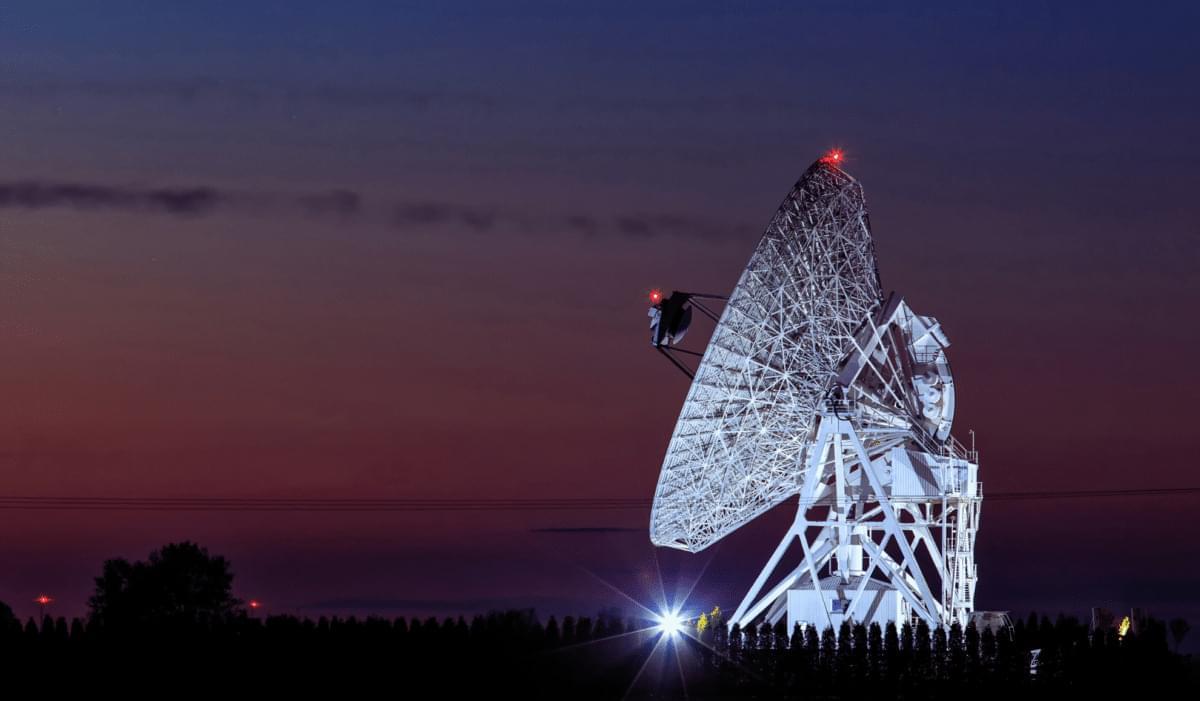
An Old Jeweler’s Trick Could Unlock the Next Generation of Nuclear Clocks
Last year, a research team led by UCLA achieved a milestone scientists had pursued for half a century. They succeeded in making radioactive thorium nuclei interact with light by absorbing and emitting photons, similar to how electrons behave inside atoms. First envisioned by the group in 2008, the breakthrough is expected to transform precision timekeeping and could significantly improve navigation systems, while also opening the door to discoveries that challenge some of the most basic constants in physics.
The advance comes with a major limitation. The required isotope, thorium-229, exists only as a byproduct of weapons-grade uranium, making it extremely rare. Researchers estimate that just 40 grams of this material are currently available worldwide for use in nuclear clock research.
A new study now shows a way around this obstacle. An international collaboration led by UCLA physicist Eric Hudson has developed an approach that uses only a small fraction of the thorium needed in earlier experiments, while delivering the same results previously achieved with specialized crystals. Described in Nature, the technique is both straightforward and low cost, raising the possibility that nuclear clocks could one day be small and affordable enough to fit into everyday devices like phones or wristwatches. Beyond consumer electronics, the clocks could replace existing systems used in power grids, cell phone towers, and GPS satellites, and may even support navigation where GPS is unavailable, such as in deep space or underwater.
The ‘hobbits’ mysteriously disappeared 50,000 years ago. Our new study reveals what happened to their home
About 50,000 years ago, humanity lost one of its last surviving hominin cousins, Homo floresiensis (also known as “the hobbit” thanks to its small stature). The cause of its disappearance, after more than a million years living on the isolated volcanic island of Flores, Indonesia, has been a longstanding mystery.
Now, new evidence suggests a period of extreme drought starting about 61,000 years ago may have contributed to the hobbits’ disappearance.
Our new study, published today in Communications Earth & Environment, reveals a story of ecological boom and bust. We’ve compiled the most detailed climate record to date for the site where these ancient hominins once lived.
Ex.50.T aptamer impairs tumor–stroma cross-talk in breast cancer by targeting gremlin-1
Quintavalle, C., Ingenito, F., Roscigno, G. et al. Ex.50.T aptamer impairs tumor–stroma cross-talk in breast cancer by targeting gremlin-1. Cell Death Discov. 11, 94 (2025). https://doi.org/10.1038/s41420-025-02363-6