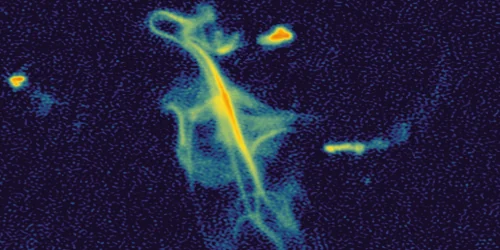
The hunt for these ghostly particles has required some of the most audacious experimental setups ever built.
For most of human history, infectious diseases were the main causes of morbidity and mortality. Advances in sanitation, antibiotics, vaccines, and public health dramatically shifted that balance, particularly in high-income countries, where life expectancy has increased by nearly 40 years over the past century. Yet the COVID-19 pandemic provided a stark reminder that infectious threats can still reshape societies almost overnight. Between 2019 and 2021 alone, life expectancy in the US fell by more than two years, and recent modelling suggests there is roughly a 50 percent chance of another COVID-scale pandemic occurring within the next 25 years.
Historically, the vaccine development model has been largely reactive and variant-driven, but the industry is now actively shifting toward proactive and universal vaccinology to get ahead of evolving pathogens. Recent results from a first-in-human clinical trial led by the University of Cambridge and its spin-out DIOSynVax, published in the Journal of Infection, provide early clinical evidence of this shift, demonstrating the safety of an AI-designed “super-antigen” intended to provide broad viral coverage.
Evolution is an extraordinary engine for enzymatic diversity, yet the chemistry it has explored remains a narrow slice of what DNA can encode. Deep generative models can design new proteins that bind ligands, but none have created enzymes without pre-specifying catalytic residues.
In this webinar, Chenghao Liu and Jarrid Brooks from the Arnold Lab at Caltech will introduce DISCO (DIffusion for Sequence-structure CO-design). This multimodal model co-designs protein sequence and 3D structure around arbitrary biomolecules, as well as inference-time scaling methods that optimize objectives across both modalities. Conditioned solely on reactive intermediates, DISCO designs diverse heme enzymes with novel active-site geometries. These enzymes catalyze new-to-nature carbene-transfer reactions, including alkene cyclopropanation, spirocyclopropanation, B-H, and C(sp^3)-H insertions, with high activities exceeding those of engineered enzymes. Random mutagenesis of a selected design further confirmed that enzyme activity can be improved through directed evolution. By providing a scalable route to evolvable enzymes, DISCO broadens the potential scope of genetically encodable transformations.
AI alignment may depend not only on how we control artificial intelligence, but on how we teach, socialize, and learn to live with the minds we create.
In an international experiment, researchers observed Jahn–Teller polarons—quasiparticles that could play an important role in future ultrafast spintronic devices. These polarons emerged within the crystal lattice of cobalt oxide that had been activated by carefully tailored laser pulses.
When a cobalt oxide crystal is exposed to carefully tailored laser pulses, they induce specific local distortions of the crystal lattice that strongly affect the material’s structural, electrical and magnetic properties. The correlative experimental approaches that revealed these unexpected properties of cobalt oxide were carried out by a large international team of scientists from the University of Pavia (Italy), the Swiss Federal Institute of Technology Lausanne, the Paul Scherrer Institute (Switzerland), the University of Texas at Austin, the Massachusetts Institute of Technology and Northeastern University (U.S.). The theoretical description of the phenomenon, which made it possible to uncover the nature of the observed oscillations, was developed by physicists from the Institute of Nuclear Physics of the Polish Academy of Sciences (IFJ PAN) in Cracow.
Chemical catalysts, battery electrodes, photovoltaic cells and semiconductor gas sensors—these are just some of the modern applications of cobalt oxide (Co₃O₄). Despite its simple chemical formula, the unit cell of its crystal lattice consists of 56 atoms: 24 cobalt and 32 oxygen. Depending on their position within the unit cell, the cobalt atoms exist here in two oxidation states.
Researchers at the Department of Energy’s Pacific Northwest National Laboratory use a slew of autonomous robots to design and implement experiments. However, setting up an experiment on an autonomous lab robot is surprisingly slow. The effort requires a lengthy back-and-forth between a scientist and an engineer to design the experimental steps—a process that can take weeks.
To help researchers work more efficiently, a PNNL team developed a generative agentic AI that can quickly translate experimental goals into instructions for a laboratory robot. The translation agent, called AutoLabs, is currently designed to operate with Big Kahuna, an automated robot built by Unchained Labs that researchers use to study new and existing battery materials. The system can carry out multistep experimental workflows, including mixing, heating, stirring and filtering samples with minimal human intervention. By automating these processes, researchers can perform five to 10 times more experiments than would be practical by hand.
The team published a paper in Scientific Reports about AutoLabs, and the software is also available for other researchers to download on GitHub.