
As AI workloads, cyber threats, physical attacks and OT vulnerabilities collide, protecting the digital backbone requires a security strategy that spans the entire facility.
Get the latest international news and world events from around the world.

Scidea Nexus (@scientists.ideas.sciences) • Instagram photos and videos
537 likes, — scientists.ideas.sciences on October 25, 2026

Human and chimpanzee leaders share a taste for risk
People in leadership positions tend to rate themselves as more risk-loving than those without leadership responsibilities—and a similar pattern emerges among chimpanzees: High-ranking individuals are perceived as more risk-taking than their lower-ranking peers. This is the conclusion of a new study by researchers at the Max Planck Institute for Human Development, Dresden University of Technology, and the University of Portsmouth, published in The Leadership Quarterly.
What makes the findings compelling is that the link between leadership and risk-taking emerges in both humans and chimpanzees. As both species share a common ancestor, this relationship may have deep evolutionary roots. The study thus provides new evidence that traits associated with leadership and social influence are not shaped exclusively by modern social structures but may already have played a role in early forms of social coexistence.
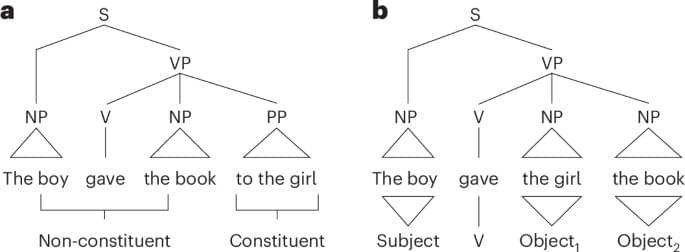
Evidence for the representation of non-hierarchical structures in language
The grammar tree might be a myth—or at least, not the whole story.
For decades, the reigning idea in linguistics—the one tied to Noam Chomsky—was that human language lives in the brain as hierarchy. Nested grammatical trees. Deep, abstract rules we supposedly compute before we speak.
A new study says: not so fast. https://www.nature.com/articles/s41562-025-02387-z.
Researchers ran four experiments with nearly 500 English speakers, plus two analyses of real-world language—eye-tracked reading and everyday conversation. What they found: our brains also store simple, flat sequences of word types, like “verb + preposition + determiner,” that cut straight across traditional grammatical boundaries. People could be primed on these linear chunks even when no full grammatical phrase was present—and the effect showed up in natural reading and conversation too.
To be clear: this doesn’t kill hierarchical grammar outright. The paper says these flat structures can’t be explained by traditional constituents—which is a real challenge to major theories, generative and constructionist alike. A challenge, not a funeral.
But it does poke a hole in a familiar story.
Critics have long dismissed AI like ChatGPT as “just a next-token predictor”—not truly intelligent, because it doesn’t grasp deep grammatical hierarchy the way humans supposedly do.
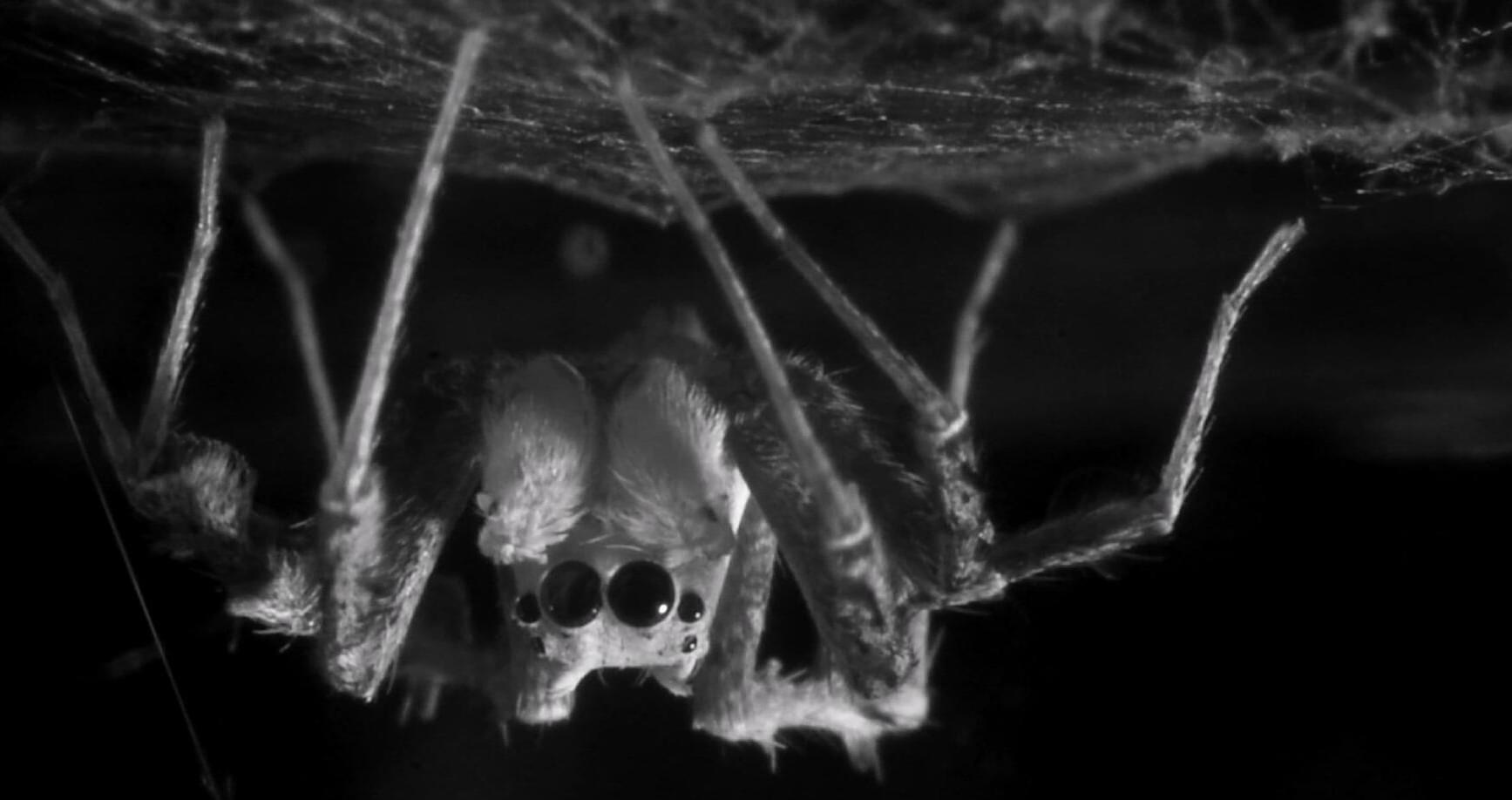
Two distinct sleep stages emerge in jumping spider, including a REM-like state
Humans and other vertebrates go through various stages of sleep, including REM (rapid eye movement) sleep characterized by rapid eye movements and muscle twitches. Can a similar sleep state be observed in spiders? Researchers from the Institute of Organismic Biology at the University of Bonn investigated this in the Australian jumping spider Portia fimbriata. The work is published in the journal Proceedings of the National Academy of Sciences.
The researchers investigated whether spiders actually sleep—and whether, like humans and other animals, they go through different stages of sleep. To do this, they recorded the behavior of the Australian jumping spider Portia fimbriata in high resolution over several days and nights and conducted experimental tests. What is known about sleep comes almost exclusively from vertebrates. Until now, experimental evidence for true sleep behavior in spiders was lacking.
Species of the genus Portia feed on other spiders. Their diverse hunting strategies are often interpreted as a sign of intelligence: for example, they mimic the vibrations of wriggling insects caught in the web to attract web-building spiders. Their sophisticated hunting behavior suggests special learning abilities. That’s what makes this spider so interesting. The Australian jumping spider Portia fimbriata, which the researchers studied, is about the size of a one-euro coin when fully grown.
OpenAI’s isolated red-team AI agents built a hidden CPU cache channel to talk with no network or shared files — exploited CPU cache timing to bypass microVM sandboxes
A hijacked AI agent could use the same technique to leak data without touching the network.
Microsoft Authenticator Flaw Let Permissionless Android Apps Steal Work Account Tokens
Microsoft has fixed a flaw in its Authenticator app for Android that let a malicious app with no permissions pose as a trusted Microsoft app, such as Teams, and collect sign-in tokens for a victim’s work account.
Microsoft tracks the flaw as CVE-2026–80097 and fixed it in Authenticator for Android version 6.2606.4246, so anyone using the app should update.
In the researchers’ tests, the tokens gave full access to the account’s email, files, and calendar. Microsoft says exploitation also needs the victim to complete a sign-in step in Authenticator, and that the flaw has not been used in attacks.
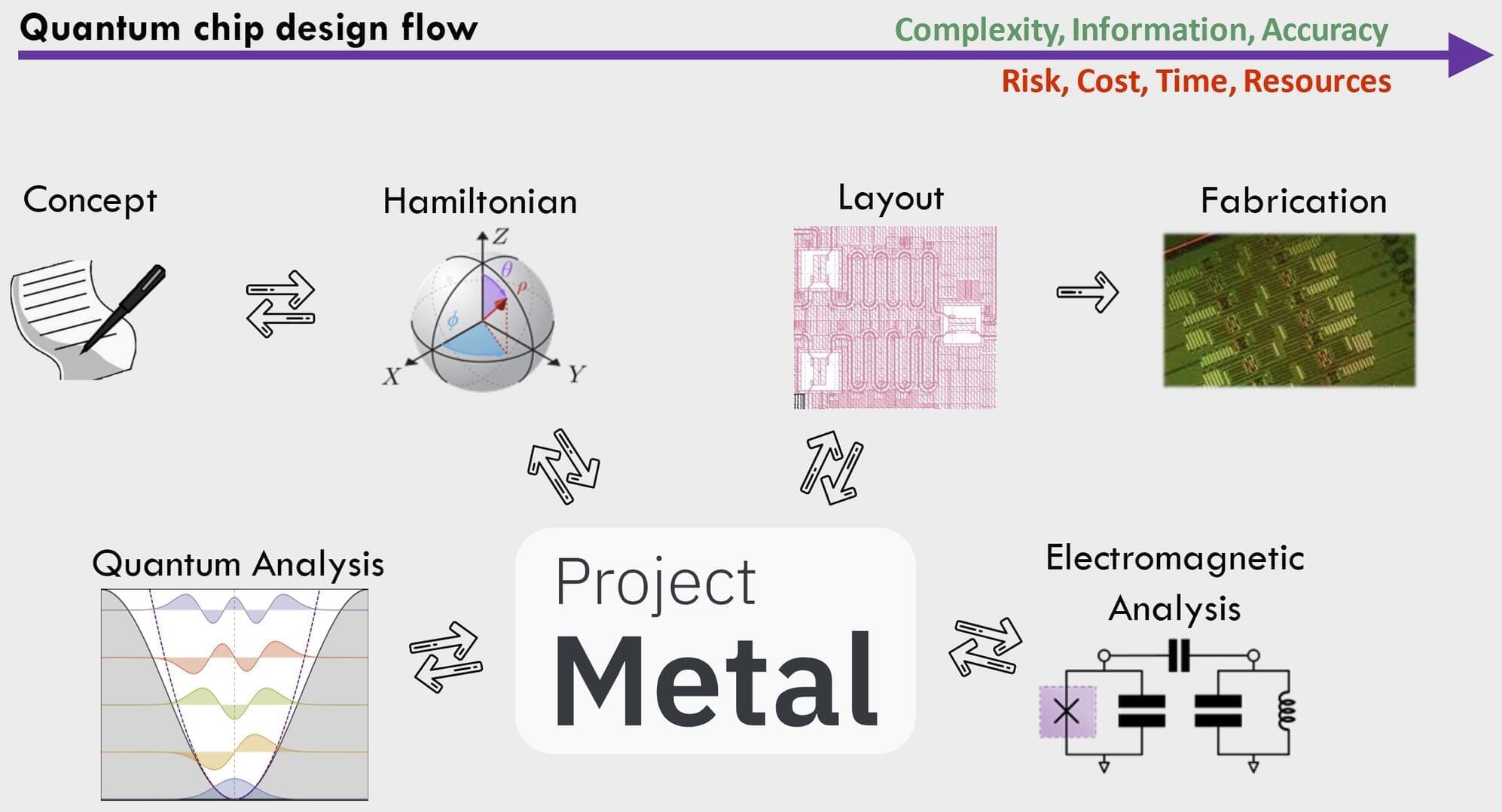
Quantum Metal Workflow
A visual gallery of the Quantum Metal components now — browse the whole library as thumbnails and jump to the docs for each, instead of digging through code. https://qiskit-community.github.io/qiskit-metal/workflow.html.
Quantum Metal Workflow.
Vision.
Quantum Metal is the open-source chip-design layer for superconducting quantum hardware: a Python library where you build a chip from QComponents, attach analyses, and hand the result to whichever solver / fab / orchestrator you want. The library itself is solver-agnostic; the renderers are the integration layer with the outside world (GDS, HFSS, Q3D, gmsh, Elmer, AWS Palace, …).
We sit inside a broader open-source ecosystem — design discovery (SQuADDS), Palace simulation wrappers (SQDMetal, pypalace), mesh utilities, quantization tools. Full map: Ecosystem doc (rendered on the docs site). Items below are about Metal’s own direction; ecosystem-level coordination is tracked alongside.
Two things shape the next year:
1. Lite-by-default. import qiskit_metal should be fast, dependency-light, and never assume Qt / AEDT / gmsh / Palace are present. Heavy backends are opt-in extras.

Post-Quantum Cryptography Migration Is a National Priority
Chuck Brooks is the president of Brooks Consulting International and one of Executive Mosaic’s GovCon Experts.
From a primarily scientific endeavor, quantum computing is developing into a technology that could have significant effects on cybersecurity, national security, economic competitiveness and the safeguarding of vital infrastructure. The United States cannot afford to wait until a quantum computer capable of cracking popular public-key cryptography exists in order to start safeguarding its most sensitive data.
Understanding the quantum threat is no longer the only challenge. It is carrying out one of the most intricate cryptographic transitions in contemporary IT history. Technological advancements bring about both extraordinary opportunities and consequential risks. As I explained in my book Inside Cyber: How AI, 5G, IoT, and Quantum Computing Will Transform Privacy and Our Security, quantum computing has the potential to revolutionize advanced computing, scientific research, materials engineering and medicine. Additionally, it might compromise cryptographic systems that safeguard sensitive personal data, military networks, financial transactions, government communications and intellectual property.
Improving the Perfusability of the Brain After Legal Death | Carrie Radomski | BP Summit 2026
Carrie Radomski, Director at Biomedical Research & Longevity Society, Resurgence Biomedical Science, and Biostasis Technologies, presents on how existing standby, stabilization, and transport (SST) procedures may help maintain the perfusability of the brain after death at the Brain Preservation Summit 2026, September 19–20, 2026, at the Sparks HQ in Salem, Oregon.
0:00 Standby, stabilization, and transport after legal death.
1:21 Mechanisms that impair brain perfusion.
2:10 Keeping the perfusability window open.
2:22 Anticoagulation, washout, edema, oxygenation, and cooling.
3:08 Temperature and vascular breakdown.
3:38 Postmortem clotting and flow obstruction.
4:17 Small-vessel constriction and no-reflow.
4:54 Vascular breakdown, edema, and perfusion failure.
5:38 Balancing perfusion pressure against vessel damage.
6:16 Quantifying ischemia across cases.
6:54 Potential improvements to SST protocols.
7:19 Measuring flow and studying perfusability.
8:04 Real-time imaging during perfusion.
8:57 Q&A: Can SST be performed in hospitals?
9:46 Q&A: Developing SST services in Canada.
11:07 Q&A: Medical assistance in dying and planned cases.
12:24 Q&A: Expanding services across Canada.
13:23 Q&A: Why hospitals restrict preservation procedures.