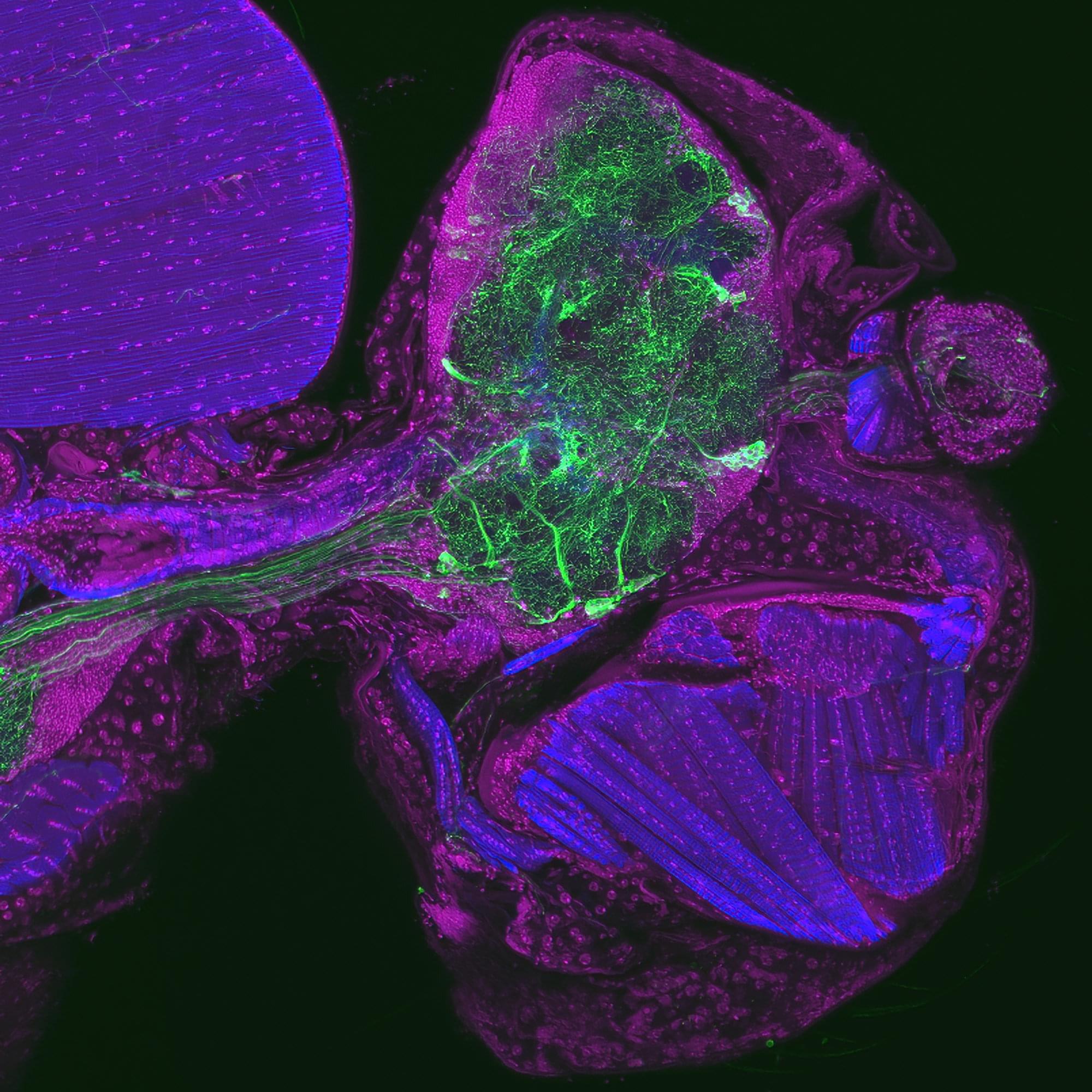
If humans or animals eat something that causes them to feel unwell, they subsequently avoid this food source. Until now, it has been unclear precisely how this avoidance learning takes place. A new study shows that communication between the brain cells and fat cells could play a crucial role here. The participants from the Universities of Bonn and Tohoku (Japan) and University Hospital Bonn have revealed the previously unknown mechanism in the fruit fly Drosophila. It may also exist in a similar form in mammals and even in humans. The results have now been published in the journal Neuron.
Anyone who’s ever had an upset stomach after eating a bad meatball knows just how much this experience can put you off them. Within research, this is also known as “conditioned taste aversion”: The brain registers the immune response to the bacteria and their toxins and concludes from this that the food source should be avoided in the future.
It is not yet known how the immune system’s discovery of the pathogens leads to a change in behavior. “As this learned food avoidance can be found in all species, we investigated this question in a model organism – the fruit fly Drosophila,” explains Prof. Dr. Ilona Grunwald Kadow. “Within this model, we can clarify how the brain and body interact with each other to trigger an avoidance reaction that is vital for survival.”