Toggle light / dark theme

Get the latest international news and world events from around the world.

Log in for authorized contributors

The ‘silent’ brain cells that shape our behaviour, memory and health

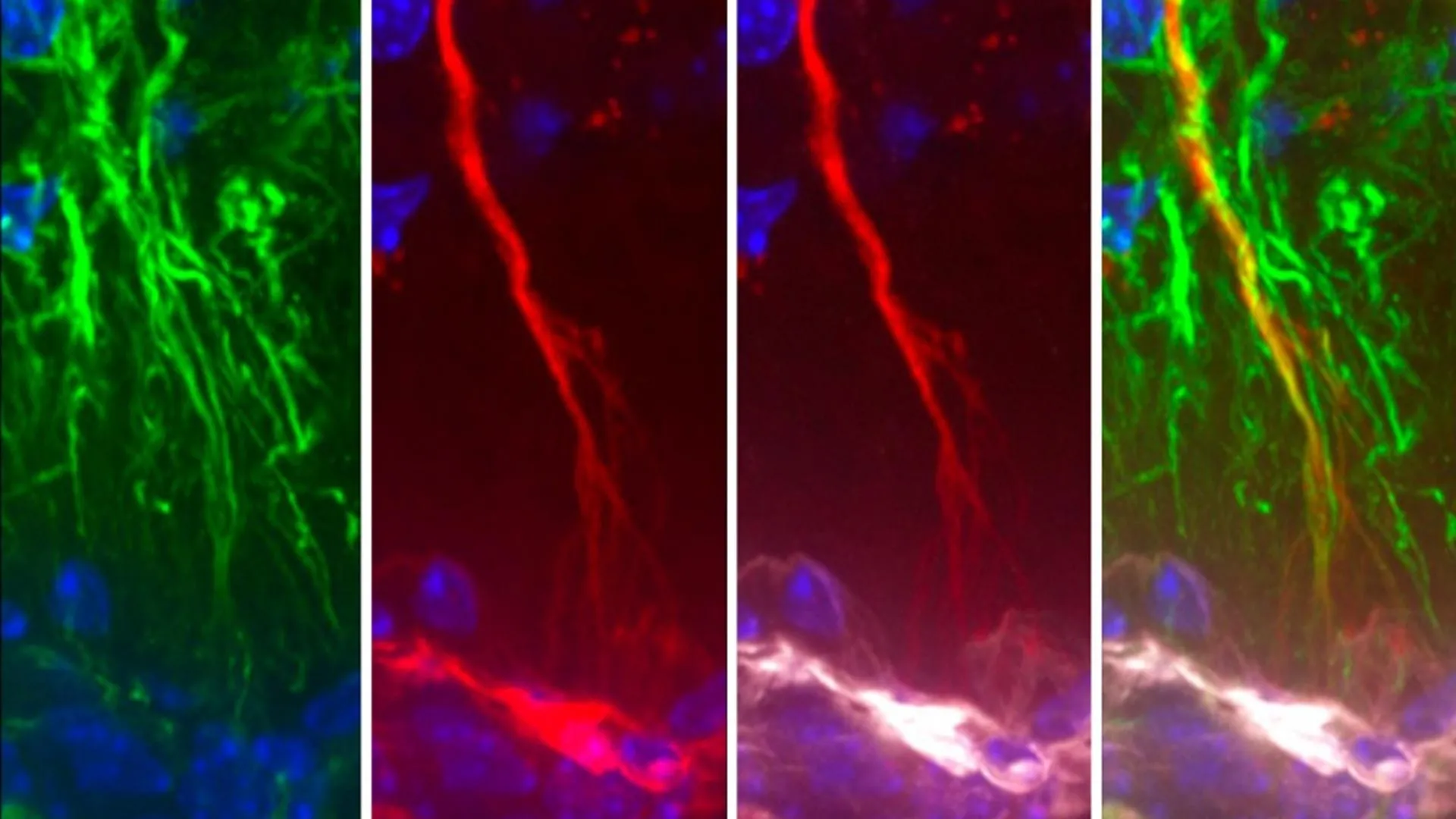
Researchers peered through microscopes, hooked up electrodes, and built entire careers around one cell type: neurons. These electrically active cells were clearly the brain’s protagonists, zipping signals through our heads at lightning speed to create thoughts, memories, and movements. Everything else—especially the star-shaped cells called astrocytes that outnumber neurons—was dismissed as mere scaffolding. Glial cells, they were called: “glue.”

Inbal Goshen, a memory researcher at Hebrew University of Jerusalem, remembers feeling like an outsider when she started investigating astrocytes in the early 2010s. “Oh, that’s the weird one who works on astrocytes,” she imagined colleagues whispering at conferences. The skepticism was palpable. Yet new molecular tools had finally given her a way to peek into these mysterious cells, and what she found was too intriguing to ignore.

Unlike neurons, astrocytes don’t fire electrical signals. They were “electrically silent,” which is why they’d been ignored. But they were whispering in another language entirely: calcium. Using advanced imaging, researchers discovered that astrocytes communicate through slow, rhythmic waves of calcium signals—more like a gentle tide than neuron’s lightning strike. And their reach is astonishing: a single human astrocyte can touch up to two million synapses, the junctions where neurons meet. Their bushy tendrils fill every crevice of the brain, each cell nestling against neurons and blood vessels, creating an intimate, three-way relationship.

Memory research revealed another layer. Goshen’s team watched astrocytes in mice navigating toward water rewards. As the animals approached familiar prize locations, astrocyte activity slowly ramped up—but showed no response in new environments. The cells were encoding spatial memories, not just supporting them. Other labs found that astrocytes help stabilize and recall fear memories, their slow calcium signals perfectly suited to bridge the gap between learning something and remembering it days later. As neuroscientist Jun Nagai describes it, “Think of them as the brain’s long-exposure camera: they capture the trace of meaningful events that might otherwise fade too fast.”


Astrocytes make up one-quarter of the brain, but researchers are only now realizing their true value.

Geodesic approach links quantum physics and gravitation

It is something like the “Holy Grail” of physics: unifying particle physics and gravitation. The world of tiny particles is described extremely well by quantum theory, while the world of gravitation is captured by Einstein’s general theory of relativity. But combining the two has not yet worked—the two leading theories of theoretical physics still do not quite fit together.

There are many ideas for such a unification—with names like string theory, loop quantum gravity, canonical quantum gravity or asymptotically safe gravity. Each of them has its strengths and weaknesses. What has been missing so far, however, are observable predictions for measurable quantities and experimental data that could reveal which of these theories actually describes nature best. A new study from TU Wien published in Physical Review D may now have brought us a small step closer to this ambitious goal.

Pegcetacoplan—the ‘closest thing to a cure’ for rare, severe kidney disease

A rare and life-threatening kidney disease in children finally has an effective therapy, thanks in large part to pioneering research and clinical leadership from University of Iowa Health Care Stead Family Children’s Hospital.

The disease, known as C3 glomerulopathy (C3G), is an ultra-rare condition that primarily affects children and young adults. Only around 5,000 Americans have C3G, which causes progressive kidney damage, with more than half of patients reaching end-stage kidney failure within a decade of diagnosis.

Unlike previous treatments for C3G that aimed to alleviate the damaging inflammatory process of the disease, the new, first-of-its-kind drug directly targets the root cause of C3G dysfunction in the body’s complement system, a part of the immune response.

Super-Refractory Status Epilepticus Diagnosis, Management, and PrognosticationAn International Survey Study

Background and ObjectivesGuidelines for super-refractory status epilepticus (SRSE) evaluation, management, and prognostication are lacking. Characterization of practice patterns could identify trends and potential areas for future inquiry. We surveyed…

DARPA moves to decentralize critical nitric acid production

A top-secret US government body called the Defense Advanced Research Projects Agency (DARPA) has launched a new solicitation seeking proposals for a high-rate, energy-efficient method of producing nitric acid directly from air and water.

The initiative, known as the High-Efficiency Nitrogen Oxidation, or HNO3 program, is aimed at protecting critical U.S. defense-industrial supply chains and reshaping how energetics are produced in contested environments.

According to DARPA, the agency is requesting “innovative proposals in the foundational technologies to enable high-rate, energy efficient, decentralized nitric acid manufacturing to protect critical supply chains in the defense industrial base.”

Mixture of Experts Powers the Most Intelligent Frontier AI Models, Runs 10x Faster on NVIDIA Blackwell NVL72

“With GB200 NVL72 and Together AI’s custom optimizations, we are exceeding customer expectations for large-scale inference workloads for MoE models like DeepSeek-V3,” said Vipul Ved Prakash, cofounder and CEO of Together AI. “The performance gains come from NVIDIA’s full-stack optimizations coupled with Together AI Inference breakthroughs across kernels, runtime engine and speculative decoding.”

This performance advantage is evident across other frontier models.

Kimi K2 Thinking, the most intelligent open-source model, serves as another proof point, achieving 10x better generational performance when deployed on GB200 NVL72.

/* */