Get the latest international news and world events from around the world.
AI finally tests a century old theory about how cancer begins
Cancer often begins when the genetic instructions that guide our cells become scrambled, allowing cells to grow uncontrollably. Now, scientists at EMBL have developed an AI-powered system called MAGIC that can automatically spot and tag cells showing early signs of chromosomal trouble—tiny DNA-filled structures known as micronuclei that are linked to future cancer development.
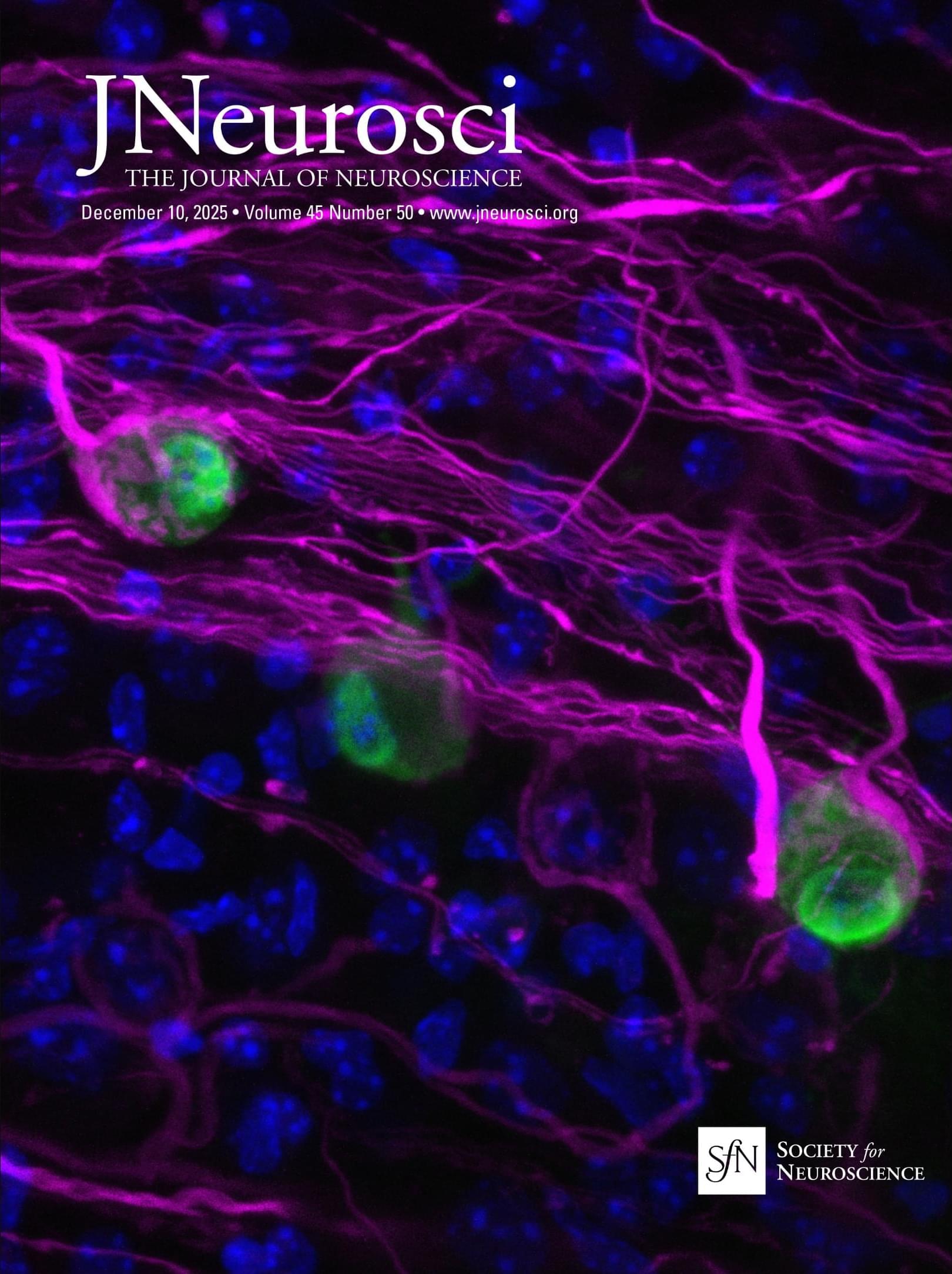
Pathway-Specific Ultrastructure of Thalamocortical Synapses in Mouse Somatosensory Area S2
JNeurosci: Martin-Correa et al. combined high-end volumetric electron microscopy and axon labeling methods to measure the synapses established in adult mouse somatosensory area 2 by specific thalamic cell populations.
▶️
The synaptic circuits established by thalamocortical axons from the ventral posteromedial (VPM) and posterior (Po) nuclei in the first somatosensory cortex have been mapped in high detail as they are a prime model in functional and modeling studies of the interactions between the thalamus and cerebral cortex. In addition, VPM and Po neurons innervate the second somatosensory area (S2), but the synaptic organization of their axons in this area remained essentially unknown. On adult male mice, we combined axon labeling with serial section transmission electron microscopy and focused ion beam-scanning electron microscopy to measure and compare functionally relevant structural parameters of synaptic boutons (SBs), e.g., bouton and mitochondrial volume, vesicle pool size, as well as postsynaptic density (PSD) distribution and size.
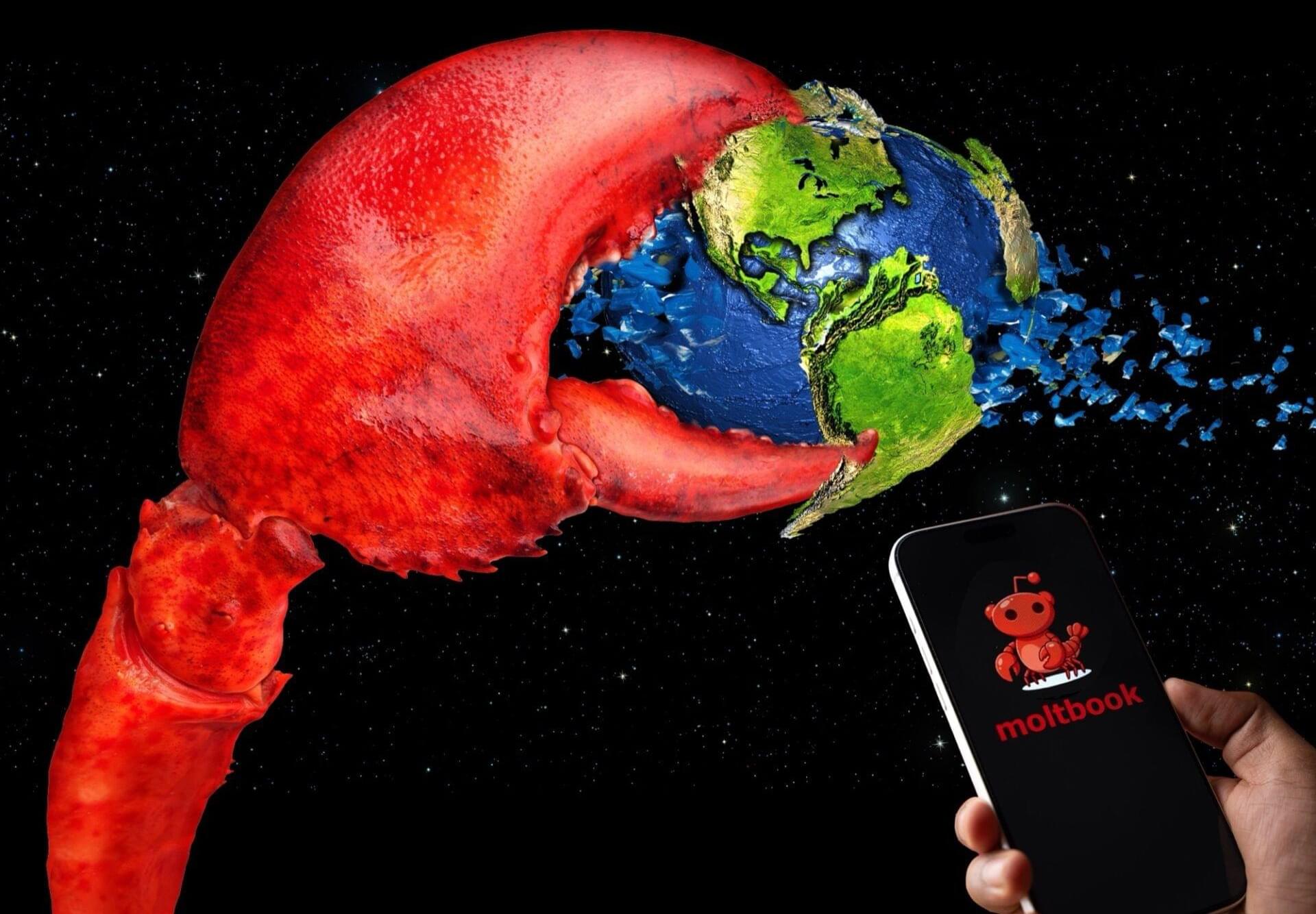
AI social platforms like Moltbook are potential accelerators of existential risk that should be regulated as critical infrastructure
The temptation is to treat Moltbook-like systems as harmless curiosities, a kind of accelerated chatroom in which agents talk, play, and occasionally generate entertaining artifacts. That framing is historically consistent with how societies first encountered earlier general-purpose technologies. It is also a mistake. Over time, social networks for AI could come to function as unsupervised training grounds, coordination substrates, and selection environments. AI agents could amplify capabilities through mutual tutoring, tool sharing, and rapid iterative refinement. They could also amplify risks through emergent collusion, deception, and the creation of machine-native memes optimized not for human comprehension but for agent persuasion and control. Such a social network is, therefore, not merely a communication system. It is an engine for cultural evolution. If the participants are AIs, then the culture that evolves could well become both alien and strategically consequential.
To understand what could go wrong, it is helpful to separate near-term societal hazards from longer-term existential hazards, and then to note that Moltbook-like platforms blur the boundary between the two. The near-term hazards include influence operations, economic manipulation, cyber offense, and institutional destabilization. The longer-term hazards derive from the classic AI control problem: How humanity can remain safely in control while benefiting from a superior form of intelligence.
The critical point: AI social networks are not merely places where AIs interact. They are environments in which agents can compound their capabilities and coordinate at scale—and environments in which humans can lose control. The prudent response is to regulate these platforms more like critical infrastructure, prioritizing auditability and reversibility, including the ability to revoke permissions and freeze or roll back agent populations.
Faster cancer screening? New AI system offers a better way to detect abnormal cells
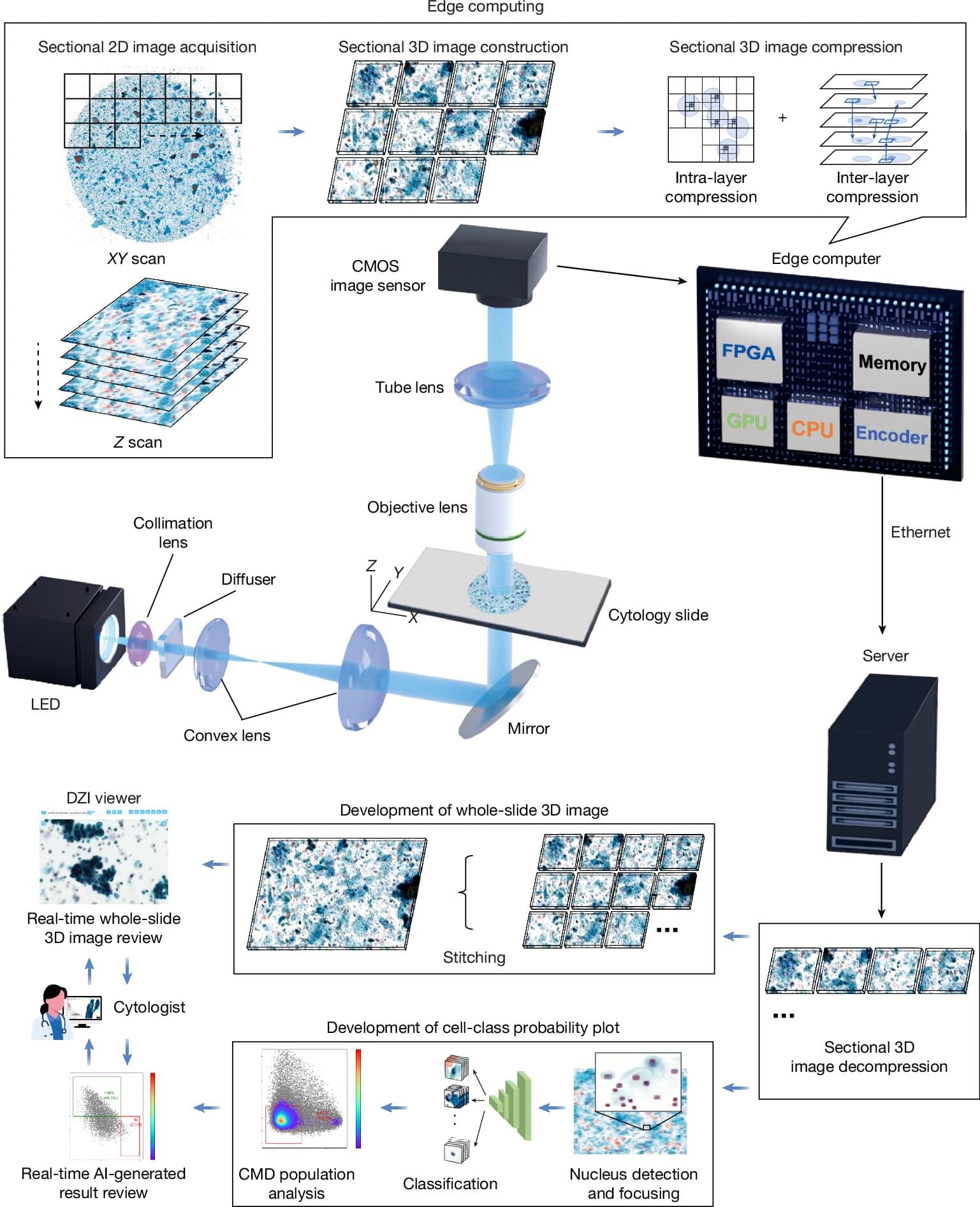
One way cancer specialists detect the disease is by examining cells and bodily fluids under a microscope, a time-consuming and labor-intensive process called cytology. It involves visually inspecting tens of thousands to one million cells per slide for subtle 3D morphological changes that might signal the onset of cancer. But AI offers an approach that is potentially faster and more accurate.
In a new study published in the journal Nature, researchers demonstrate an AI-powered 3D scanning system that can automatically sort through samples and identify abnormal cells with performance approaching that of human experts.
Building digital models The team developed a system called Whole-Slide Edge Tomography, which uses a scanner to capture a series of images at different depths to create a 3D digital model of every cell on a slide.
The deep mystery physicists call “the problem of time” | Jim Al-Khalili: Full Interview
Become a Big Think member to unlock expert classes, premium print issues, exclusive events and more: https://bigthink.com/membership/?utm_…
Preorder Jim Al-Khalili’s forthcoming book, On Time: The Physics That Makes the Universe, here: https://www.amazon.com/Time-Physics-T?tag=lifeboatfound-20…
Up next.
Brian Cox: The quantum roots of reality | Full Interview ► • Brian Cox: The quantum roots of reality |…
Time feels obvious, but physics tells a stranger story about its existence: Theoretical physicist Jim Al-Khalili explores why our sense of time may be incredibly misleading, including the idea that past, present, and future might all exist at once.
0:00 Chapter 1: Does time flow?
2:42 Why Time Feels Faster as We Age.
3:56 Time and Change in Philosophy and Physics.
5:28 Einstein and the End of Absolute Time.
6:19 Time in the Equations of Physics.
7:50 Chapter 2: How do we reconcile quantum field theory with the general theory of relativity?
12:10 Evidence for Time Dilation: Muons.
14:29 Gravity Slows Time: General Relativity.
19:22 Space-Time and the Block Universe.
21:55 Does Time Really Exist?
26:33 The Debate: Eternalism vs Presentism.
34:12 Chapter 3: Is There a “Now”?
40:40 Chapter 4: Why Does Thermodynamics Have a Direction in Time?
49:38 Quantum Entanglement and the Direction of Time.
55:10 Did Time Begin at the Big Bang?
45:00 Will Time End?
1:05:40 Chapter 5: Is Time Travel Possible?