Toggle light / dark theme

Get the latest international news and world events from around the world.

Log in for authorized contributors

Astrocytic Sox9 overexpression in Alzheimer’s disease mouse models promotes Aβ plaque phagocytosis and preserves cognitive function

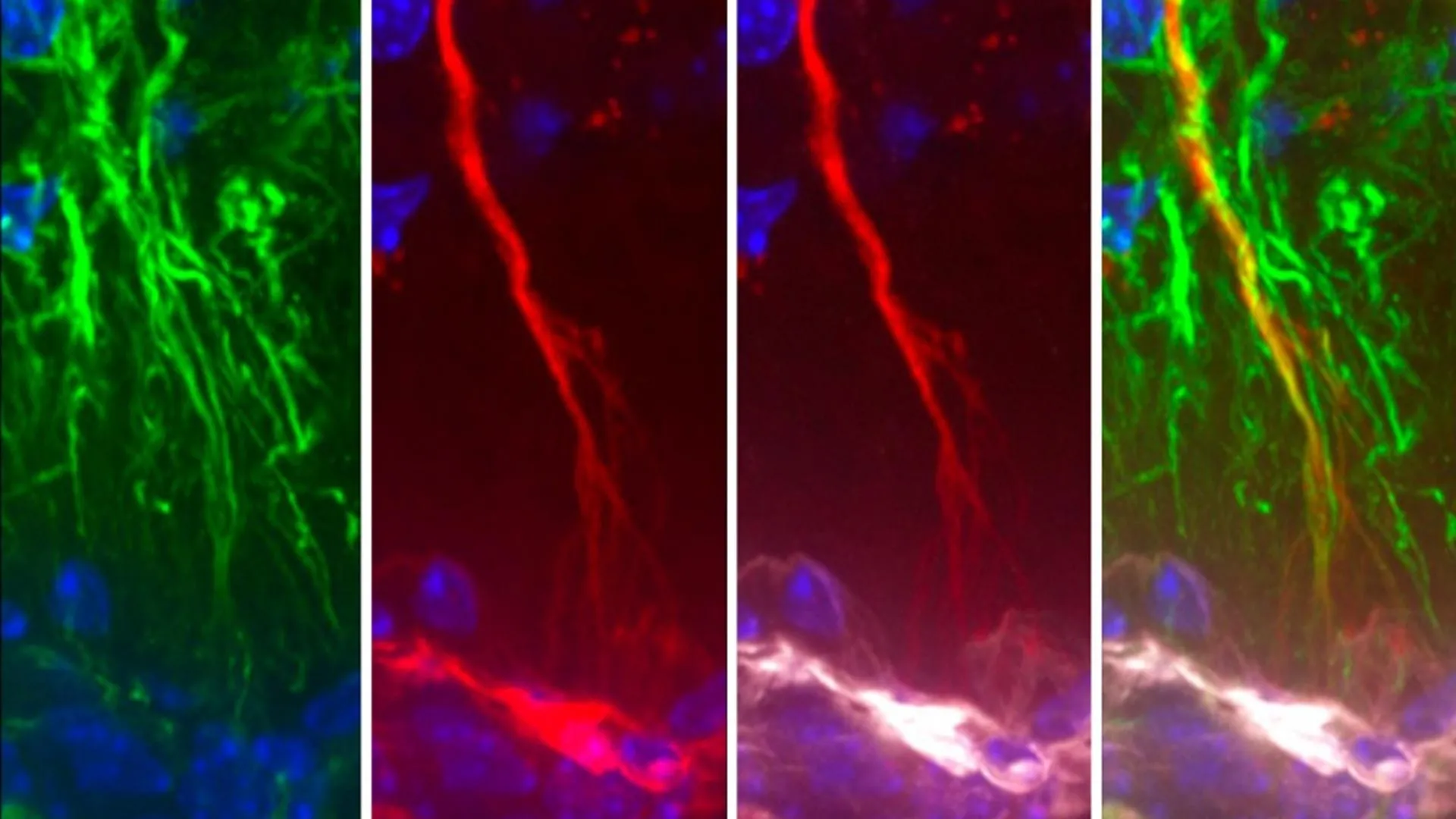
Researchers at Baylor College of Medicine have discovered a natural mechanism that clears existing amyloid plaques in the brains of mouse models of Alzheimer’s disease and preserves cognitive function. The mechanism involves recruiting brain cells known as astrocytes, star shaped cells in the brain, to remove the toxic amyloid plaques that build up in many Alzheimer’s disease brains. Increasing the production of Sox9, a key protein that regulates astrocyte functions during aging, triggered the astrocytes’ ability to remove amyloid plaques. The study, published in Nature Neuroscience, suggests a potential astrocyte-based therapeutic approach to ameliorate cognitive decline in neurodegenerative disease.

“Astrocytes perform diverse tasks that are essential for normal brain function, including facilitating brain communications and memory storage. As the brain ages, astrocytes show profound functional alterations; however, the role these alterations play in aging and neurodegeneration is not yet understood,” said first author Dr. Dong-Joo Choi, who was at the Center for Cell and Gene Therapy and the Department of Neurosurgery at Baylor while he was working on this project. Choi currently is an assistant professor at the Center for Neuroimmunology and Glial Biology, Institute of Molecular Medicine at the University of Texas Health Science Center at Houston.


Astrocytes are associated with Alzheimer’s disease pathogenesis. We found that the transcription factor Sox9 functions to enhance astrocytic phagocytosis of Aβ plaques via MEGF10, and this clearance of plaques is associated with the preservation of cognitive function in mouse models.

Mini lung organoids made in bulk could help test personalized cancer treatments

A team of scientists have developed a simple method for automated manufacturing of lung organoids which could revolutionize the development of treatments for lung disease. These organoids, miniature structures containing the cells that real lungs do, could be used to test early-stage experimental drugs more effectively, without needing to use animal material.

In the future, patients could even have personalized organoids grown from their own tissue to try out potential treatments in advance.

“The best result for now—quite simply—is that it works,” said Professor Diana Klein of University of Duisburg-Essen, first author of the article in Frontiers in Bioengineering and Biotechnology.

Opposite Effects of mRNA-Based and Adenovirus-Vectored SARS-CoV-2 Vaccines on Regulatory T Cells: A Pilot Study

New-generation mRNA and adenovirus vectored vaccines against SARS-CoV-2 spike protein are endowed with immunogenic, inflammatory and immunomodulatory properties. Recently, BioNTech developed a noninflammatory tolerogenic mRNA vaccine (MOGm1Ψ) that induces in mice robust expansion of antigen-specific regulatory T (Treg) cells. The Pfizer/BioNTech BNT162b2 mRNA vaccine against SARS-CoV-2 is identical to MOGm1Ψ except for the lipid carrier, which differs for containing lipid nanoparticles rather than lipoplex. Here we report that vaccination with BNT162b2 led to an increase in the frequency and absolute count of CD4posCD25highCD127low putative Treg cells; in sharp contrast, vaccination with the adenovirus-vectored ChAdOx1 nCoV-19 vaccine led to a significant decrease of CD4posCD25high cells.

Magnetic fields power smarter soft robots with built-in intelligence

Soft robots are prized for their agility and gentle touch, which makes them ideal for traversing delicate or enclosed spaces to perform various tasks, from cultivating baby corals in laboratories to inspecting industrial pipes in chemical plants. However, achieving embodied intelligence in such systems, where sensing, movement and power supply work together in an untethered configuration, remains a challenge.

Flexible materials can deform and adapt, but their power sources are unable to do so. Conventional batteries often stiffen the robot’s body, drain quickly, or degrade under strain, all of which leave soft robots tethered or with a short lifespan.

Assistant Professor Wu Changsheng and his team from the Department of Materials Science and Engineering and the Department of Electrical and Computer Engineering, College of Design and Engineering, National University of Singapore, found a way to turn that limitation into an advantage. Their study, published in Science Advances, demonstrates that the same magnetic fields used to control soft robots can also enhance the performance of the batteries inside them.

Smart spatial omics (S2-omics) optimizes region of interest selection to capture molecular heterogeneity in diverse tissues

Yuan et al. present S2-omics, an end-to-end workflow that automatically identifies regions of interest in histology images to maximize molecular information capture in spatial omics experiments.

FLASH-AWAY: Intrabody-Directed Targeting of Optogenetic Tools for Protein DegradationClick to copy article linkArticle link copied!

Protein homeostasis, or proteostasis, is essential for cellular proteins to function properly. The buildup of abnormal proteins (such as damaged, misfolded, or aggregated proteins) is associated with many diseases, including cancer. Therefore, maintaining proteostasis is critical for cellular health. Currently, genetic methods for modulating proteostasis, such as RNA interference and CRISPR knockout, lack spatial and temporal precision. They are also not suitable for depleting already-synthesized proteins. Similarly, molecular tools like PROTACs and molecular glue face challenges in drug design and discovery. To directly control targeted protein degradation within cells, we introduce an intrabody-based optogenetic toolbox named Flash-Away integrates the light-responsive ubiquitination activity of the RING domain of TRIM21 for protein degradation, coupled with specific intrabodies for precise targeting. Upon exposure to blue light, Flash-Away enables rapid and targeted degradation of selected proteins. This versatility is demonstrated through successful application to diverse protein targets, including actin, MLKL, and ALFA-tag fused proteins. This innovative light-inducible protein degradation system offers a powerful approach to investigate the functions of specific proteins within physiological contexts. Moreover, Flash-Away presents potential opportunities for clinical translational research and precise medical interventions, advancing the prospects of precision medicine.

Brain “stars” hold the power to preserve cognitive function in model of Alzheimer’s disease

Researchers at Baylor College of Medicine have discovered a natural mechanism that clears existing amyloid plaques in the brains of mouse models of Alzheimer’s disease and preserves cognitive function. The mechanism involves recruiting brain cells known as astrocytes, star shaped cells in the brain, to remove the toxic amyloid plaques that build up in many Alzheimer’s disease brains. Increasing the production of Sox9, a key protein that regulates astrocyte functions during aging, triggered the astrocytes’ ability to remove amyloid plaques. The study, published in Nature Neuroscience, suggests a potential astrocyte-based therapeutic approach to ameliorate cognitive decline in neurodegenerative disease.

“Astrocytes perform diverse tasks that are essential for normal brain function, including facilitating brain communications and memory storage. As the brain ages, astrocytes show profound functional alterations; however, the role these alterations play in aging and neurodegeneration is not yet understood,” said first author Dr. Dong-Joo Choi, who was at the Center for Cell and Gene Therapy and the Department of Neurosurgery at Baylor while he was working on this project. Choi currently is an assistant professor at the Center for Neuroimmunology and Glial Biology, Institute of Molecular Medicine at the University of Texas Health Science Center at Houston.

Astrocytic Sox9 overexpression in Alzheimer’s disease mouse models promotes Aβ plaque phagocytosis and preserves cognitive function.

Scientists Uncover New Biological Law, Cracking an 80-Year Mystery

Scientists uncover a basic principle that shows how higher nutrient levels change the pace of cell growth, revealing a universal rule that applies to microbial growth. A research group that includes a scientist from the Earth-Life Science Institute (ELSI) at Institute of Science Tokyo, Japan, has

/* */