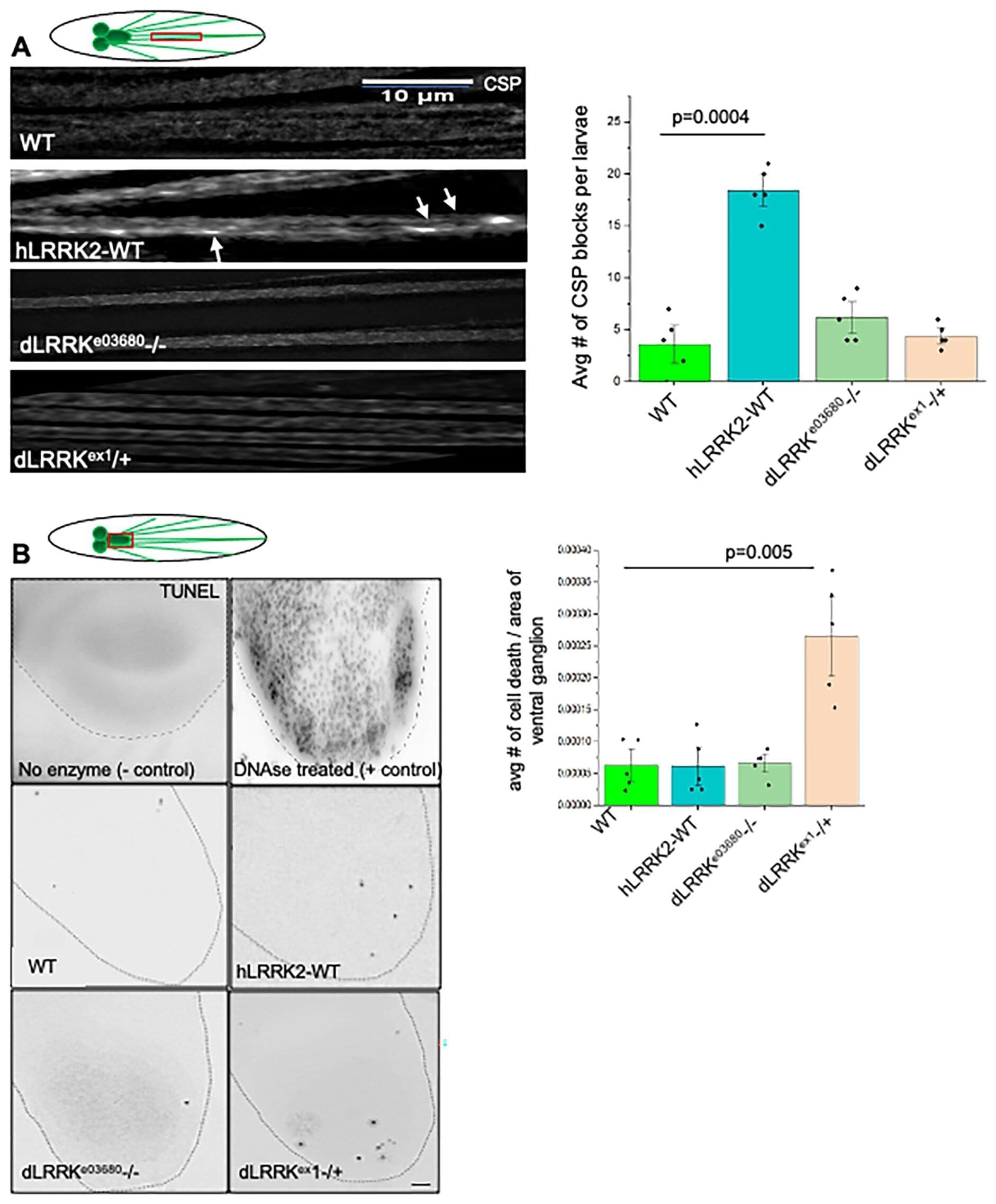
A hallmark of Parkinson’s disease is the buildup of Lewy bodies—misfolded clumps of the protein known as alpha-synuclein. Long before Lewy bodies form, alpha-synuclein can interfere with neurons’ ability to transport proteins and other cargo along their axons to the synapses. When present at high levels, alpha-synuclein binds too tightly to structures inside the axon, creating the cellular equivalent of traffic jams. These disruptions may even help set the stage for the later accumulation of Lewy bodies in the brain.
Now, University at Buffalo researchers have identified a way to reduce these traffic jams and restore flow—by altering how alpha-synuclein interacts with another Parkinson’s-related protein known as leucine-rich repeat kinase 2 (LRRK2).
In a study published last month, the researchers increased levels of specific mutant forms of LRRK2 in fruit fly larvae. They found that one mutation had a downstream effect on alpha-synuclein, limiting its ability to bind to cargo and disrupt axonal transport. The research is published in the journal Frontiers in Molecular Neuroscience.